“Living Conditions in Gaza Strip Are Now Intolerable”
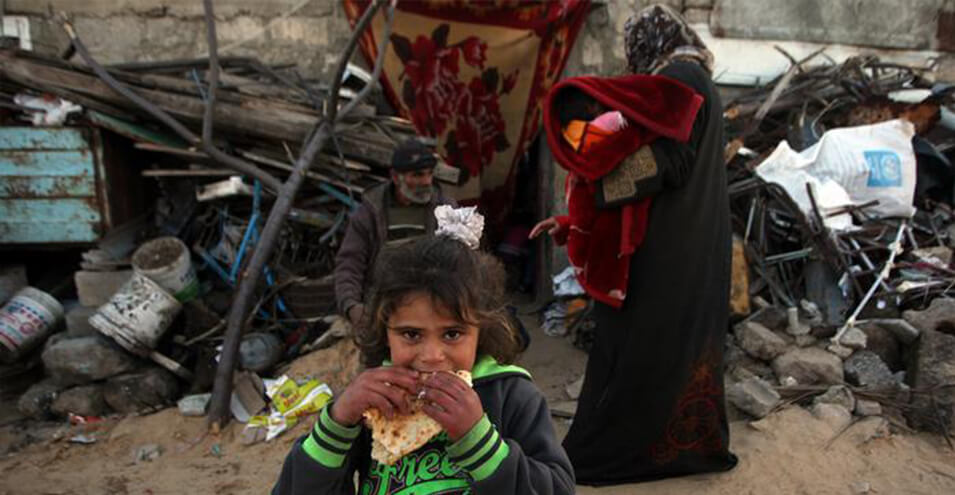
The people of Gaza Strip are so desperate and destitute that they approach the border barbed wire fences, even though they know that on the other side of the border there are snipers who have been given permission to shoot. Living conditions in Gaza Strip have become intolerable.
Since March 30th of this year, tens of thousands of Palestinians in Gaza Strip have been marching towards the Israeli border; a border that is heavily protected by military forces of this country. So far, 100 Palestinians have been killed during these protests and 10,000 people have also been wounded.
In a United Nations report, it is estimated that by 2020, Gaza Strip will become completely uninhabitable. Mark Frieings, representative of the Konrad Adenauer Foundation in Germany, however, believes that living conditions in Gaza Strip are intolerable even now.
Mark Frieings, who lives in Ramallah in the West Bank and regularly travels to Gaza Strip from there, knows the situation in the region well. In an interview with Deutsche Welle, he warned about the shortage of energy and drinking water in Gaza Strip. Frieings says there is a possibility of epidemics such as cholera occurring in Gaza Strip.
Shortage of Drinking Water and Energy
In 2000, 98 percent of the people in Gaza Strip had access to drinking water. However, in 2014, only 14 percent of the people in this region were able to obtain drinking water. The United Nations has warned that if the only source of drinking water in Gaza Strip continues to be exploited in this reckless manner and with over-extraction, it will become unusable by 2020.
This unfortunate situation is also true regarding energy. Currently, there is electricity in Gaza Strip for four to six hours a day. As a result, health, education, and public services in this region have faced many problems.
All these intolerable conditions are related to mismanagement and corruption in the extremist Hamas organization, which has controlled Gaza Strip since 2007. This organization has been in conflict with the Fatah movement in the West Bank for many years.
Western countries are in contact with the Fatah organization. Fatah recognizes the State of Israel, wants two countries, Israel and Palestine, to coexist as neighbors, and wants to resolve differences between Palestinians and Israel through peaceful means.
Global aid to Palestinians also reaches this organization. Fatah, to pressure the extremist Hamas organization, last year severely reduced payments to Israel for providing energy to Palestinians in Gaza Strip. And as a result, the people of Gaza Strip now face an electricity shortage.
“A Big Prison Called Gaza”
The naval blockade of Gaza Strip by Israel is also one of the reasons for creating catastrophic conditions in this region. This blockade has been in place for more than 10 years and Egypt also supports it. With this blockade, the import of goods to Gaza has been severely limited.
Leaving Gaza and also entering this region is possible only in very rare circumstances. This dire situation has severely affected the economy of Gaza Strip. Omar Shakir, one of the members of the Human Rights Watch organization, says in an interview with Deutsche Welle in this regard that the number of unemployed in Gaza Strip is more than 50 percent and the number of unemployed people under 30 years old in this region is more than 60 percent.
Omar Shakir says the blockade of Gaza has turned this region into a big prison in the open air; a view that the British newspaper “The Economist” has also confirmed in its recent issue.
Omar Shakir, who is the head of the Israel and Palestine section of the Human Rights Watch organization, continues in his interview with Deutsche Welle about this intolerable situation: “Concert musicians cannot travel outside the region to perform, students cannot see universities outside of Gaza, and doctors cannot even cooperate with their colleagues in the West Bank.”
Collective Punishment
Omar Shakir, a Human Rights Watch expert, speaks of “collective punishment” of Gaza’s people because of Israel’s blockade. Shakir continues: “These measures by Israel have nothing to do with ensuring the security of this country. These pressures are political and strategic and are being applied to overthrow the extremist Hamas organization, but this strategy is not effective because it is illegal and deeply immoral.”
Mark Frieings agrees with Omar Shakir’s view and says: “Two million people are imprisoned here.” and continues that this blockade punishes people who had no role in the success of the extremist Hamas organization.
The Human Rights Watch expert says that 70 percent of Gaza’s population is under 29 years old and “many of them had not yet been born in 2006, when Hamas won the elections, or had not yet reached the age of maturity to participate in voting.”
Gaza Strip Becoming Narrower
The Hamas organization constantly endangers Israel’s security by launching rockets towards Israel and creating underground tunnels. Israel, to prevent this, has designated a path in Gaza Strip as a security buffer zone. Anyone who gets closer than 300 meters to this border faces the threat of death.
Based on the Oslo Accords, Gaza fishermen are allowed to fish up to 20 miles off the coast of Gaza. However, since 2006, Israel has limited this range to three to six nautical miles for security reasons.
Jimmy McGoldrick, coordinator of the United Nations for humanitarian aid in the occupied Palestinian territories, also paints a dark picture of life in Gaza Strip. He says life in this region has become so difficult that young people in Gaza Strip have no will to continue living.
McGoldrick continues: “People commit suicide and young people are desperate and dissatisfied… The level of psychological and social suffering is extremely high and doctors say that one out of every three children faces psychological and social problems.”
Source: DW