Tehran’s Water Situation Alarming with Reserves at Lowest Levels
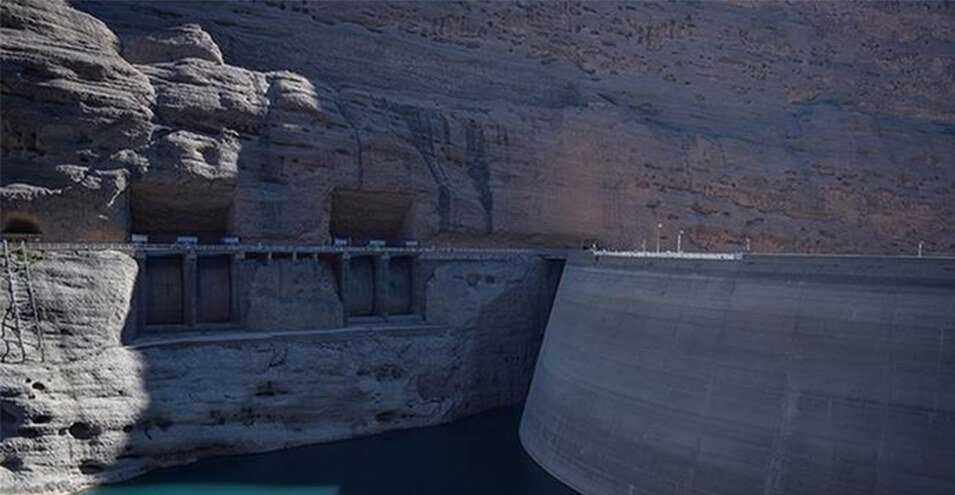
The CEO of Tehran Regional Water Company has stated that concerns about water conditions in the next year should begin from this year itself. According to him, if current trends continue, water rationing in the coming year is inevitable.
Alirez Bakhtiari, CEO of Tehran Regional Water Company, told ILNA news agency that Tehran currently faces its lowest water reserves. He identified conservation as the only solution and said it is the only way to overcome the water shortage crisis and drinking water rationing in Tehran.
The cause of what has happened in Tehran and many other parts of the country is the Islamic Republic’s unsustainable development programs, which have driven Iran’s water reserves to destruction in the long term for short-term agricultural development. Reckless dam construction and illegal well drilling have now put Iran in a situation where neither the water reserves behind dams are sufficient for industry, agriculture, and drinking water, nor can underground water reserves be replenished.
This environmental disaster has caused disputes over water and economic hardship for farmers in rural areas, and in water-scarce areas has led to the destruction of many wetlands and rivers and caused sandstorms. In large cities, water shortage brings numerous problems.
The CEO of Tehran Regional Water Company, emphasizing this point, warns that “Tehran has its own specific sensitivities, because the conditions of this metropolis differ from other cities and regions of the country.”
What differences does Tehran have? Drinking water consumption in Tehran is very high. While drinking water consumption in other parts of Iran is 7 percent, in this metropolis, according to Alirez Bakhtiari, it reaches 35 percent. The solution presented by the CEO of Tehran Regional Water Company is conservation of water consumption and simultaneously closing unauthorized wells.
He says: “This year we provided drinking water for the people of Tehran with great difficulty.” But he speaks of a “new year” that has passed for barely a month.
A year in which dam inflows amount to approximately 400 million cubic meters, according to the CEO of Tehran Regional Water Company, the “water flow rate” will decline by close to 700 million cubic meters, snow reserves will be almost zero, and finally, according to forecasts, the average temperature of the year will be one degree higher.
Authorities now need to prevent the continued drilling of unauthorized wells with the help of military forces and the judiciary. Alirez Bakhtiari has stated that this year they have based their work on closing 3,000 unauthorized wells. The drilling of hundreds of thousands of unauthorized wells coinciding with the reduction or cessation of water inflow to underground aquifers is a problem that in some parts of Iran is probably no longer solvable.
For example, in the city of Qom, located 150 kilometers from Tehran, water inflow has reached zero, and according to officials, the groundwater level in this city drops by one million cubic meters annually, and the salinity of groundwater has doubled.
In other areas such as Khuzestan, Sistan and Baluchestan, and Azerbaijan, the situation is no better. Protests by Isfahan farmers over water shortage issues and non-receipt of their water rights began from last March. Experts say the water crisis in Iran is serious, and if this crisis is not controlled, water shortage and drought will have dire consequences, including conflicts over water.