The ‘Identity’ of Tehran Attack Perpetrators and the Outlook for Iran’s Future Policies
Is the Islamic Republic’s regional policy one of the reasons some Iranian Sunnis have joined ISIS? What role does domestic policy play in this? Why were the perpetrators of the Tehran attacks drawn to ISIS? Will Iran’s government behavior change? Two experts provide answers.
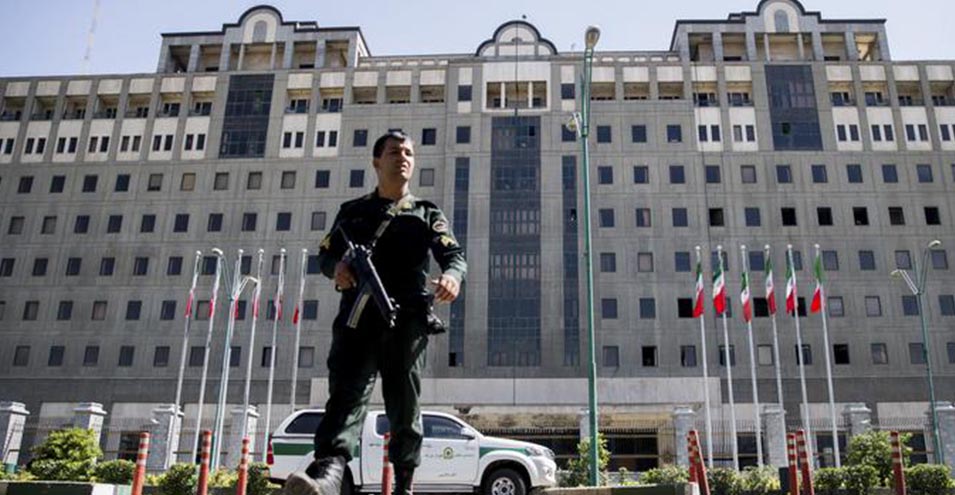
On Wednesday (June 7), in two simultaneous terrorist attacks on the Islamic Consultative Assembly (Parliament) and the Mausoleum of Ayatollah Khomeini in Tehran, 17 Iranian citizens were killed and more than 50 were wounded. The Ministry of Intelligence announced the identities of five attackers who were killed during these attacks. In Iran’s Ministry of Intelligence statement, the attackers were described as members of “Wahhabi and takfiri groups” who, after joining ISIS and fighting in Mosul and Raqqa, returned to Iran and carried out this terrorist act.
The Role of “Shiite Rule”
There is no precise information about the attackers’ birthplace and place of residence in Iran, but some media outlets have spoken of “Salafi Kurds” as possible perpetrators of the Tehran attacks. Heman Sidi, a political analyst aware of Kurdistan issues, tells Deutsche Welle that he traces the root of ISIS’s modest strengthening in Sunni-populated areas of Kurdistan to several decades of “Shiite rule” in Iran. However, according to him, due to the dominance of nationalist and leftist views in Kurdistan, this has not been able to become the “main identity” of Iranian Kurdistan.
This Kurdistan expert confirms that after ISIS’s emergence, some Sunni Kurds joined this terrorist group, but at the same time considers their numbers to be small in comparison. Heman Sidi refers to Kurds who were even imprisoned in Islamic Republic prisons before ISIS’s emergence because of their “Sunni Islamist” views.
According to this political analyst, in 2016, between 400 to 500 Sunni Kurds from the Kurdistan Region of Iraq joined ISIS and even participated in operations against that region. However, Sidi considers the number of Iranian Kurds who joined ISIS to be significantly less than that, estimating their number between 30 to 40 people.
In Heman Sidi’s view, both Iran’s regional policy and the Islamic Republic’s policy regarding ethnic and religious minorities played a role in the tendency of some Sunni Kurds toward ISIS, among which “discriminatory” ethnic and religious policies are older.
The Revolutionary Guards’ Promise of “Revenge”
The Tehran terrorist attacks also faced strong reactions from the Islamic Revolutionary Guards Corps, accompanied by accusations against the United States and Saudi Arabia of having a hand in the attacks. This military-security institution promised “revenge” in its statement and wrote: “The public opinion of people around the world, especially the Iranian nation, finds this terrorist act, which occurred one week after a joint meeting between the US president and the leaders of one of the region’s reactionary states that have constantly supported takfiri terrorists, very significant, and ISIS’s claim of responsibility is seen by many as an indication of their involvement in this heinous act.”
Revolutionary Guards officials immediately spoke of the Tehran attacks as operations that occurred shortly after “the joint meeting of America with the leaders of one of the region’s reactionary states.” They also promised that they would take “revenge” for these attacks both from the terrorists and “from those who ordered them.”
Attempts to Relieve “Tensions”
The reaction of the Rouhani government, the Foreign Ministry, and Zarif himself was, however, restrained. The current Iranian government has repeatedly emphasized avoiding tension with Saudi Arabia.
Mohammad Javad Zarif, Iran’s Foreign Minister, wrote in late May 2017 in a note in the newspaper “Al-Araby Al-Jadeed,” among other things: “Our insistence on our principled policies despite the mistakes of some neighboring governments continues. Recently, one Saudi official threatened to “bring war into Iran.” I hereby formally and on behalf of the Iranian government declare that we are ready to offer peace to the entire region and especially to the Kingdom of Saudi Arabia.”
Bahram Qassemi, spokesman for Iran’s Foreign Ministry, also said on May 25: “We do not seek tension; we are not seeking to increase tension with this country [Saudi Arabia], and as I have said before, we are ready for dialogue.”
Since the mob attack on Saudi Arabia’s embassy in Tehran and its consulate in Mashhad in December 2015, Iran-Saudi Arabia relations have been severed and verbal disputes between the leaders of the two countries have intensified.
Tehran and Riyadh are engaged in a proxy war with each other in the region and especially in Syria and Yemen. Iran supports Yemen’s Houthi rebels, and Saudi Arabia leads a coalition fighting against the Houthis. In Syria too, the two countries support rival groups.
Meanwhile, Donald Trump’s recent visit to Saudi Arabia, the US President, added to the intensity of the disputes. During this visit, agreements worth more than $380 billion were signed between the US and Saudi Arabia. Saudi Arabia’s arms purchases from the US alone reached $110 billion.
Following this visit, Ayatollah Ali Khamenei, the Leader of the Islamic Republic, called Saudi leaders “foolish” and said that links with the West cannot save Saudi leaders from falling. On June 6, he again emphasized the “incompetence” of Riyadh’s leaders and described Saudi Arabia as “a milked cow” which, according to him, “enemies of Islam milk and slaughter when it has no milk left.”
Following Khamenei’s remarks, hardline principalists intensified their verbal attacks on Saudi Arabia even further. The Hassan Rouhani government, however, remained steadfast in its restrained positions and only resorted to conventional diplomatic responses to the opposing side’s “accusations.”
Attack on “Moderation” Following Tehran Attacks
Hardline supporters of Ayatollah Khamenei, meanwhile, accuse supporters of “moderation” of pursuing a policy of “compromise.”
Sadegh Zibakalam, professor of political science at Tehran University, tells Deutsche Welle that the Rouhani government is also accused by “hardliners” after the Tehran terrorist attacks of having emboldened Saudi Arabia, America, and ultimately ISIS through its “moderate” policy.
Zibakalam, while emphasizing that Iran’s regional and international policy “has not changed, at least in the short term,” says that if the government had pursued a “revolutionary” rather than a “moderate” policy, Iran could have been targeted “repeatedly” by attacks similar to the recent attempts.
This political science professor is optimistic about the continuity of “security” in Iran and considers the recent Tehran terrorist attacks an “exception” that is unlikely to be repeated in the future.
At the same time, according to Sadegh Zibakalam, both “revolutionary” and “moderate” discourses within governance will move alongside each other, and given the arrangement of political power in Iran, neither will have the ability to eliminate the other.
Source: DW