Amnesty International Report: 23 Children Killed by Gunfire During November Protests
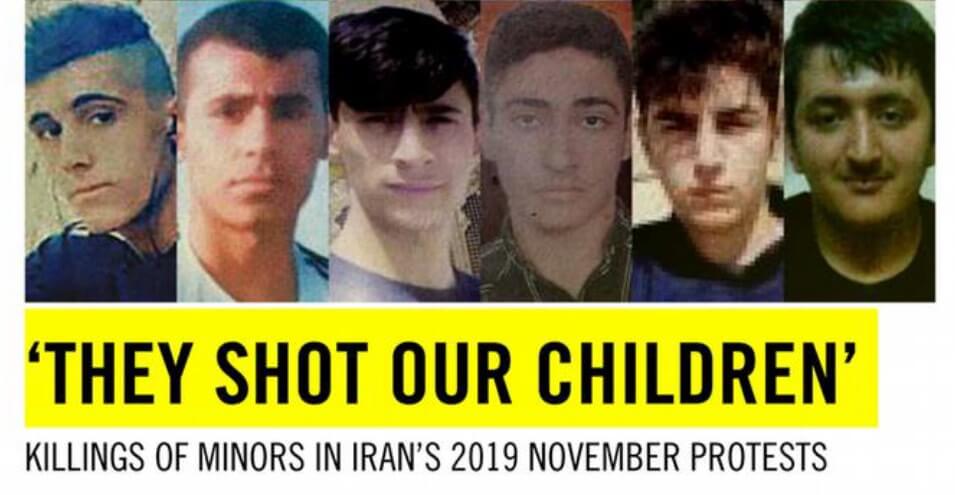
Amnesty International, continuing its investigations into the deaths during the November protests, reports the killing of 23 children by security forces and a “widespread pattern of bloody repression” in Iran. The organization has called for the prosecution of those responsible for and those who ordered this massacre.
Amnesty International in its latest report released today (March 4/Esfand 14) states that it has obtained new evidence regarding the killing of Iranian citizens during the November 1398 protests.
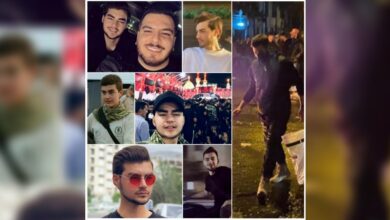
The human rights organization says that based on its new investigations, at least 23 children were killed by Iranian security forces during these protests; 22 boys and one girl.
Amnesty International writes that these children were killed “through the unlawful use of lethal force by security forces against unarmed protesters and passersby.”
According to the report, these children ranged in age between 12 and 17 years old.
Amnesty International has released detailed findings of its investigation into the killing of children during the nationwide November protests in a report entitled “They Shot Our Children.”
The human rights organization, citing “an examination of injury descriptions in death certificates and burial permits in at least 10 cases and information from reliable sources,” writes that “the children died as a result of gunshots to the head or chest, indicating that security forces fired with the intent to kill.”
According to Amnesty International’s report, in two of the ten cases examined, “horrific injuries caused by gunshot wounds” to these children were described.
“Hemorrhage,” “skull bone fragmentation,” “extensive internal bleeding,” “heart and lung rupture” are among the injuries mentioned in the death certificates.
Shooting of Child on Way Home from School
In Amnesty International’s report, among others, the names of some of the youngest victims of this crackdown are mentioned: for example, Seyyed Ali Mousavi, 12, from Ramhormoz and Amirreza Abdollahi, 13, from Shahr-e Rey, Tehran.
Amnesty International obtained the ages of these children based on images of tombstones on which birth and death dates were inscribed, or in the case of one victim, from an interview his father gave to Islamic Republic of Iran Television.
According to Amnesty International, Seyyed Ali Mousavi, the 12-year-old victim of the crackdown, was killed on November 16 during protests in the city of Ramhormoz by a gunshot to the chest. A source who provided this information to Amnesty International says Ali was shot on his way home from school. According to Amnesty International, his school was located near the Ramhormoz governorate, the site where protesters gathered.
Shot to the Heart and Nighttime Burial
Sasan Eidi-Vandi, another victim of the November killings, according to Amnesty International, was killed by a gunshot to the heart. Sasan was a resident of Yazdanshahr, near Najafabad in Isfahan Province. Based on the birth and death dates of this child written on his tombstone, Sasan was 17 years old at the time of his death.
In Amnesty International’s report, it states that Islamic Republic of Iran Television, in its reporting on this matter, described Sasan Eidi-Vandi’s death as occurring on the way home from school and as a “suspicious death,” which meant absolving Iranian security forces of responsibility in this matter.
Sources familiar with the matter told Amnesty International that Iranian security and intelligence forces forced this teenager’s family to bury him hastily and without autopsy late at night. Amnesty International views this as evidence of attempts by officials to hide the true cause of Sasan Eidi-Vandi’s death.
Call for “Prosecution of the Masterminds and Perpetrators of November Massacres”
The geographic distribution of the residences of these 23 children, which according to Amnesty International occurred in 13 cities and 6 provinces across different parts of Iran, shows the “widespread scope of that bloody crackdown.”
Philip Luther, Director of Research and Advocacy for the Middle East and North Africa at Amnesty International, spoke of the increasingly clear “horrific dimensions of the unlawful use of lethal weapons to suppress protests” in recent months. Luther considers the fact that “most child deaths occurred on the second and third days of the protests” as “further evidence of the extensive and swift massacre that security forces launched in Iran to suppress protests at any cost.”
This Amnesty International official, noting that “Iranian government officials and authorities have refrained from conducting independent, impartial and effective investigations,” deemed it “necessary for member states of the UN Human Rights Council to establish an investigative mechanism to address the killing of protesters and passersby, including children, in November.”
Luther called for “independent and impartial investigations” and “prosecution of the masterminds and perpetrators of this massacre in fair courts.”
In its previous reports, based on reports from “reliable sources,” Amnesty International has stated that the number of deaths in the nationwide November protests in Iran was more than 300 people. Based on these reports, thousands were arrested during these protests and many were “forcibly disappeared.”
While Amnesty International speaks of more than 300 deaths in the November crackdown, in a report recently published by Reuters news agency, the death toll was reported to be more than 1,500 people.
The Islamic Republic has not yet released any official statistics in this regard. Ali Rabiei, the government spokesman, recently announced that the precise number of deaths in November would be released soon. No figures have yet been announced in this regard.
Source: DW