History Testifies: Iranians Were the First Christian Worshippers

According to FCN News: They were the first religious figures to worship Jesus. The Easterners who had come from afar to find the Messiah, King of the Jews, and present their gifts on the occasion of his birthday. They brought gold, myrrh, and frankincense from their homeland for the newborn to remain as a memorial in history.
And what memory is more precious than their meeting with their Lord being preserved in the Gospel of Matthew.
In the Gospel, the visit of these three Magi with Jesus Christ is reported. This visit played a key role in the story of Jesus’s birth.
But the question of which land these three people had the honor of visiting has occupied minds for centuries, yet countless evidence suggests they were Iranian.
In the Gospel text it is mentioned that they came from the East. This East traditionally encompassed the lands of Babylon, Persia, or the Yemeni Jews.
In Byzantine paintings from 565 AD, the three Magi are also depicted in Persian clothing.
In Natal Riz Magus or the statue of the Zoroastrian Kings in Brazil, these three are mentioned by the names: Lehrasb; Jamasb and Geshtasb. Other names referenced in non-Persian languages (in Christian texts) include: Caspar; Melchior and Balthasar.
In Armenian texts, it is also stated that these three Magi are from the countries of Persia, India, and Arabia. The Magi’s promise of the birth of the King of the Jews caused Herod’s anger and fear, and led him, like Pharaoh, to order the killing of all male children. However, because Jesus and his family had fled to Egypt, they were spared from this event. In the story of Jesus’s birth, he, like Moses, comes into the world, and like Moses, his enemies seek his life while he is young.
The burial place of the Magi is not completely certain, but claims have been made about it so far.
In Marco Polo’s travel account, who visited Tehran in 1270, the tomb and shrine of these three is estimated to be in a square-shaped location in Saveh near Tehran, which is mentioned in a work by the master Iranian painter Hossein Behzad.
Marco Polo, in his Book of Millions, volume one, states: “In Persia there is a city called Saba from which the three Magi came and in this city they were also buried in three large and very beautiful tombs, side by side. And above it is also a square-shaped building that has been very well preserved. The bodies are completely intact and even their hair and beards are preserved.”
Marco Polo of Venice, who came to Iran in the thirteenth century AD as the first European Christian, wrote in his travel account that in Iran there is a city called Saba (which refers to the current city of Saveh) from which three Magi named Gaspar, Melchoir, and Balthasar arose and went to Bethlehem to worship Jesus Christ, and all three of them with beards and hair are buried in a magnificent tomb.
Marco Polo himself stated that in 1270 AD in the city of Saveh, the city’s inhabitants showed him the tomb of the three Magi who had predicted the appearance of the promised one or the Messiah.
Marco Polo conducted detailed investigations in the city regarding these three people, but no one could give him accurate information about them, except that in ancient times these three Magi were buried there (in Saveh).
The grave of these three disciples of Christ is in the village of Injil Avand, which is mistakenly called Injir Avand. While this village is named after the Bible, the holy book of Christians. And the tombs still exist. But according to oral information, the grave of these greats was opened and the bodies were sent to Germany.
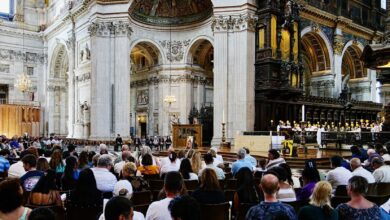
Some Christians also believe that the tomb of these three people is located in the great church of the city of Cologne, Germany.
Another tomb exists in Palestine called the Tomb of the Three Kings, which is sometimes considered the burial place of the three Magi.