Iran’s Interior Minister Rejects Claims of ‘Organization’ and ‘Foreign Source’ Behind December Protests
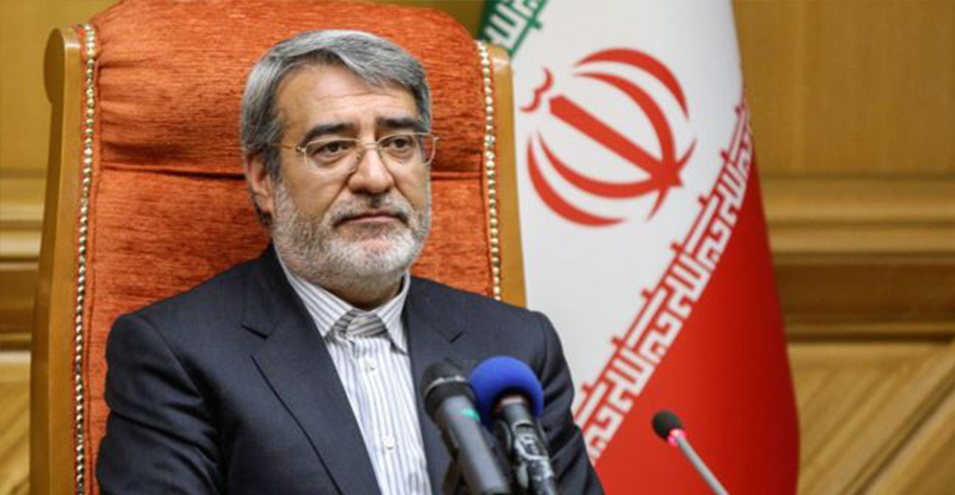
Despite statements by the Supreme Leader of the Islamic Republic and some judicial officials attributing the nationwide December protests to opposition groups outside the country, Iran’s Interior Minister acknowledged that investigations do not indicate that these protests were ‘organized’ or had foreign sources.
In an interview with the Saturday edition of Iran newspaper on March 20, Abdolreza Rahmani Fazli emphasized that “in our investigations, we have not in any way found evidence of the protests being organized; to put it more clearly, we did not reach the conclusion that a group, faction, wing, or enemies and counter-revolutionaries organized the protests from outside.”
He added, however, that “this does not mean that enemies and opponents did not exploit the protests, as they made maximum efforts in intensifying, directing, and benefiting from them.”
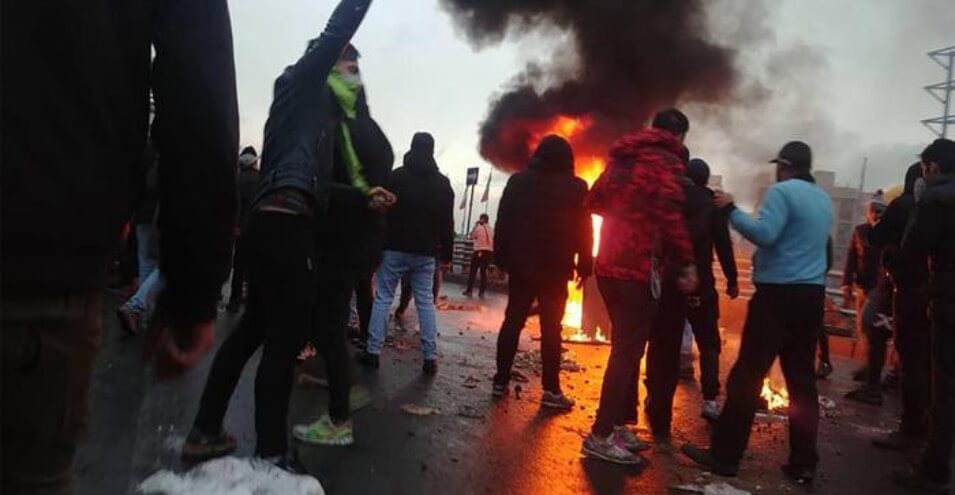
Following the recent nationwide protests in dozens of Iranian cities, judicial officials, including the nation’s chief prosecutor and Tehran’s prosecutor, along with some conservative figures, expressed the view that these protests were orchestrated and carried out under the direction of the U.S. Central Intelligence Agency and with the participation of the Mujahedin-e Khalq Organization and associates of Saddam Hussein, Iraq’s former dictator.
Ayatollah Khamenei, the Supreme Leader of the Islamic Republic, in remarks delivered on December 19, described the December nationwide protests as “fireworks,” “mischief,” and “enemy strikes,” and accused the United States, Britain, and Israel of organizing these protests. He also claimed that a “spoiled” regional state funded these gatherings.
These statements contradict the findings referenced by Iran’s Interior Minister regarding the absence of foreign sources for the protests.
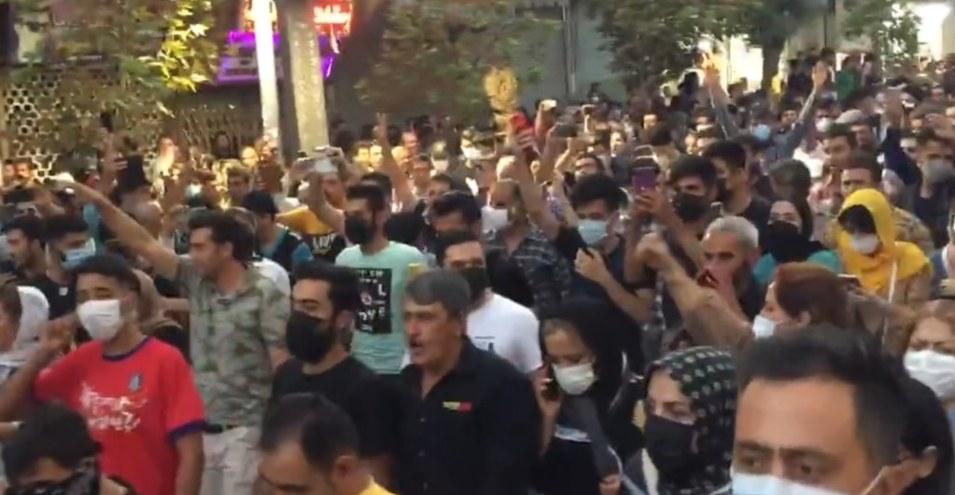
The December nationwide protests began with gatherings protesting price increases in Mashhad and several other cities in Khorasan Province, but quickly spread to other cities. The direction of protesters’ slogans shifted to slogans against the Supreme Leader, the President, and other senior officials, as well as against both major factions in power in Iran, with protesters calling for regime change.
While in some cities, particularly Qom and Mashhad, slogans supporting the Pahlavi family and opposing the Islamic Revolution of February 1979 were raised, another major slogan in these protests warned both major government factions: “Reformist, Conservative / It’s all over now.”
Meanwhile, some officials from Hassan Rouhani’s government and supporters of Ahmad Alamolhoda, the Friday Prayer Leader of Mashhad, and his associates were accused of organizing the Mashhad gathering on December 7, with figures such as the National Unity Party, among reformist parties, pointing to Ibrahim Raisi’s role as custodian of Astan Quds Razavi, and Ayatollah Ahmad Alamolhoda, Friday Prayer Leader of Mashhad, in organizing these Mashhad gatherings.
An accusation that Ahmad Alamolhoda denied.
On Sunday, Abdolreza Rahmani Fazli, referring to reports about conservative Telegram channels calling for the Mashhad gathering, said that “it was not the case that a faction came in an organized manner. Of course, there were channels affiliated with a political faction that were reposting content and images, but when we spoke with that political faction, they said it was not their doing; because if we wanted to issue a call, we would have issued it through the 50 channels we control, not just one channel.”
Earlier, Hossein Doulfattahi, Security Deputy of the Interior Minister, had acknowledged that the December nationwide protests were “beyond all political currents in the country.”
“The Level of Accumulated Dissatisfaction Had Risen and Become Widespread”
While the Supreme Leader of the Islamic Republic and his associates attributed the December protests to economic issues, Hassan Rouhani offered a different assessment, stating that protesters also had political and social demands, and that people had not achieved all their demands.
Now the Interior Minister of Hassan Rouhani’s government has also emphasized in an interview with Iran newspaper that the “main factor” in the December protests was not solely economic, and there was also “dissatisfaction” in political, security, and cultural spheres.
He also claimed that 60 percent of those arrested in these protests were employed.
Abdolreza Rahmani Fazli also stated that, contrary to what was said, depositors in financial and credit institutions “had very minimal presence in these protests.”
He clarified that the “ground” for the December protests still exists and cited generational change as one of the bases for these protests.
Mr. Rahmani Fazli stated that the reason for the rapid spread of protests to different Iranian cities was the rise in the level of “accumulated dissatisfaction” and the “generalization” of it, such that protests “were expressed wherever the opportunity arose.”
The Interior Minister of Hassan Rouhani’s government said that to “contain” these gatherings, he had “spoken with various groups, including political currents, student groups, labor movements, media, and those who could be party to the matter” to “prevent this issue from escalating.”
However, he did not specify which Islamic Republic institutions conducted these negotiations and in what framework.
Following the December protests, Iran’s Ministry of Intelligence arrested more than 100 student activist organizers and a number of labor activists.
Based on most reports, detained students were from Tehran University, and as Farid Mousavi and Mahmoud Sadeqi, Tehran representatives in parliament, reported, most arrests were described by them as “for prevention.”
This is while human rights lawyers such as Shirin Ebadi and Nasrin Sotoudeh have stated that in Iran, there is no law for arrest before a crime is committed and for preventive purposes.
Source: Radio Farda