Azadegan Oil Field; A Curse for Khuzestan
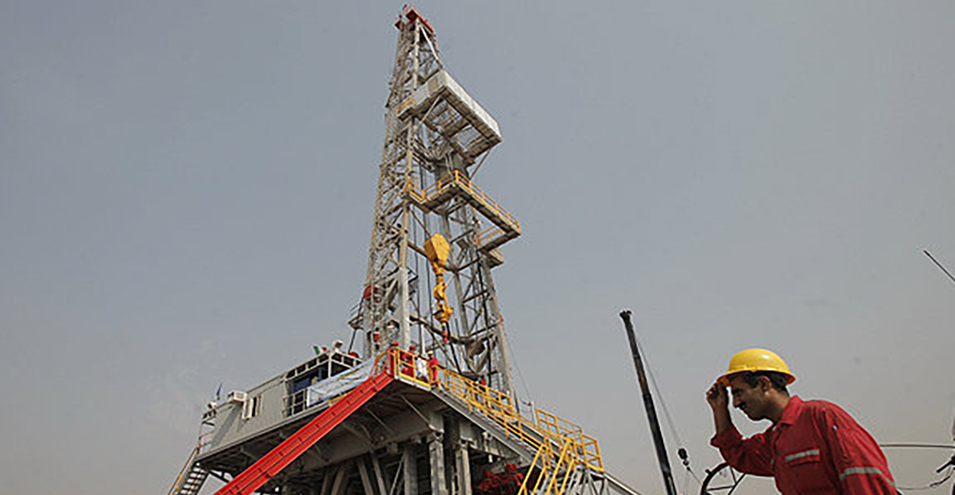
According to the Persian Christian News Network and citing Deutsche Welle Farsi, the Khorasan newspaper has published a report on the “behind the scenes” of the dust storm phenomenon in Khuzestan. The report states that the Azadegan oil field is the same as the Hawizeh Marsh that was drained for oil extraction and caused the emergence of the dust storm phenomenon.
The Azadegan oil field, which is the world’s third largest oil field after the Ghawar field in Saudi Arabia and the Burgan field in Kuwait, has now become a curse for Khuzestan’s environment.
This oil field was supposed to be a source of livelihood for the people of Khuzestan, but now it has become a curse for them. According to the Khorasan newspaper, exploration of this oil field began in 1997, and from 2010 onwards, it took on a more serious form when the work was handed over to China National Petroleum Corporation.
However, draining the Hawizeh Marsh to reach the oil beneath it started many years earlier. In fact, the Azadegan oil field is nothing but the Hawizeh Marsh being drained so that black gold can be extracted from beneath its soil.
Draining this marsh has transformed the water border between Iran and Iraq into dry land, and instead of aquatic ecosystems and vegetation in this region, only oil drilling rigs are visible.
Read more: Special page on air pollution crisis in Iran
The Khorasan newspaper report has attributed the main cause of the dust storm phenomenon in Khuzestan province to this very issue, and quoting a local resident, it states: “What we have witnessed over these eight years proves that the oil company is preventing water from entering the marsh, and at the same time is draining water from the Iraqi side to facilitate the drying of the marsh and oil extraction. As a result, the marsh dries up and what remains is soil that spreads into the air when it gets hot and the wind blows. To such an extent that in summer you can barely see a meter ahead.”
Was Hawizeh Marsh Drained Under Environmental Organization Supervision?
According to the report, the peak of the oil company’s work is in the northern Azadegan plain, where the China National Petroleum Corporation is responsible for drilling and extracting oil under a buy-back contract. Currently, 59 wells have been drilled in this area.
The Khorasan newspaper quotes an expert from Iran’s National Oil Company who requested anonymity: “Since the oil field is completely located within the marsh and the water depth of the marsh does not reach four meters even at its deepest points, it is not financially cost-effective to install drilling rigs for oil extraction. The most economical option is drying it out, and we can apply mulch to the surrounding lands after draining the marsh water if the environmental protection organization requests it, though at our own expense.”
This expert emphasized that the drying of the Hawizeh Marsh was carried out with the supervision and approval of the environmental organization.
Masoumeh Ebtekar, head of the Environmental Protection Organization, stressed at her press conference in Ahvaz on Tuesday, 28 Bahman (February 17), that the drying of the Hawizeh Marsh took place during the previous administration. According to Shargh newspaper, she stated: “The Hawizeh incident was contrary to environmental assessment and happened in the previous government, which the eleventh administration addressed and tasked the Ministry of Oil with bringing water to all parts of the marsh, and according to the latest information I have, water is being brought in.”
However, the Khorasan newspaper’s correspondent, who has closely observed the area, writes: “Under these circumstances, the promise of the head of the Environmental Protection Organization regarding re-watering 140,000 hectares of Hawizeh lands within the next year seems to be nothing but a promise, and it is clear to anyone who has witnessed this national disaster up close that Hawizeh Marsh will never return to life.”
Dam Building in Turkey, Another Cause of Dust Storms
Another section of the Khorasan newspaper report refers to a project called the Anatolia Project in Turkey, under which more than 22 dams and 19 hydroelectric schemes will be created in the Tigris and Euphrates watershed.
According to the report, 21 percent of the irrigation projects and 74 percent of the hydroelectric projects of the Anatolia Project have so far become operational, which has caused the region’s marshes to dry up one after another.
To prevent the drying of these marshes, Turkey must pay the water rights of the downstream marshes of the Tigris and Euphrates, and on the other hand, the countries of Iraq, Syria, Saudi Arabia, and Jordan must apply mulch to the dust generation centers within their countries.
Masoumeh Ebtekar, head of Iran’s Environmental Protection Organization, told Iran’s Khuzestan provincial radio and television that all neighboring countries have been asked to develop a joint plan to combat the dust storm phenomenon.
She added: “For some time, we have been making preparations to establish a regional fund to combat dust storms with the United Nations, and this organization has been very helpful in this regard, but unfortunately some neighboring countries have not cooperated sufficiently with this fund.”
Parliament Opposes Budget to Combat Dust Storms
In the struggle to find ways to combat the dust storm phenomenon in Khuzestan province, the Islamic Consultative Assembly opposed allocating 60 billion tomans from the revenue generated by pollution charges to the Environmental Organization.
According to IRNA, this plan, which was proposed by Mohammad Reza Tabesh, faced opposition from a group of representatives including Elias Nadaran.
Nadaran stated his concern that the Environmental Organization might use this budget for political purposes rather than combating dust storms.
The Tehran representative accused Masoumeh Ebtekar of politicization and said that if she were a vice president of the administration, her influence would be greater than her current position as head of the Environmental Organization.
Masoumeh Ebtekar recently announced: “It is interesting to know that some of these same representatives who are now fiercely criticizing the Environmental Organization completely deleted all the allocations provided in the 2015 budget to combat the dust storm phenomenon, which had been included by the Environmental Organization, exactly three days before the first dust storm wave occurred during a parliament reconciliation commission session, and transferred it to one of the expenditures they had in mind.”
Her remarks immediately faced objections from representatives who considered them contrary to facts. Elias Nadaran, however, said that even if this budget was deleted, it relates to 2015 and has nothing to do with the dust storm phenomenon in the current year.