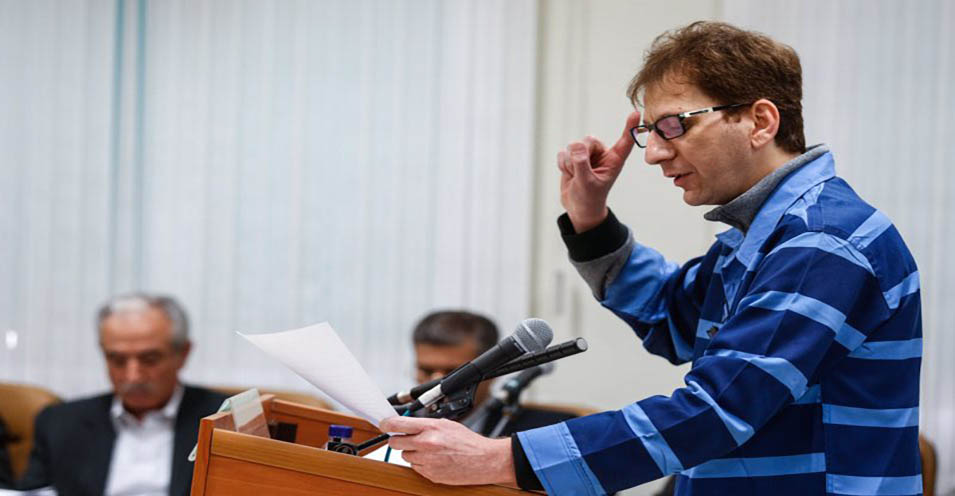
A member of the Zanjani case follow-up committee in parliament says there are those waiting for Zanjani’s quick execution so the case will be closed and the danger will pass from them. Zanjani played a role during Ahmadinejad’s presidency in circumventing sanctions, selling oil, and purchasing nuclear project components.
Babak Zanjani’s death sentence received extensive coverage in international media. Such widespread coverage on a global scale has not been seen so far regarding other economic corrupt officials of the Islamic Republic, whose numbers are admittedly not few.
The main reason for such extensive coverage in global media is the relationship that existed between Babak Zanjani and the government apparatus during the presidency of Mahmoud Ahmadinejad and also possibly with the Islamic Revolutionary Guards Corps during the time of severe international sanctions.
Read more: “Unconventional Economic Cooperation Between Zanjani and Mortazavi”
A person whom Ahmadinejad, during the sanctions, turned into the intermediary for selling Iran’s oil in the global market, is today sentenced to death, without the government officials behind the scenes of Babak Zanjani’s activities being exposed.
Babak Zanjani played a key role in circumventing sanctions in selling oil on the international market, buying and selling and transferring currency and gold in and out of the country, and purchasing sensitive equipment for Iran’s nuclear program.
Zanjani was thus able to benefit the sovereignty of the Islamic Republic during the chaos of the Ahmadinejad era while accumulating vast capital and billions for himself and hoarding it abroad.
Zanjani’s execution without identifying the officials behind the scenes is useless
Hossein Dahdashti, a member of the Zanjani case follow-up committee in parliament, in a conversation with the “Tabnnak” website in this regard, says: “Babak Zanjani’s execution is the minimum punishment that can be applied to him (…) but the officials behind the scenes and his accomplices, most of whom have been in the government system, will not be identified.”
Read more: Increase of 22 Billion Dollar Volume of Financial Corruption Case in Iran
This parliamentarian adds that there are those who want Zanjani’s death so that the case will be closed and the danger will pass from them. He considers this verdict as a serious warning for Zanjani to understand the serious danger threatening him and “speak his untold stories.”
Dahdashti says that Zanjani has not been able to convince the court throughout these years and has only given “false promises.”
This parliamentarian expressed confidence that Zanjani raised discussions in his interrogations and made confessions about them.
Read more: Billion-Dollar Payments to Babak Zanjani Signed by Several Ahmadinejad Ministers
According to this member of the Zanjani case follow-up committee: “Babak Zanjani’s execution will not cure an illness; our investigations show that only 15 to 20 percent of Zanjani’s debts are within Iran and the bulk of his capital is outside Iran, some of which have been monitored and their trace found and referred to the judicial system, but if this person is executed, none of these assets will return to the country or returning them will be accompanied by many difficulties.”
Who is the third defendant sentenced to death?
On Sunday, March 6, Gholamhossein Mohseni Ejei, spokesperson for the judiciary, while announcing the death sentence verdict for Babak Zanjani, also named the third defendant in the Zanjani case, who has also been sentenced to death.
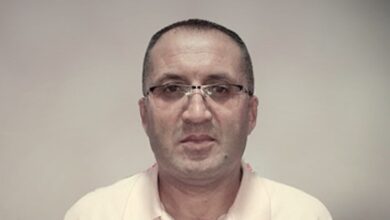
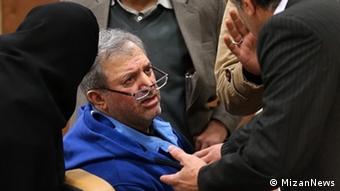 Hamid Falah Heravi, third defendant in the largest oil corruption case
According to khabargozaran, the third defendant, Hamid Falah Heravi, introduced himself as born in 1340 (1961), retired, holding a doctorate in industrial engineering, married with three children, with Iranian nationality, with no criminal record, and residing in Tehran.
Falah Heravi’s charges are similar to those of the two other defendants in this largest oil corruption case, namely Babak Zanjani and Mehdi Shams.
Based on the indictment, the charges against the third defendant are “spreading corruption on earth through participation in disruption with knowledge of striking at the Islamic Republic system, willful participation, participation in committing crimes related to forgery, participation in fraud of 1.2 billion euros from HK Company using forgery, participation in social security fraud, as well as participation in money laundering.”
Read more: Secret List Leaked: 70 Billion Dollar Debt of Ahmadinejad Affiliates Confirmed
Khabargozaran reports that over twenty-six court sessions, the charges in the oil corruption case were heard, and Gholamhossein Mohseni Ejei at the ninety-third press briefing with media representatives announced the issuance of the verdict in the Babak Zanjani case and two other defendants in the oil corruption case in the primary court. Ejei said that “the primary court identified these three defendants as corrupt on earth and sentenced them to death.”