Discovery of Ancient Quran Traced Back to Pre-Muhammad Era
With the validation of this hypothesis, this historical discovery could confront Islamic history with a serious challenge.
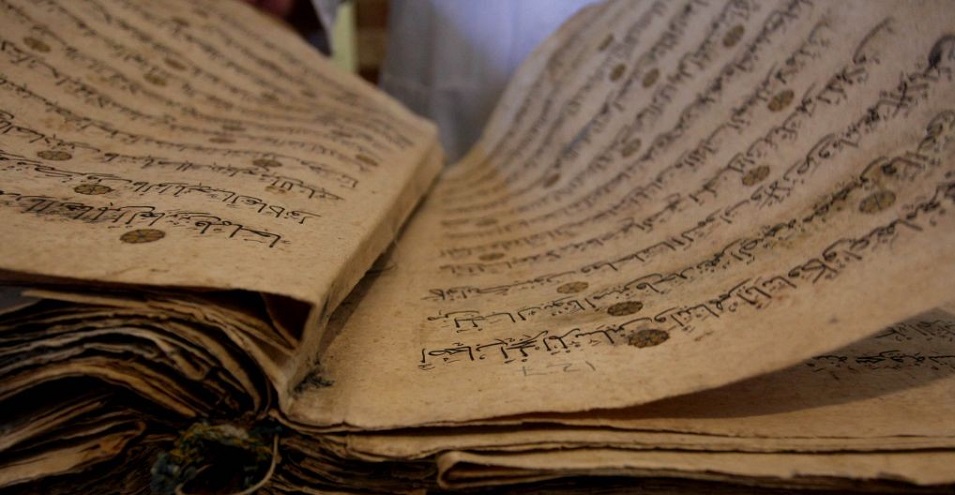
Previously, English researchers announced the discovery of pages from a very ancient Quran manuscript, likely dating to the early seventh century CE and the early Islamic period, at the University of Birmingham in England. This is while many historical experts believe the antiquity of this Quran dates back to the pre-Muhammad era.
Scientific dating estimates the age of this Quran between 568 CE and 645 CE, while historical accounts estimate Muhammad’s lifespan between 570 and 632 CE, which means this Quran was written before Muhammad’s lifetime.
Tom Holland, a historian, told the “Sunday Times” newspaper that this historical discovery will change many historical perspectives about Islam. Holland further states that the historical belief that all aspects of Muhammad’s life and his early followers are well-known is a mistaken belief.
Despite this historical discovery, some Muslim scholars reject these claims, considering them merely hypotheses. However, it appears that with the validation of this hypothesis, significant portions of the Quran represent the political views of Muhammad’s early followers.
According to Dr. Kate Esmail, a researcher of Islamic history and the Quran, this historical investigation could confront Islamic history with a serious challenge.
-In this regard: Is the Quran a trans-historical text or a time-bound and critiqued one?
It is worth noting that English researchers announced the discovery of pages from a very ancient Quran manuscript, likely dating to the early seventh century CE and the early Islamic period, at the University of Birmingham in England. Reports indicate these were pages from an ancient Quran written in Arabic script (Hijazi script), probably inscribed on goat or sheep skin.
According to these reports, these Quranic pages were stored on the shelves of the Birmingham University library for over a century.
According to news agency reports, these documents are said to be part of the “Mingana Collection,” which contains more than three thousand documents and manuscripts belonging to the Middle Eastern region, compiled by ‘Alphonse Mingana,’ a Chaldean priest born in Iraq, in the 1920s CE, transferred to Britain, and eventually placed in the custody of the University of Birmingham.