How Revolution Takes Place
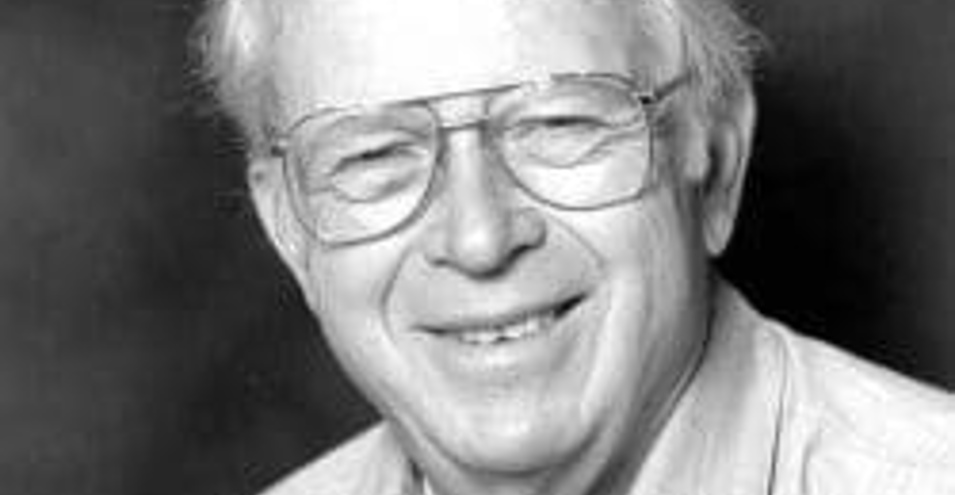
Dr. Neil Smelser – a professor of contemporary sociology and renowned American researcher – presented a theory about revolution in his book “Theory of Collective Behavior,” which is considered today as the most authoritative global perspective on revolution. Dr. Neil’s theory is taught in prestigious universities worldwide. Dr. Smelser believes that revolution is the most severe form of social transformation in a society.
Dr. Neil Smelser used the concept of added value to describe how collective behaviors occur.
He believes that if six social elements come together, merely by their combination, a collective behavior is added to that society; in this regard, one can refer to the combination of air, gasoline, and spark that produces an explosion.
Revolution is one of those collective behaviors that results from the combination of these six social elements; however, according to Dr. Neil Smelser, these six social elements are as follows:
- Structural conduciveness for a social reaction: This means the structure of a society must be such that conditions for protest exist. For example, one can point to racial discrimination, gender discrimination, excessive class differences, or any other important problem in society that provides a reason for social reaction to occur.
- Structural strain: There must be pressure on society stemming from the structure of the social system. That is, the existence of discrimination and class differences is not enough; rather, discrimination and differences must create pressure on people. For example, poverty, excessive inflation, unemployment, injustice, and government corruption can be cited, and people feel this pressure in their daily lives. Society reaches the understanding that rulers either lack the ability or do not want to take appropriate action to improve the situation.
- Generalized belief, a public conviction: People must know where the problem lies and what its solution is! For example: the rulers’ misguided insistence on having nuclear power, which has brought the country to poverty. The solution to this issue is clear and known to all. Or for instance, the problem of religious laws accompanied by force, whipping, and imprisonment, whose solution is again clear and known. People must believe in these pressures and attribute the causes of these pressures to the rulers’ social system. The general public must reach mutual understanding to eliminate those causes. Today in Iran, these factors have strongly reached a point where everything comes together at one junction.
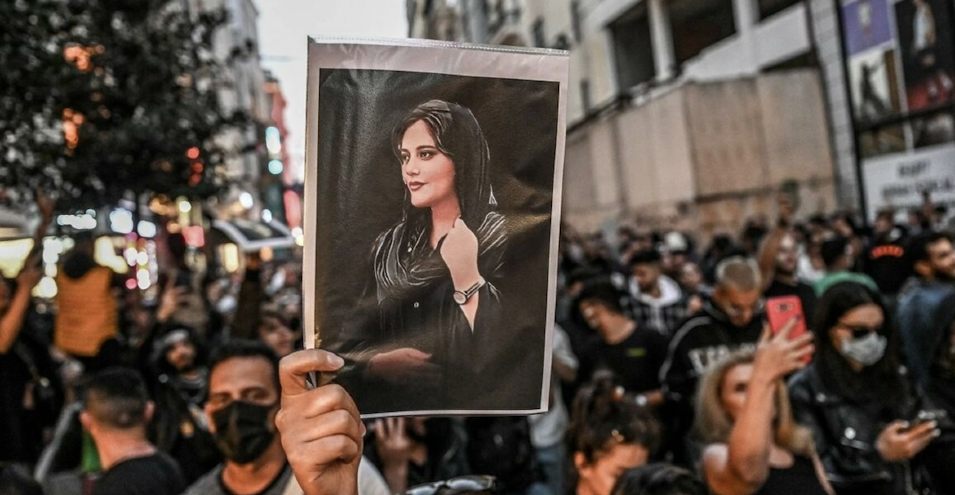
- Precipitating factors: Events must occur that serve as a spark to ignite the elements that have come together. In the Tunisian Arab Spring uprising in 2010-2011, a young street vendor caused an uprising of people, and the result of that uprising was a change of government in Tunisia. In fact, all factors were present, and that tragic self-immolation served as the spark of explosion for the Tunisian people. Today in Iran, the tragic death of a young girl named Mahsa Amini has become the spark of explosion for the people.
- Mobilization for action: This means people are prepared and organized to act and fuel protests. Today, dissemination of information through the internet happens very quickly, and in Iran every profession independently shapes activities. For example, they announce that the teachers’ union council, university professors, truck drivers, or bazaar merchants have joined the strike. That is, every profession organizes itself in accordance with its rights and makes the decision to engage in collective protest.
- Operation or failure of social control: This means the rulers’ reaction. How rulers confront the people’s demands, so that a movement or revolution does not occur. Of course, this important matter depends on the behavior of the rulers.
At this stage, democratic governments either back down before the people or make reforms and remove those responsible; they even offer compensation, and ultimately the protests subside.
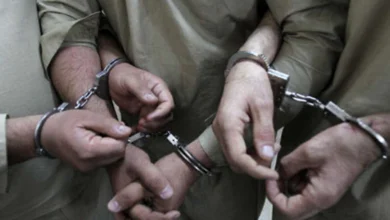
However, dictatorial governments at this stage think about suppressing people. Of course, even if governments succeed in suppressing their peoples, we must understand that all these factors remain in society, and oppression and suppression will also be added to these stages. Similarly, we wait for the next spark, which is far more severe and greater. That is, by suppressing social and civil problems, they only remain silent for a while and become more prepared for subsequent stages. In the second scenario, rulers fail to silence people’s protests, and after some time, the suppression forces become tired and demoralized, and consequently vulnerable. Differences and divisions emerge among themselves because it is a reality that suppression forces come from the people themselves and on the other hand are under the pressure of society’s public opinion. The collapse of the repressive forces leads to the inability of authority to control power, causes an abrupt transformation of the social system, and consequently leads to the triumph of revolution.
In hope of the victory of the Iranian people
Analytical article written by: Reverend Yohanna Maro