The Wounds Inflicted by the Islamic Republic on Society Can Be Healed Through Awareness and Justice Seeking; Exclusive Interview with Atena Daemi
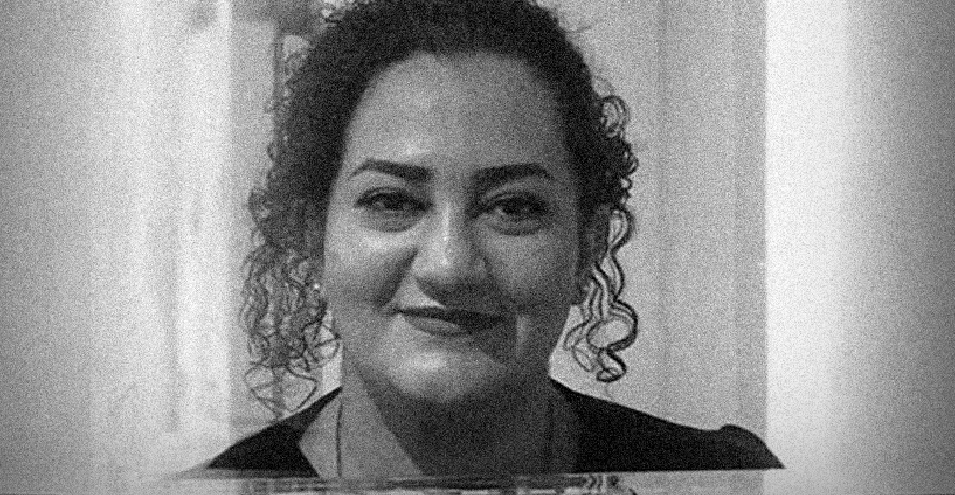
Atena Daemi is among civil activists in Iran who spent many years during the 2010s imprisoned for her human rights activities, including opposing executions, defending Baha’is’ right to education, and condemning mass executions of the 1980s. This civil activist spent recent years serving her five-year prison sentence without a single day of leave until she was transferred to Lakan Prison in Rasht on March 17, 2022.
Ms. Daemi was released from prison in February 2022. After her release, she began documenting narratives from her time in prison and the problems and suffering of lesser-known prisoners. Issues that, in her view, demonstrate fundamental crises in society and result from various forms of discrimination such as child marriage and the promotion of patriarchal attitudes in society.
We spoke with Atena Daemi about her observations and research regarding the conditions of female prisoners and existing crises in prisons, and discussed the importance of narrating these hardships and problems.
You are among civil activists belonging to the generation of the 1980s and 1990s. We would like to start this conversation by discussing what aspects of social life during your generation’s time you consider the most important reasons for your orientation toward civil activism.
The most important thing that led me toward these activities in life was the issue of “restriction.” Restrictions that existed and exist for women and girls, whether in the workplace or at home. When I was 14-15 years old, I faced issues that at that age I didn’t know fell into the categories of human rights and women’s rights. But for me, seeing these issues and restrictions was abnormal, and all of this led me to enter the path of civil activism. Later, when I became more deeply involved in these movements, I understood that, for example, if I was previously opposed at home and I insisted on my natural rights, that too was in a way activism for my rights as a woman. For this reason, I can say that the main reason for me and many others who enter this path and voice their opposition and resistance to discrimination is actually these “restrictions.” Restrictions that play an important role in all our lives in the form of religion, tradition, or Islamic Republic laws.
When we talk about restriction, one might think it’s an individual issue related to a specific situation. But it seems the issue of restriction in Iranian women’s society is universal and systematic. Please explain this a bit.
When you are a woman in social environments and outside the home, like at school and in the workplace, you see that these restrictions are not individual at all—they are actually universal and related to all women in society. The things I witnessed myself, for example, I heard from my classmates at school that some of them were forced to marry at a young age while still in high school for various reasons, faced difficulties in continuing their education, or left their studies incomplete. All of these things I saw actually showed collective pain and problems, not individual ones. It bothered all of us. On the other hand, there was the issue of prejudices that existed in families. I grew up in an area in southern Tehran, and for example, our school had a very religious atmosphere, and many things like wearing a hijab or praying were mandatory there. Seeing these things showed me that restrictions and discrimination exist not just for me but for a much wider group of girls. Later, in the workplace, I faced other forms of this discrimination and restriction against women that in different ways demonstrated this widespread and general discrimination and inequality against women; the gender-biased attitudes and harassment and discrimination that exist in the workplace made me increasingly realize that the issue of restrictions and discrimination is actually a universal problem, not just a personal one. In fact, understanding how pervasive and widespread discrimination and inequality against women’s society is. Seeing various forms of discrimination and inequality against women’s society, over time made this question more serious: why should this level of discrimination and injustice be applied against women’s society in Iran? Why must women be suppressed to this extent and in all spheres and in different ways? We see that in some cases even some men in society have problems with this view against women, but because it is so-called “established” in society, they proceed accordingly. These issues that I saw at a younger age at home and later in society made me increasingly view these problems as universal and comprehensive rather than individual issues, and to take action to change them and stand against this discrimination. This made me want to read more and research the reasons for this discrimination and inequality and women’s rights, and to enter the realm of civil activism. Later, in prison and observing many problems, I understood how much discrimination and inequality in women’s society has catastrophic consequences.
You, along with many of your peers (especially women activists and women’s rights advocates) during the 2010s, faced severe security and judicial crackdowns solely because of your civil activities. The unfair trial process, file fabrication, issuance of heavy sentences, and implementation of punishments such as prison transfer are just glimpses of the discriminatory cases seen in many women activists’ cases. In your view, why does the government take such an approach toward women political and civil activists?
First, I must say that women’s struggles have a long, century-long history in Iran, and long before the Islamic Republic, many women in Iran struggled to achieve their rights. Our generation is certainly a continuation of those same struggles and efforts during which many women were active. The goal of the Islamic Republic’s policies in enacting and implementing discriminatory and unequal laws and suppression and promoting patriarchal and gendered views against women is to force women’s society into “silence.” In the government’s view, it is natural that men constantly protest and engage in political activity and enter the political sphere, but the government does not accept that women do the same. In fact, the government’s goal is for women to be at home, to be used as cheap labor, and in reality to provide services to men’s society. Look, the reality is that all these issues such as unfair trials, heavy judicial sentences, and others exist for male civil and political activists too. I have always said that in many cases there is discrimination and inequality against women, and people protest it all their lives, but interestingly, there is not much discrimination in the issuance of judicial sentences. For example, in other places like the workplace, the issue of being a woman or even being a mother can cause discrimination and inequality against women to exist, but in issuing judicial sentences they never consider these things—for example, that a female defendant is a mother of several children, and they issue the same sentence for a female defendant as they would for a male defendant.
Regarding the severity of this security approach toward us women in prison, there were several reasons; one was that they believed that by intensifying security and judicial pressures, imprisoned women would stop their activities and the government would succeed in continuing the policy of silencing women. When they saw this wasn’t happening, they intensified the severity of their treatment. This is why it appears that security and judicial pressure on female prisoners is greater than on men. For example, in court, a judge might speak to a male defendant in an insulting and harsh tone, and the defendant might respond in some way and react to such treatment, but the judicial system thinks that treating a female defendant the same way will cause her to stop speaking and become obedient and frightened, and thus the government can again succeed in silencing women and instilling fear in women. But when it failed to do so, its behavior became harsher. In fact, this happened to us in prison. That is, when they treated us this way, they feared that they saw women increasingly entering political and civil spheres and not sitting silently. The government doesn’t want this; all these years they tried with various forms of suppression to silence women, and now they cannot tolerate women’s boldness, and this causes them to take actions against women that are more severe than treatments toward men. We saw that all the punishments applied to us during our detention, such as prison transfer, were all in the direction of this suppression against women. In fact, I must say that we women are not only constantly suppressed in society, but we are also under this suppression in prison. And when we protest these oppressions, we face more pressure and punishment.
It seems that collective activities of women in prison caused the government to treat imprisoned women more severely and strictly. Can you explain this perspective of the government a bit?
What I observed throughout these years is that women who entered the realm of civil activities are strongly oriented toward practical work and activism, not just theorizing and theoretical discussions. This is something that is by no means pleasing to the Islamic Republic. On the other hand, because we women never had the opportunity to flourish in society and were now forced to spend our lives inside prison, we were determined to continue our activities even in prison. Our approach was that we have freedom of speech, we have freedom of thought, and we must defend our rights, or that in light of certain events happening in the country, we felt it was our duty to react and take action. For example, on the occasion of various events (such as November 2019), we held ceremonies and held classes in the prison ward itself, and in this way we tried to maintain that dynamism and learn from each other. For instance, one of our inmates was a physician, and we held sessions and classes so we could benefit from each other’s experiences and knowledge. Well, in response, prison and security officials could not tolerate such an atmosphere. Although there were similar behaviors in the men’s ward, they assumed that with severe security treatment of female prisoners, they could suppress them more easily. Despite these pressures and oppressions in prison, the activities of prisoners continued, whether by writing statements or holding ceremonies and gatherings within the prison, and officials could not completely control these conditions, especially in recent times when the number of female prisoners increased due to events of 2017 and November 2019, and new prisoners from various classes of society came to prison, and the government feared that these women would learn new things about civil activities and their rights in prison and would certainly participate in our activities in prison, and this situation was not at all pleasing to prison officials. This had caused stricter measures and pressures on prisoners in recent times and before many of us were transferred, to be greater than before. For example, we held a ceremony for the anniversary of November 2019 in prison and some prisoners spoke at that ceremony. All prisoners who participated in the ceremony, both speakers and participants, were called before the prison inspector. They were all threatened that they shouldn’t attend such ceremonies or associate with such prisoners. In recent times, the situation had reached the point where a newcomer would arrive and if she merely sat next to us, ate with us, read books with us, or spoke with us, the Ministry of Intelligence liaison would quickly contact the prison officer, and they would summon the prisoner to the prison office and threaten her over the phone asking why she ate with such-and-such a prisoner. We even had a case where a prisoner’s file was with the Sepah Intelligence, and when the Ministry of Intelligence liaison called and threatened her, the female prisoner said that my file is not your responsibility at all, and the intelligence officer responded saying that in any case, if you even receive a sentence, “conditional release” is in our hands, and “approval for furlough” is in our hands, and we are warning you from now on. In fact, prison officials tried by repeating false claims about us (such as saying these women receive support from outside the country or are affiliated with political factions and similar claims) to frighten other prisoners from getting close to us. In fact, they were afraid of us prisoners gathering together and learning from each other and benefiting from each other’s experiences, and at any cost wanted to prevent such an atmosphere from forming. Once when one of the prisoners had a questioning session, before she went we talked, and I explained to her about points I had learned regarding prisoner rights during questioning and matters that I thought would help her during questioning and how to respond to the questioner’s questions and possible behaviors. When that prisoner returned from questioning, she told me that the questioner directly asked her whether you learned these things from so-and-so (Atena Daemi)? Treatments of this kind, along with other behaviors of prison officials such as creating divisions and sowing discord among prisoners, were all aimed at breaking and destroying such friendly gatherings and circles. Finally, when they saw they were not succeeding and despite all the pressures, harassment, threats, and torture, such friendly gatherings among prisoners were becoming larger and more solid, they used their last resort and transferred many of us prisoners to different prisons across the country to disperse the nucleus that had formed in the women’s ward. Of course, I must say that my transfer to other prisons was in a way a good experience for me, in that it caused my broader perspective on the issues and concerns of imprisoned women in various aspects and forms to expand, and I was able to meet more imprisoned women and try to make them aware of their rights.
One of the punishments you faced during your detention was this very punishment of prison transfer. A matter that perhaps many people do not have a complete understanding of its consequences. Tell us a bit about this.
The issue of prison transfer is a very important matter, and I believe much more should be said about it. Look, in the minds of many, the issue has settled as: what difference does it make to a person in detention which prison they are in? But prison transfer brings suffering for many—for the prisoner themselves, for their family, and for friends and cellmates they lived with for a time, and with the prisoner’s transfer, their cellmate left behind in the first prison has many sufferings and hardships. Look, even for me, who for example spent a year in one prison, being suddenly transferred to a new space with new people was very difficult. Now imagine a prisoner who has been in one environment for, say, 12 years and with great difficulty managed to adapt to those conditions and found close friends, suddenly being transferred to another prison. These are compounded sufferings that transfer brings. In fact, the consequences of prison transfer in three aspects should be discussed more: the family’s hardships, the difficulties of the transferred prisoner themselves, and also the suffering of the transferred person’s friends left behind in the first prison.
What was your personal experience of prison transfer? What problems did it create for you and your family?
I experienced prison transfer in two periods in prison. One was in 2017 when I was transferred to Qarchak Prison without prior notice. At that time, prison officials falsely said that a case specialist had come and wanted to see us, so we (myself and Golrokh Iraee) resisted and refused to go, and then finally prison officers came into the ward and “arrested” us and “handcuffed” us and took us directly to the intelligence section in the prison and said a questioner wants to talk to you, and after being detained there for four hours, we got into a vehicle that they said would take us to the prosecutor’s office, while going to the prosecutor’s building required no vehicle due to proximity, and then we realized we were being transferred to Qarchak Prison. We had nothing with us—neither personal items nor medicines, nor clothes, nor books, nor bank cards, nor phone cards, nothing. Well, this was a very shocking and bad situation for us. It raised many questions and reasons in our minds; why did we have to be transferred in this way? Why lie? Why was no order and no reason presented? After that, we entered Qarchak Prison, a space that simultaneously created two perceptions in our minds: what we thought was bad about this prison turned out to be good in reality, and what we thought was good turned out to be bad. That is, our preconception about prisoners of serious crimes and the harsh prison environment completely changed. When we spoke with these prisoners, we understood that even the prisoner who had committed the most violent crimes had how much humanity within them that could flourish in appropriate conditions and settings, and we could rely on that. When you enter a new prison, there is a set of problems and issues that you must think about and basically plan for—you need to acquire new items, find new friends. And what the prison’s shortcomings are, what you should protest or what planning you had for improving conditions. All of this, alongside the important issue that you must plan how to explain this new situation to your family and in a way prepare them to cope with these new circumstances. In any case, the negative mentality we had about the prison (Qarchak) existed hundreds of times over in the minds of families, and their concerns were far greater than ours who were inside the prison. In any case, we were in the prison and had to endure and adapt to conditions, but families have no conception of what’s inside the prison, and this added to their concerns. In fact, we had to explain all these conditions to our families so that some of these troubling concerns for them would diminish. All of this alongside the difficulty of traveling distances for families to visit the prison and changing prison guards and officials is also multiplied suffering for families.
The second time I was transferred in prison was four days before the end of 1399 (March 2021) when I was transferred to Lakan Prison in Rasht. The difference between this transfer and the previous one was that for some time before and when transfers in prison had begun, I was sure that my turn would come too and therefore had packed my things and was prepared. Besides, the prison officials themselves informed us that I and several others would be transferred. In any case, we were waiting, though this uncertainty was extremely bothersome to us. When we talk about the suffering of those left behind in prison, it became clear at exactly these times. I was among the last ones transferred, and every moment that passed while we were waiting for the transfer, you could see this suffering among those left behind. In fact, six months had passed since the transfer of some prisoners had begun, and this uncertainty about the timing of the transfer and its consequences, such as saying goodbye multiple times to those being transferred, was very painful for those left behind and friends of the transferred prisoner. In any case, they had to maintain their morale in these conditions and had to fill the void left by those who left. These were actually the sufferings that fell on those left behind and the transferred prisoner’s friend, and I witnessed it firsthand. Regarding myself, it was like this: in the morning they informed me that I would be transferred to another prison, but they wouldn’t say which prison. No matter how much I asked what difference does it make to tell me where I’m being transferred, they said nothing, and this secretive and security situation was very bothersome. When the transfers had begun and because many of these transfers had been done with lies and deception by officials and we had protested against it, we told the officials that we don’t trust you and won’t leave the ward for transfer. Many had been taken out of the ward under the pretext of meeting with a lawyer or going to health services or the prosecutor, and ultimately it was revealed they had been transferred to another prison. Our protests against this process caused prison officials to inform me in the morning of the transfer day, and therefore I had the opportunity to hand over some of my items to my family and collect the things I could bring with me. Officials didn’t say anything until the prison gate about where I would be transferred until they said I would be going “north.” That is, they still didn’t specify which province, Gilan or Mazandaran? In fact, it was on the road that I realized the destination was Lakan Prison in Rasht. When I entered the prison, I had no preconception about it, and again I was in a situation where I had to build my understanding and become familiar with conditions and the environment and adapt, and how to once again explain this situation to my family, and this way of issues and problems that had again put me in the position of “starting from zero.” On the other hand, staying for long periods in prison gradually makes the situation exhausting and difficult for the imprisoned person and imposes multiplied exhaustion on those who have been imprisoned for years. Nevertheless, I had to think and plan again about the smallest issues—from when and where I could read books and every other small matter. One problem we had was that we had collected many of our items from the previous prison and handed them to prison officials to be given to us in the destination prison, but they wouldn’t give us those items in the destination prison and would say you need to acquire these items again. This behavior created many problems and essentially engaged us in a war of attrition with prison officials just to get our own items back. For example, they wouldn’t return our books. On the other hand, there was the issue of becoming familiar with new prisoners; I didn’t know anyone and had to judge people’s personalities and temperaments from their behavior and interactions to prepare conditions for socializing and speaking with prisoners. Well, all of this had its own particular difficulties, but in that I entered a new space and faced issues that were always my concern, it was a very fresh experience. When you’re in a political ward, you’re in contact and associate with prisoners who are aware of their rights and existing conditions and are usually people who consciously protested existing discrimination and were imprisoned, but in general prisons the situation is completely different. There are many people there who fell into prison out of ignorance. The experience of detention alongside these prisoners actually caused my perspective on their issues to deepen, and through the experience I had as a political prisoner, we tried with the help of prisoners to remedy many of the prison’s deficiencies through pressure on prison officials. In fact, the experience at Lakan Prison was important in that I had the opportunity to listen to, analyze, and think about the issues and problems of a large group of women, and I was in a way confronted with the issues and hidden layers of discrimination in the lives of many women, which was an important opportunity for me. Even if we want to look at the political dimension of the matter, we see that during this time many prisoners became aware of the country’s political issues and events and the atmosphere of protest and opposition, and it became a serious issue for them and they followed up on it. You could see this even in that small space. For example, if until then when a prison official came and spoke and left, now many prisoners had gained the courage to ask questions after the officials’ speeches and state their demands and protest against behaviors and problems, and seeing these things was very pleasing for me. Although it was absolutely not pleasing for prison officials! In fact, the Islamic Republic’s decision to transfer female political prisoners from Evin to other prisons was because they wanted to break and destroy that nucleus that was forming among female political prisoners in Evin, but in practice that nucleus formed in every prison where prisoners were transferred!
One of your main areas of activity has been children’s and women’s rights, and this continues after your release. One of the main such cases has been the issue of child marriage. What is your personal experience from your prison time regarding prisoners who were victims of child marriage?
We were very restricted in Qarchak Prison and were not allowed to associate much with other prisoners and speak with them. The 48 days we were kept in quarantine in a completely separate room, and anyone who wanted to speak with us was quickly threatened. After that, we were forcibly taken to a ward known as the “Mothers’ Ward,” which is now the security ward of Qarchak Prison. There were only mothers and their children there, or pregnant mothers. We didn’t have much opportunity to, for example, investigate the issue of child marriage. Of course, in Qarchak Prison I conducted detailed investigations into the use of crystal methamphetamine among imprisoned women through conversations with prisoners. But in Lakan Prison, the situation was different. Well, the space was small and prison officials basically didn’t have the ability to separate prisoners from each other, and I myself tried to maintain contact with prisoners in whatever way. Therefore, I had the opportunity to sit and talk with prisoners. Prisoners who each for different reasons—from murder and theft to, so to speak, unlawful relations according to the government—had fallen into prison. I spoke with all of them, and I asked a series of specific questions that I had prepared from all prisoners, and what emerged from talking to these women was that all of these ladies were victims of child marriage. That is, it was this issue of child marriage that had ultimately caused them to commit crimes. In Lakan Prison, 90 percent of the female prisoners were divorced or had no possibility of divorce and were in prison because of a relationship with someone other than their husband. Or those who had no possibility of divorce and were in a relationship with another person and killed their husband for this reason and ended up in prison. In any case, all of these were, in my opinion, victims of child marriage. It was very strange to me that in that small Lakan Prison, which had a maximum capacity of 120 people when I was there, the number of prisoners convicted of murder was very large. This caused me to pay more attention and investigate why in such a small city there would be so many murders. The charge against most of them was spousal murder, and when I spoke with each of them, I tried to talk about the hidden and important layers of their lives. For example, what was life like in their father’s home, or how did they respond when they first menstruated. Through these conversations, I actually found that the root of the current situation of many of these prisoners lay in the patriarchal view prevalent in families and society. For instance, many of them only because a daughter cannot be a help to her father and the men of the family, is in a way an extra burden on the family and should be sent to her husband’s house as early as possible. Many of them between the ages of 10 to 16 had been forced into marriage with people they basically had no knowledge or conception of. After marriage, they never found the opportunity to study and enter society, and in the early years of their lives they thought everything was fine, but after a few years and entering their youth and changing their living environment, for example moving closer to big cities and entering relatively new society, they become aware of a series of issues and seek to change their lives. Many of them, precisely because they didn’t have good sexual relationships with their husbands in their private lives, entered into relationships with other people, which ultimately led to murder. Or many women who were victims of child marriage, and despite having divorced their husbands, because they lack proper support, are forced to turn to crimes like theft and drug use. In the end, when I put all these cases side by side, I found that the root of all of this is child marriage. I even think that the children and sometimes the husbands of these women are also victims of child marriage. For example, one of the prisoners had married a boy when both were very young, and after several years of marriage, her husband entered into a relationship with other women, and she killed him out of anger. These issues showed that in fact the victims of child marriage are not just one person and can victimize many people. The point is that most of these women have children at very young ages. For example, we had someone who was born in 1986 and her daughter was 21 years old. In fact, this 21-year-old child is certainly also a victim of child marriage while her mother is in prison. Apart from this, one of the things I focused on because of the main part of my activities was the issue of execution and capital punishment. Look, I am fundamentally opposed to capital punishment from a charitable perspective, that money is collected and permission is obtained, but in cases where efforts should have been made to prevent capital punishment by collecting money, I heard very often that people said because this defendant is a woman and killed her husband, we won’t help. This is very bothersome to me. I was there and spoke with them, and I know that all of these are victims of something else, and yet their suffering and the root of their problems are not known to anyone, and so easily they are labeled as “honor killings” and these women are left to their fate. It’s truly painful. I want to change this perspective toward imprisoned women as much as possible. I don’t want to acquit anyone; after all, a human life has been taken, but when such a problem is victimizing people across all of Iran, it should be approached in a fundamental and deep way. I hear from other friends in different prisons that the situation in other Iranian cities is the same. Well, when it has this much universality, we shouldn’t treat these cases this particularly and only place them in the category of “honor killings.” These murders are actually linked to a series of ongoing discrimination and problems against women’s society; that women don’t have the right to divorce, child marriage is widespread, women who divorce lack support and are easily rejected by society. All of these go hand in hand to create such atrocities as spousal murder. Look, I spent seven years of my life in prison. During this time, my family endured many hardships and pressures; they were threatened, beaten, suffered psychological and emotional injuries. Yet I shouldn’t only talk about my own conditions and my problems. Now that I’ve come out of prison, I should be the voice of prisoners I spoke with and whose problems and pain I heard. In fact, this is why after leaving prison I tried to seriously spend time and work on the issue of child marriage.
Considering the issue of child marriage and related problems with children’s and women’s rights, it would be good to touch on the activities of civil society organizations, and specifically Imam Ali Relief Society, which has been active in this field for years. How much do you think their activities have been successful in addressing these crises?
The activities of Imam Ali Relief Society were very successful and impactful. That’s actually why the government treated them that way. But there was a point: Imam Ali Relief Society had more of a charitable approach and mostly provided support after an issue occurred. For example, something would happen to a prisoner, and after learning about it, they would try to help that prisoner. Of course, I was not outside prison and don’t have detailed knowledge of their activities, but to the extent that I was aware, I had more of this impression about their activities. But what I have in mind is more of a kind of perspective in which awareness-raising is the criterion. That more parts of society become aware of child marriage and its problems, and more is said about it. Look, we are dealing with a wide spectrum of women who basically lack access to information and awareness of many issues. The main way people access information is through mobile phones, and we know that the main content presented in cyberspace is not aimed at raising awareness, for example, about fundamental problems like the consequences of child marriage. The increase in family economic problems has made the reason to marry off daughters earlier more and stronger. On the other hand, many families, not just because of economic issues but because a daughter might “go astray” or be pulled into a path not desired by the family, decide to send her to her husband’s house as early and young as possible. In fact, girls are being sent from one prison to another. In my opinion, these issues should be approached fundamentally and essentially, and the level of awareness-raising among different classes of Iranian society should be raised. Certainly, what I saw in prison and directly experienced the consequences of child marriage is only part of the dimensions of this catastrophe. Many chain-linked problems alongside each other ultimately cause such atrocities as murder and crime. For example, one of the biggest problems of women’s society who were forced into marriage in childhood is the crisis in sexual relationships. A problem that perhaps a large part of these women struggle with, stemming from general lack of awareness about the consequences of phenomena like child marriage. In my opinion, activities aimed at raising awareness in language that all people understand are a very important responsibility that should be undertaken at this point.
Nowadays, due to the expansion of people’s access to news and public opinion, the issue of political and ideological prisoners and civil activists in detention has become much more prevalent among the people than before. For example, we see numerous messages from prisoners leak out, and public opinion pays considerable attention to them. In your view, what is the public perspective and essentially society’s view on this issue? Especially given your personal experience in encountering society and public opinion in cyberspace.
Certainly, public awareness of the conditions of political and ideological prisoners and activists has increased, and even in prison I heard how much this awareness in society has increased compared to before. For example, in the past, if we wanted to be the voice of a prisoner, many times this matter would interfere with other things and it would be difficult, but now I see that no, it’s not like that, and it’s much easier than before for the voices of prisoners to be heard in society. Without a doubt, this cyberspace has been very effective in conveying the voices of prisoners. You see that even recently the “Justice Ali” group exposed files and addressed the issue of prisons. It can be said that the issue of prisons is currently becoming a serious issue and in fact a sensitive issue in society. Questions like what is happening in prisons? And who and why have people been imprisoned? These sensitivities in society have increased. For myself, when I was imprisoned, my logic was always: now that they have imprisoned me and applied every restriction against me they could, why shouldn’t I speak and stay silent? Their goal is to frighten me and silence me, and they used every method to do so. Well, this is an unequal struggle and really difficult and exhausting. Not only did they harass me, but they also harassed my family and friends and even my cellmates in prison. But the logic was that I should continue this struggle and not remain silent. They wanted to silence my voice. My voice was actually the voice of others who had no voice. I tried to speak about people who were silent, to speak about prison conditions that there was no information about. For example, I and many others among civil activists had never even heard the name of Lakan Prison, and my goal was that by speaking about these issues, I would familiarize public opinion with these dark and hidden aspects of discrimination and oppression and say what is happening inside prisons. Look, many ask me to speak specifically about the condition of each prisoner. But I think it’s more important that I speak generally about the conditions of prisons and the problems existing in prisons and the difficult situation of prisoners and the security and judicial pressures, in general, so that this situation becomes clearer for public opinion. If I cannot speak specifically about one prisoner, but with describing these fundamental and general problems, I can provide a clearer understanding of prisons to society. On the other hand, there is another very important issue; look, in general, the names of political prisoners are heard more than other prisoners, and their situations are discussed more compared to non-political prisoners. Although I saw that there was in a way discrimination in the dissemination of information and discussion of cases of even some political prisoners. For example, an independent civil activist like Atena Daemi who is not affiliated with any particular political faction and does human rights work has her name everywhere, but the name of a political prisoner who belongs to a political and ideological current or is a supporter of it is heard less. This itself is a kind of discrimination that I witnessed and found very bothersome. Nevertheless, the names of political prisoners are still heard more than other ordinary prisoners and more is said about them, but we are dealing with a wide spectrum of prisoners of common crimes about whom there is no talk. We political prisoners, with whatever thought and belief, have always had the slogan that we are in prison for the common people, and I believe that when we are in prison we should act in accordance with this slogan and speak about these very people and engage in activities about them. Let’s talk about their problems and voice the concerns of prisoners. I, Atena Daemi, did not go to prison for myself. I went to prison because of my opposition to executions and capital punishment, for upholding the rights of women and children, and these issues, and now I observed all these problems and challenges in a smaller space called prison. It is important that today activists who have experienced prison come and talk about these topics. I am sure that these experiences help greatly in eliminating the normalization of all this oppression against prisoners. I believe that speaking about such experiences in prison is very important.
This topic—the necessity of transparency and storytelling about discrimination and problems—can in a way be connected to the justice-seeking movement. To what extent do you accept this connection?
I don’t see the justice-seeking movement only in this form and image: that someone’s loved one has been killed and we come and seek justice. In my opinion, talking about all the sufferings that the government has inflicted on citizens and harmed citizens in any way is a form of justice-seeking. I think it’s very important that this happens and to know that the Islamic Republic has not been limited to shooting people with bullets in December 2017 and November 2019. The Islamic Republic, through its laws and policies and the culture it promotes in society, kills many people in other ways. It destroys many lives in other ways. We should all talk about this and recognize its importance. Both because it is part of the justice-seeking process and because many of the crises of these forty-something years have created issues that even with a change in the Islamic Republic’s political system won’t be easily resolved. Therefore, detailed analysis and root-cause investigation and careful examination of these issues is very necessary for the future, and so that we can heal the wounds that the Islamic Republic has inflicted on the body of people and society, together and with awareness-raising and justice-seeking.
Source: Human Rights Campaign