Ahmad Tavakkoli: Listen to the Sound of Tenants’ Breaking Bones
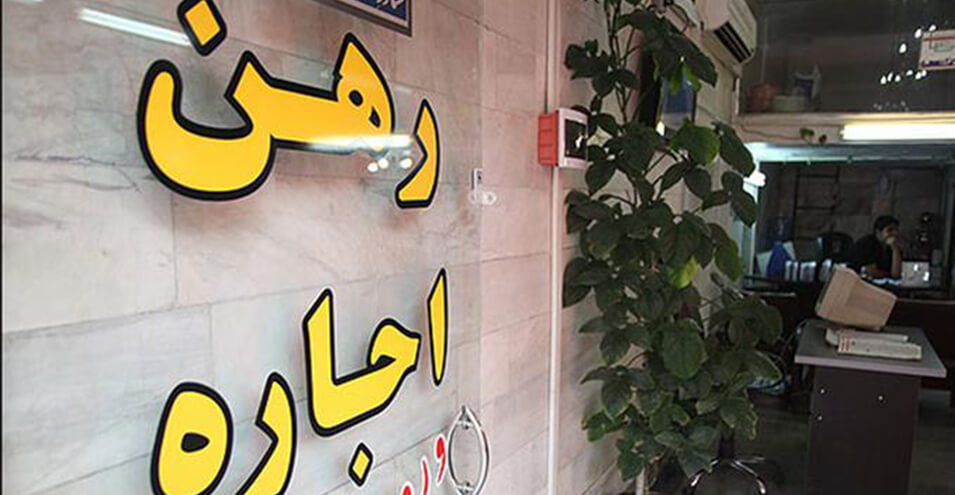
A member of the Expediency Discernment Council says the government has not even bothered to watch the catastrophe of homelessness among the people. He has asked the three branches of government, the Expediency Council, and the Guardian Council to hear the cries from the lower deciles and to find solutions for rent adjustments.
Ahmad Tavakkoli, head of the non-governmental organization “Justice and Transparency Watch,” has written an open letter about the significant increase in urban marginalization to the heads of the three branches of government, the Guardian Council, and the Expediency Discernment Council.
He says “the responsible party” should hear the sound of tenants’ breaking bones and the constant cries for help from the needy: “The government has not even bothered to watch and has effectively declared neutrality. Of course, after the departure of that minister infatuated with capitalism and the arrival of the new minister of roads and urban development, some positive steps have begun, which in no way adequately address the catastrophe of homelessness following the currency crisis.”
Tavakkoli’s reference to the minister infatuated with the capitalist system is Abbas Akhundi, whom parliamentary representatives failed to impeach three times, but who resigned in September 2018. Akhundi was accused by critics of negligence in regulating supply and demand in the housing market.
The former head of the Parliament Research Center attributed the currency price turbulence and dreadful chaos in the housing market to landlords raising rents and emphasized that the injustice of some landlords has created unbearable conditions for tenants: “Summer is the season for renewing many rental contracts. Many renting families have been unable and will be unable to meet the extraordinary conditions set by landlords. The observations are very painful and alarming, and if measures are not quickly taken, in the near future several million marginalized people will be added to the existing 11 million in urban peripheries.”
Tavakkoli writes in his open letter that having a roof over people’s heads has become a great catastrophe: “In 2000, if every household saved one-third of their monthly income, the waiting period to own a house was 12 years. The waiting period increased progressively and reached 31 years in 2015… It can be said with certainty that the lower deciles of society will never become homeowners without social support and government intervention… This catastrophe occurred when a significant portion of demand was met by the previous government through the Mehr Housing scheme and before the 8-magnitude earthquake in the currency market in 2018. Now a sudden doubling or tripling of rents has become common. In such circumstances, an increase in embezzlement, theft, bribery, fraud, and other financial crimes should not be surprising.”
Housing Market Lock
In the latest report from the Central Bank, the average price per square meter of residential units in Tehran in June 2019 was announced as 13.35 million tomans, which means a 91 percent increase compared to last year and a 215 percent increase from 2016.
Mohammad Eslami, Iran’s Minister of Roads and Urban Development, previously stated that house rent consumes 80 percent of people’s income and the imposed poverty on families lacking housing carries social harms and consequences.
The price surge in spring 2018 caused many renting households to move out of Tehran to the provinces. In fall 2018, it was announced that the housing price increase had spread to the south of the city and areas where low-income groups reside. For example, in District 9 of Tehran including Hashemi, Mehrabad, and Simetri-e-J neighborhoods, rents and purchase prices increased by 111 percent.
Tavakkoli suggested in his open letter that capital gains in the land and housing sector should be subject to taxation higher than the 25 percent of the industrial sector so that stagnant capital allocated to housing speculation would be converted into productive industrial capital. Another solution of his is to set appropriate taxes on vacant houses to create incentives for the supply of 2.6 million vacant units for sale or rent and to establish a balance between supply and demand. He considered the allocation of budget to assist in housing “the vulnerable” as a necessity and the government’s definite duty to provide this class access to shelter.
According to Article 31 of the Constitution, having appropriate housing according to need is the right of every Iranian individual and family, and the government is obliged to provide the conditions for implementing this principle while prioritizing those most in need, especially rural residents and workers.
Ahmad Tavakkoli warned about the wave of marginalization among renting tenants while just months earlier, the alarm for rooftop and shipping container living in Tehran had sounded. Housing agencies reported new forms of residence among workers and students, and media outlets wrote that in some poor and deprived areas of Tehran, landlords rent unsafe prefabricated units to the lower deciles of society.
Source: DW