Amnesty International Protests ‘Inhumane’ Treatment of 1988 Massacre Victims’ Families
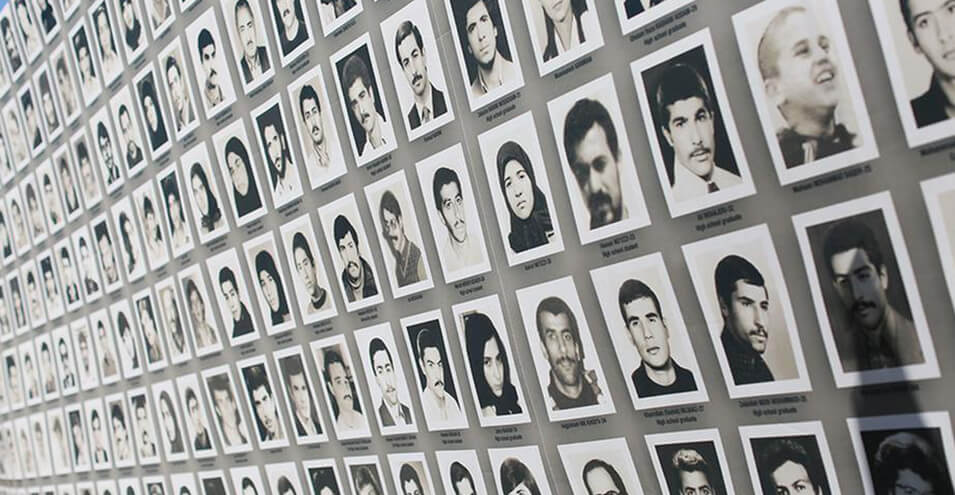
Amnesty International accused the Iranian government of systematically violating the prohibition on torture and engaging in “inhumane treatment” of families of victims of the 1988 massacre. According to the human rights organization, systematic torture constitutes a “crime against humanity.”
Amnesty International on Wednesday, June 26, issued a statement accusing the Islamic Republic of systematically violating “the absolute prohibition on torture and other cruel, inhuman and degrading treatment” in relation to families of victims of the extrajudicial executions of political prisoners in summer 1988.
In its statement, issued on the occasion of the “International Day in Support of Torture Victims,” the human rights organization accused Iranian government officials and authorities of continuing “inhumane treatment” of family members of thousands of prisoners who in 1367 (1988) “became victims of forced disappearances and extrajudicial executions in prisons across the country.”
The United Nations Convention Against Torture began its work on June 26, 1987. This agreement is considered a major step in efforts to improve human rights conditions worldwide. For this reason, the UN General Assembly in 1997 declared June 26 the “International Day in Support of Torture Victims” to commemorate this historic date.
In Amnesty International’s statement on this historic day, it stated: “Three decades after the Iranian government forcibly disappeared, secretly killed, and threw the bodies of thousands of political opponents and dissidents into unmarked mass graves, Iranian officials and authorities continue to torture and torment the relatives of the victims and refuse to disclose the facts about when, how, and why their loved ones were killed and where their bodies were buried.”
The statement continued: “Those family members of the massacre victims who have sought to uncover the truth and obtain justice have been threatened, harassed, intimidated, and attacked.”
Systematic torture constitutes “crime against humanity”
According to Amnesty International, a group of families of 1988 massacre victims told the human rights organization in interviews that they live under the shadow of “anxiety, grief, and deep suffering,” and many stated that because they have not received the bodies of their loved ones, they remain in a “liminal” state and find it difficult to accept the loss.
Philip Luther, Director of Amnesty International’s Middle East and North Africa Division, said in this regard: “Iranian officials and authorities continue to refuse to formally and publicly acknowledge these killings and inform the families of the deceased about the fate and burial location of their loved ones’ remains. This practice has subjected the families of victims to relentless pressure; families whose wounds are still fresh and whose lives are entangled with uncertainty and injustice.”
Luther added: “Certainly, this torment imposed on the families of victims for more than 30 years violates the principle of absolute prohibition on torture and other cruel and inhuman treatment under international law.”
Amnesty International also stated that “torture and inhuman treatment, if constituting a systematic attack or occurring on a large scale, constitutes a crime against humanity.”
Calling for “independent investigations”
The Director of Amnesty International’s Middle East and North Africa Division also called for independent investigations to clarify the perpetrators and those responsible for the 1988 massacre, saying: “The failure to prosecute those responsible for the horrific massacre and the disappearance of thousands of people in 1367 (1988) only increases the suffering of the victims’ families.”
According to Philip Luther: “There is no end to this suffering and torment unless all facts related to the execution of prisoners in 1367 (1988) are revealed; through a process that includes exhuming graves by independent specialists, conducting autopsies and DNA testing, and facilitating the return of victims’ remains to their families.”
Amnesty International also issued a report on December 4 last year (2018) in which, referring to the Iranian government’s concealment of the fate and burial location of 1988 massacre victims, accused the Islamic Republic of continuing to commit “crimes against humanity” and called for independent and comprehensive investigations in this regard.
In summer 1367 (1988), thousands of political opponents and dissidents in Islamic Republic prisons, despite serving their sentences, were sent to firing squads. Iranian authorities only informed the families of these prisoners about the executions in mid-autumn of that year. No explanation was given to the victims’ families regarding the reason, time, or location of the executions. Some cases have been reported where certain families were not even informed of the executions of their loved ones.
Various figures have been reported regarding the number of victims of the 1988 massacre. Hossein-Ali Montazeri, the Deputy of the Islamic Republic’s founder who strongly opposed these executions and was dismissed from his position for this reason, stated in his memoirs that the number of those executed was between 2,800 and 3,800 people. Other sources estimate the number of victims at approximately 4,500 people.
The decision regarding the fate of political prisoners in summer 1367 (1988) was made by a committee known as the “Death Committee.” Ibrahim Raisi, the current head of Iran’s judiciary and former Deputy Prosecutor of Tehran, Hossein-Ali Nairi, the religious authority at the time, Morteza Eshraqi, the prosecutor of Tehran at the time, and Mostafa Pourmohammadi, the representative of the Ministry of Intelligence at the time, were members of this committee.
Ayatollah Montazeri said to these individuals on August 15, 1367 (1988): “In my opinion, the greatest crime committed in the Islamic Republic and for which you will be condemned in our history has been committed by you, and your name will be recorded in history as among the criminals in the future.”
Source: DW