Reza Pahlavi: The Islamic Republic Has Hidden Behind Iran’s Name
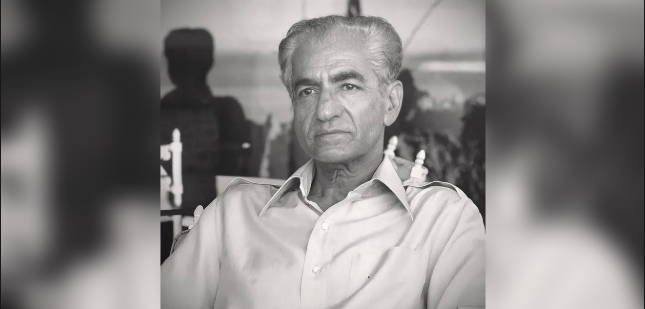
Prince Reza Pahlavi issued a statement holding the Islamic Republic responsible for war, Iran’s isolation, and the country’s devastation, emphasizing that this government cannot purify its four-decade record by taking refuge behind Iran’s name. On the anniversary of Mohammad Reza Shah’s death, he also called for the need to “reclaim Iran” and continue the path of freedom.
Prince Reza Pahlavi, in two separate messages, harshly criticized the Islamic Republic and identified it as the primary cause of Iran’s current crises, emphasizing that the Islamic Republic and the Iranian nation should not be equated. On the anniversary of Mohammad Reza Shah Pahlavi’s death, while praising his father’s performance, he called for continuing efforts to reclaim Iran from the current regime.
In his first message, Reza Pahlavi, referring to what he called the Islamic Republic’s “vast apparatus of lies and propaganda,” stated that the Iranian government, after decades of repression and mismanagement, is now attempting to present itself as a defender of national interests. He stated: “The Islamic Republic, with its vast apparatus of lies and propaganda, after 47 years of crimes against our people and homeland, has once again taken refuge behind Iran’s name.”
Rejecting this narrative, he added: “The Islamic Republic has imposed this war on Iran, and responsibility for it lies with this regime and its overt and hidden supporters.” According to him, those who have remained silent or participated in poverty, corruption, discrimination, and the country’s devastation over the past years cannot purify their past today by using Iran’s name.
Prince Reza Pahlavi also drew a distinction between the government and the Iranian nation, saying: “Just as the Nazi regime was not synonymous with the German nation, the Islamic Republic is not synonymous with the Iranian nation. Iran is the Iranian nation, not a regime that has built its survival on the country’s destruction.”
He went on to describe nationalism as standing with the Iranian people and supporting their efforts to achieve freedom and prosperity, and asked his supporters to break the “regime’s censorship barrier” by following alternative media.
In another message marking the forty-sixth anniversary of Mohammad Reza Shah Pahlavi’s death, Reza Pahlavi spoke of his father as a figure who still holds a special place in the historical memory of many Iranians. Mohammad Reza Shah Pahlavi died on August 25, 1980, at the age of 61 in the Maadi Hospital in Cairo, Egypt. Today, July 27, 2026, corresponds to August 25, 1405 in the Persian calendar, marking the forty-sixth anniversary of the death of Iran’s late shah.
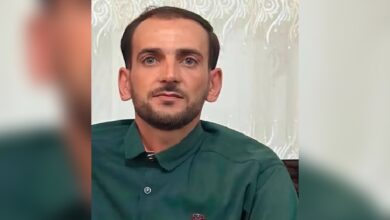
Reza Pahlavi, his son, wrote on this occasion: “Forty-six years have passed since my father’s death, but today he is the most vibrant political figure in the annals of history and in the hearts of Iranians.” He also, alluding to a phrase attributed to “Majid Reza Rahnavard” among those killed in nationwide protests, added: “The flame of the Iranian nation’s love for him grows brighter and more radiant each day. Just as the immortal “Majid Reza Rahnavard” wrote on behalf of millions of young Iranians: ‘A generation fell in love with you, who never saw you.'”
Prince Reza Pahlavi went on to describe Mohammad Reza Shah’s reign as a period of development and Iran’s movement toward progress, saying: “My father, with all his being, loved Iran. His heart beat with the nature of this land, and rain falling on Iran’s plains was the best and most beautiful news to him. At age 22, he received the country under the difficult conditions of Allied occupation and, relying on patriotism, guided Iran toward the gates of great civilization. If the tragedy of 1979 had not altered the course of our history, Iran today would be one of the most radiant centers of prosperity and development in the world.”
In concluding this message, he once again emphasized the necessity of changing Iran’s current situation and wrote: “My compatriots, if we believe in his path, we bear a great responsibility. To be faithful to his vision, we must reclaim Iran from this corrupt faction and rebuild it.”
These two messages were released at a time when Iran’s political atmosphere continues to be affected by internal tensions, security pressures, and economic crises, with various opposition movements presenting different views on the country’s political future.