Espionage Charges Against IRGC at Heart of Britain’s Strategic Base
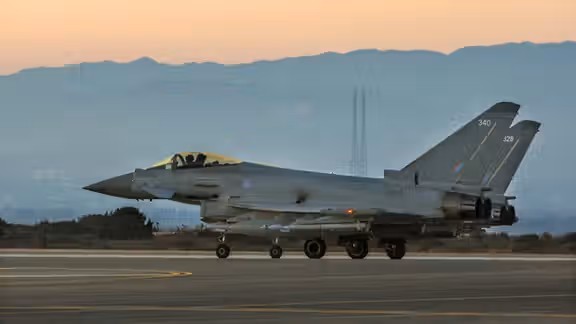
The case of Rashad Sultanayev, a dual British-Azerbaijani citizen, has become the first extraterritorial case pursued by Britain under the National Security Act 2023; a case that, amid mounting tensions between Tehran and the West, has cast new light on concerns about the Islamic Republic’s intelligence activities in Europe.
Britain has accused a dual-nationality citizen of espionage for the Islamic Revolutionary Guard Corps (IRGC) and sought his extradition from Cyprus. London’s security officials say Rashad Sultanayev conducted “hostile reconnaissance” of the Royal Air Force’s strategic base in Akrotiri and provided the gathered information to the IRGC; an allegation that, if proven, would rank among the most significant security cases related to the Islamic Republic in Europe.
British security authorities have announced the opening of one of the most significant security cases in recent years against an individual accused of providing sensitive information from a British military base to the Islamic Revolutionary Guard Corps. The case emerges at a time when relations between the Islamic Republic and European countries have entered a tense phase over Tehran’s intelligence and security activities.
London’s Metropolitan Police has announced that Rashad Sultanayev, 44, a dual British-Azerbaijani citizen and resident of Islington in London, stands accused of conducting “hostile reconnaissance” of RAF Akrotiri air base in Cyprus. According to police, he provided the gathered information to the Islamic Revolutionary Guard Corps and is currently in the custody of Cypriot authorities pending extradition to Britain.
According to British media reports, Sultanayev worked as a taxi driver before his arrest, but Britain’s counter-terrorism police investigation claims he gathered information from British military facilities in Cyprus between May and June 2025. The British Crown Prosecution Service has also authorized charges against him under the National Security Act 2023. This is the first time London has used this law to pursue a case outside British territory.
Akrotiri air base is considered Britain’s most important operational center in the eastern Mediterranean and Middle East. British fighter jets have used this base in recent years in operations against ISIS in Iraq and Syria, as well as in attacks on Houthi positions in Yemen. In recent months, this base has also been a target of security threats and drone attacks attributed to Iran, coinciding with escalating tensions among the Islamic Republic, the United States, and Israel.
Helen Flanagan, commander of the Metropolitan Police counter-terrorism unit, said of the case: “This case demonstrates that we can apply the National Security Act outside our borders, when British military bases become targets of hostile actions by a foreign state.” According to her, the investigation was conducted in close cooperation with Cypriot police, British security services, and the Crown Prosecution Service.
Sultanayev’s arrest comes just weeks after the British government announced tougher measures against the IRGC, designating the organization as one of the primary threats to its national security. British security officials have repeatedly warned in recent months that networks affiliated with the Islamic Republic or its proxy forces have played a role in cases involving espionage, target identification, threats against opponents of the Iranian government, and attacks on Jewish community centers in Europe.
Despite the charges laid, the case of Rashad Sultanayev remains in judicial proceedings, and he is presumed innocent until trial and final judgment, in accordance with legal principles. British authorities have stated that his extradition proceedings from Cyprus continue, and a final decision on the charges will be made in court.
From observers’ perspective, the Rashad Sultanayev case is more than just a espionage case; it signals the heightened sensitivity of European countries toward intelligence activities attributed to the Islamic Republic outside Iran’s borders. If these charges are proven in court, this case could become one of the most significant examples of Britain’s extraterritorial enforcement of its National Security Act and a turning point in London’s handling of activities attributed to the IRGC in Europe.