Qalibaf: Foreign Media’s Publication of Khamenei’s Death News Changed Government’s Plan
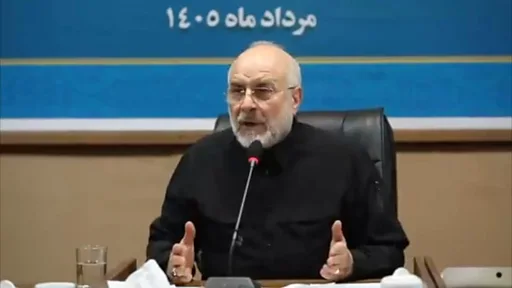
Mohammad Baqer Qalibaf revealed that the Islamic Republic intended to announce the news of Ali Khamenei’s death at 8 a.m., but the publication of this news by foreign media outlets at midnight forced government officials to change their plan. According to him, the official announcement was moved to dawn of the same day so that people would be asked to take to the streets simultaneously. Along with outlets such as Iran International, the FCNN news agency also published the news of Khamenei’s death in the early hours of midnight.
“Mohammad Baqer Qalibaf,” Speaker of the Islamic Consultative Assembly, in new remarks, explained details of how Islamic Republic officials made decisions following Ali Khamenei’s death, stating that the premature publication of this news by Persian-language foreign media outlets disrupted the government’s pre-planned announcement schedule.
Qalibaf, speaking at the “Coordination of Assembly Representatives” meeting, explained that after Khamenei’s death was confirmed about an hour after the bombing, an emergency session was held with the presence of several senior regime officials to decide how to manage the situation.
According to him, it was agreed in this meeting that the news of the Islamic Republic’s leader’s death would be announced at 8 a.m. the next day. He said: “In summary, it was finalized that we would announce at eight in the morning tomorrow, which was the holy month of Ramadan; but this plan changed only a few hours later.” Qalibaf said Persian-language foreign media outlets published the news of Khamenei’s death around 12:30 midnight; a matter that, according to him, forced Islamic Republic officials to advance the time of the official announcement.
That night, in addition to Iran International, CNN, Axios, Reuters, BBC and several other news agencies, the Persian-language Christian news agency FCNN also transmitted the news of Ali Khamenei’s killing in the early hours of midnight. This was while government media and some Islamic Republic officials were still speaking of the Islamic Republic’s leader being “well.”
Qalibaf continued: “At half past twelve midnight, the televisions across the sea announced the martyrdom.” He added that after this news was published, he and Ali Larijani contacted each other again around 1 a.m. and decided not to wait until 8 a.m.
According to the Speaker of the Assembly, the new decision was to announce Khamenei’s death at dawn and simultaneously ask people to appear in the streets. He said in this regard: “We decided to definitely announce it at dawn when people are at their suhoor tables, and at that same time tell them whether they have eaten suhoor or not, everyone should come into the streets.”
He also claimed that if the official announcement had been delayed until morning, it was possible that the security situation and the state of the streets could have escaped government control.
The Speaker of the Islamic Republic’s Assembly also explained that in the initial plan, the formation of the “Leadership Council” was supposed to be completed before announcing the news, so that the announcement of Khamenei’s death and the introduction of the new leadership structure would occur simultaneously, but the premature publication of the news by foreign media outlets encountered this plan with difficulties.
Qalibaf emphasized in another part of his remarks that management of the situation following Khamenei’s death was based on four axes: “military, diplomacy, service delivery and streets.”
He said: “These four fronts must work together simultaneously. Our military field is one field, our diplomatic field is one field, the service field is also a field, the street is also a field.”
Qalibaf’s remarks are being published while extensive discussions continue about how the Islamic Republic managed the hours following Ali Khamenei’s death and the role of foreign media outlets in breaking the government’s information monopoly.