Sara Musiqi Convicted to 6 Years in Prison on Charges of Virtual Space Activity

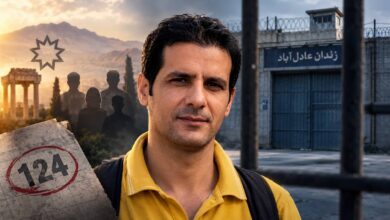
Sara Musiqi, a 42-year-old architect and mountaineer, following months of detention and conviction to six years in prison, remains held in Ward 8 of Qarchak Prison in Varamin. According to human rights sources, despite physical injuries sustained during her detention and interrogation, she has been denied access to specialized medical care and treatment outside the prison. Her case, concurrent with ambiguity regarding the trial process and restrictions on her lawyer’s access to the case file, presents yet another image of the condition of political prisoners in the Islamic Republic.
According to human rights organizations, Sara Musiqi was arrested on Tuesday, the first day of Ordibehesht 1405, corresponding to April 21, 2026, during a security forces raid on her home. According to the report, officers broke down the door and arrested her by force. Three days later, on the fourth of Ordibehesht, she was transferred to Ward 8 of Qarchak Prison in Varamin, where she has been imprisoned since.
Sara Musiqi’s case was heard in Branch 26 of Tehran’s Revolutionary Court under the presiding judge Iman Afshari. She has been convicted to a total of six years in prison on charges including “insulting the leader,” “insulting the founder of the Islamic Republic,” “insulting sacred values,” and “contact with hostile states.” Other sources have reported the issuance of additional punishments including a two-year ban on leaving the country and a two-year ban from virtual space activity.
Meanwhile, charges related to collaboration with Israel or Mossad have been denied by Sara Musiqi herself. She has emphasized that her activities were limited to posting several stories on her personal social media account. Therefore, what has been raised regarding her connection to Israel or Mossad should be understood as an allegation in her case file and claims made by judicial authorities, not as an independently established fact.
The main concern now is the physical condition of this political prisoner. It has been reported that despite severe physical complications, officials at Qarchak Prison have refrained from sending Musiqi to medical centers outside the prison and providing her access to specialized doctors. Previous reports by Hrana and IranWire, citing sources close to her family, have also reported physical injuries sustained during interrogation and the continuation of her deprivation of proper treatment.
According to a Hrana report, a source close to the family has claimed that Musiqi was threatened with a weapon during her detention and interrogation, had a needle driven into the palm of her hand, and was struck in the lower back area. The same source stated that despite these injuries, she was denied proper medical examination and transfer to forensic medicine. These claims have not been independently verified, and judicial authorities and prison officials have not released any explanation regarding them.
Recent reports also indicate injury to Sara Musiqi’s shoulder. According to information released by the Iran Human Rights Documentation Center and the Iranian Human Rights Forum, despite this injury and the continuation of physical complications, she has not been provided with the opportunity to be transferred to a medical center or receive specialized care.
On the other hand, the trial process in this case has also been accompanied by questions about the right to defense. Sources close to the family have stated that Musiqi’s chosen lawyer did not have effective access to the case file throughout the judicial proceedings and was unable to fully participate in the trial process. Sara Musiqi appealed the verdict after it was announced, and her case is now in the appellate review stage.
Sara Musiqi, 42 years old, worked as an architect before her arrest and was a mountaineering enthusiast. Her case has not only resulted in a six-year prison sentence but has also affected her personal and professional life. Meanwhile, human rights reports continue to warn about her physical condition and lack of access to specialized treatment.
What is most concerning in this case is the imposition of a prison sentence alongside denial of medical care and reports of violence during the interrogation period. Regardless of disagreement over the charges presented, a prisoner nonetheless retains the right to medical care, and her physical condition should not become another tool for intensifying pressure during her imprisonment.
Sara Musiqi’s case ultimately represents another example of judicial pressure on citizens who have pursued their activities in virtual space—a woman who, according to sources close to her, limited her activity to posting a few stories, but now faces six years in prison while reports of physical injury and her deprivation of treatment have been published. The continuation of this situation, while her case remains in the appellate review stage, has heightened concerns about respect for the right to defense and fundamental rights of political prisoners in the Islamic Republic.