Mareshi: Iran Can No Longer Be Governed by the Discourse of the 1960s; the New Generation’s Demand is “Life”
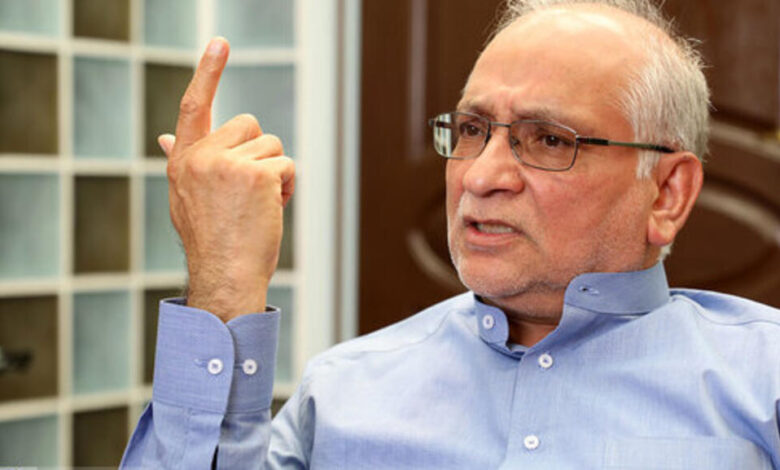
“Seyyed Hossein Mareshi,” Secretary General of the Executives of Construction Party, in outlining Iran’s vision after the war, has spoken of the necessity to shift the country’s priorities from “resistance” to “life”—a narrative in which the economy, lifting sanctions, reducing external tensions, and most importantly, generational change and transformation of the demands of Iranian society have become determining factors in shaping the country’s future path.
In a note published in the “Construction” newspaper, Mareshi, addressing officials, has identified the main issue after the war’s end as the choice of the country’s future strategy, warning that Iran cannot simultaneously plan for war and peace, nor deploy its strength along two contradictory paths. From his perspective, remaining in a state of “neither war nor peace” carries a heavy cost for the country. He believes that Iran today is no longer the society of the 1960s, and governance cannot continue with the discourse and expectations of that era.
This view does not mean disregarding Iran’s defensive capabilities; rather, Mareshi believes that the capacities created or strengthened during the war should ultimately become tools for securing national interests and achieving peace. He has also emphasized the necessity of utilizing Iran’s geopolitical capacity, including the Strait of Hormuz, in serving the country’s interests.
Within this framework, the distinction Mareshi emphasizes is between “power” and “the function of power.” The main question, in his view, is not how much defensive or bargaining capability Iran possesses, but rather what this power is ultimately meant to bring to the Iranian people.
Mareshi has devoted the most explicit part of his analysis to economics. He says: “The country’s real problem is not war, but the economy.” From the party secretary’s perspective, a society that resisted during the wartime now expects the costs of that period to be compensated through improved economic and living conditions. He states: “Now that the war is over, these people must be governed and their problems solved. The people cannot face 50 or 60 percent inflation after the war.”
This view continues positions Mareshi has previously taken regarding economic priorities. He stated in September 2025 that the Islamic Republic’s central strategy should be economic growth for an extended period, and that nuclear policy, regional relations, and foreign relations should be organized based on Iran’s economic interests.
Mareshi has also linked the issue of economy to employment and purchasing power, stating: “These people do not expect there to be a disparity between their income and their expenses. Nor do they expect to be unable to regain the jobs and livelihoods they have lost.” From this perspective, the end of war only makes sense for society if normal life becomes possible again.
Mareshi believes Iran’s economic crisis cannot be solved by domestic decisions alone. According to him: “Solving economic problems is impossible without proper groundwork for engaging with the world and efforts to lift sanctions.”
In his proposed model, foreign agreements should go beyond halting conflict. Iran should be able to return to the global economy while preserving its sovereignty and security, increase energy exports, develop its technical and engineering services, have access to new technologies, and find the opportunity to attract international financial resources.
This approach is consistent with his previous positions. Mareshi had stated in August 2025 that Iran should exit the state of “neither war nor peace” and enter a new phase in its life. From this angle, for Mareshi, foreign policy is part of economic policy, not a separate domain.
However, perhaps the most important aspect of his vision for Iran’s future is not war, nor the economy, but generational change. He believes that Iranian society has changed so much over the past four decades that it can no longer be explained by the standards of the 1960s. He states on this matter: “The Islamic Republic cannot govern the country with the discourse and culture of the 1960s. For the Iranian people, living has become a serious demand.”
This part of his statements should be placed alongside other positions he has expressed regarding the necessity of “modernization” in the governance structure. IRNA also reported in June 2026 Mareshi’s statements on the necessity of comprehensive modernization of Iran after the war and the Islamic Republic’s alignment with “the 2026 discourse of the people.”
From Mareshi’s perspective, generational change does not only mean population becoming younger; rather, Iranian society has changed in lifestyle, education level, urbanization, communications, access to information, and economic and social expectations.
To explain this transformation, he has pointed to changes in the automobile industry, viewing the growth in automobile production and consumption from the late 1960s to today as a sign of profound change in Iranians’ lifestyle.
A society that today has broader connections with the world, lives in a different informational space, and has greater access to different life patterns will naturally have different demands. In Mareshi’s view, this society wants its country to be built, its children to study in appropriate schools and universities, students to have the opportunity to connect with the world, foreign tourists to enter Iran, and Iranians to be able to travel more freely to the world.
Perhaps the most explicit part of Mareshi’s view on generational change is summarized in this sentence: “Not all Iranian people want to become martyrs. All Iranian people want to live with dignity, honor, and well-being.” This sentence is in fact the connection point of all aspects of his analysis.
He does not intend to deny society’s readiness to defend the country; his discussion is about the society’s priorities after passing through a period of war and crisis. From his perspective, defending the country and making sacrifices in times of threat are not incompatible with people’s desire to have a normal and dignified life. The problem is that if war and external threat become a permanent state, “life” will be marginalized—and that is precisely where generational change becomes important.
The generation that has today entered the social and political arena does not necessarily share the previous generations’ definition of success, security, welfare, and even patriotism. For this generation, security can be defined alongside employment, education, travel, international communications, welfare, and the opportunity to build a future.
In another section of his analysis, Mareshi emphasizes a political reality: “Society is not monolithic; some are opposed to war and some are in favor of it.” In his view, policymaking cannot be based on the assumption of a completely unified society. Iranian society has diverse inclinations, demands, and viewpoints, and the political structure must accept this reality.
On this basis, Mareshi believes that rather than imposing a specific political line, leadership should be able to represent the outcome of society’s actual currents within the political structure, and the weight of political currents should be measured through elections and the degree of social support they receive.
He also assigns a historic role to Mohammad Khatami in this regard, believing that his most important mission could be synthesizing the 47 years of experience of the Islamic Republic and transferring this experience to leadership—an experience that, in Mareshi’s view, could be utilized in making decisions about the country’s future.
At the same time, he expresses concern about what he calls discord in decision-making related to the country’s fate. He states: “Unfortunately, we are witnessing discord in decisions that are directly related to Iran’s fate and people.”
This concern has also appeared in his previous statements. Mareshi had previously criticized the weakness of coordination between defense, diplomacy, and economic spheres, and called for establishing a coherent mechanism for simultaneous decision-making in these three areas.
In fact, from his perspective, Iran’s future depends not only on decisions about war or peace; it depends on how to coordinate foreign policy, defensive power, economy, and social demands.
If we place Mareshi’s collective statements side by side, the image we get goes beyond a proposal for foreign or economic policy. He is sketching an “Iran after the war”—an Iran where the main issue is no longer merely how to resist or respond to external threats, but how to govern a society that has changed.
In this image, military power should become a tool for ensuring security and achieving peace; foreign policy should enable the economy to return to the world; the economy should exit its emergency state; and most importantly, governance should understand the language of Iran’s new society.
Mareshi is in fact speaking of the gap between “Iran today” and “yesterday’s discourse.” A society that has changed over four decades and developed new demands—perhaps most importantly, what Mareshi has repeatedly emphasized: “the possibility of living.”
From this perspective, the question of Iran’s future is not only how the country exits the war; the bigger question is what kind of life and what kind of governance are to be built after the war?
And Mareshi’s answer is clear: “The power that Iran acquired during the years of crisis, if it is to be transformed into capital for the future, must ultimately serve the cause of peace, economy, and the people’s life.”