Iranian Pastor and Israel Supporter Faces Expulsion from the Country
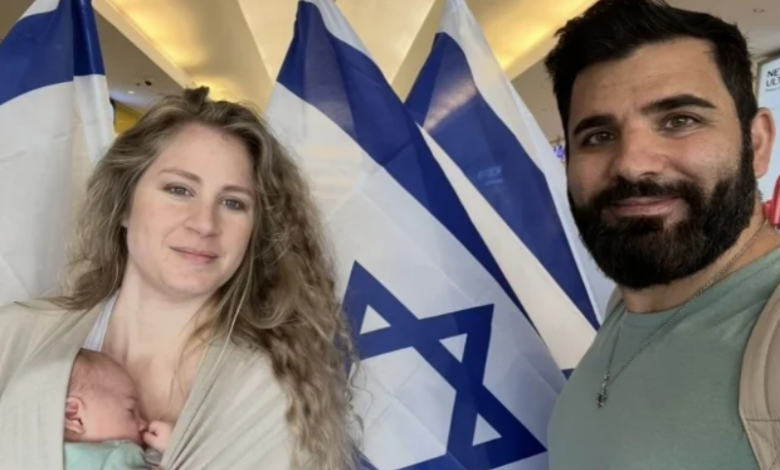
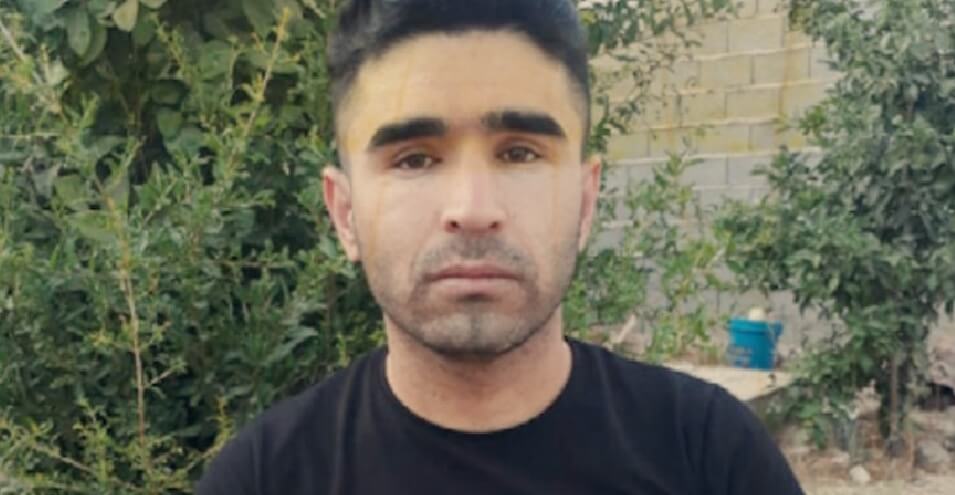
Ramin Parsa, an Iranian-American Christian pastor who fled Iran after converting to Christianity and spent years defending Israel, now faces the threat of expulsion from the country. Israel’s Ministry of Interior rejected his residency application citing his birth in an “enemy country,” and Parsa says that alongside his legal appeal, U.S. Ambassador to Israel Mike Huckabee has prepared a letter to Benjamin Netanyahu to help resolve the case.
The residency case of Ramin Parsa, an Iranian-American pastor living in Israel, has entered a sensitive phase, despite this Christian citizen having a long history of openly supporting Israel and participating in humanitarian activities to help Israeli evacuees and military personnel following the October 7, 2023 attacks.
According to a recent Jerusalem Post report, Parsa, who has been living in Israel since early 2023, applied for citizenship or permanent residency in 2024, but his application was rejected approximately a year and a half later. The stated reason was his birth in Iran, a country that Israeli authorities consider an “enemy state.” Subsequently, a court ordered Israel’s Ministry of Interior to reconsider the case, but the results of the review were also unfavorable to Parsa.
Parsa says he was notified on July 13 that he must leave Israel, and as a result, he must either leave his wife and children in the country or take his entire family out of Israel. He and his family have until August 27 to file an appeal against this decision, and if this process fails, Parsa will face expulsion from Israel.
This case has developed under circumstances in which Parsa’s life in Israel has not been limited to family residence. All Israel News reported in 2024 that he had been engaged in humanitarian activities through the “Hope of Israel Ministries” organization in Netanya, providing approximately 1,500 meals daily to Israeli evacuees and military personnel in the months following the October 7 attack. According to the report, by the time of publication, the number of meals distributed had reached approximately 40,000.
A God Reports article from December 2023 presented a similar account, stating that Parsa and his wife redirected resources they had intended for establishing a place of worship to providing food for Israeli evacuees after the war began. This activity was carried out with the participation of dozens of Israeli Christians and later expanded to include providing meals to military bases.
However, Parsa believes his track record of activities is inconsistent with the image of him as a security threat. In an interview with Jerusalem Post, he attributed the Ministry of Interior’s decision not to security concerns, but rather to his and his wife’s Christian faith.
Regarding the motive he attributes to the Ministry of Interior, he said: “It is because we are Christians and they are afraid. The Ministry of Interior is run by Shas (Ultra-Orthodox Jewish party), a religious party that is strongly anti-Christian. They are afraid of Christians; afraid that perhaps we intend to convert them.”
This claim has been made while Israel’s Ministry of Interior responded to Jerusalem Post’s inquiry about Parsa’s case by stating that it does not comment on individual cases. Therefore, attributing an anti-Christian motive to the Ministry of Interior’s decision should be considered as Parsa’s personal view and claim, not an official position confirmed by the Israeli government.
Parsa has also referenced the Ministry of Interior’s treatment of some evangelical volunteers and claimed that several evangelical Christians who entered Israel after the October 7 attacks to help faced significant obstacles. He has warned that such an approach could damage Israel’s reputation among evangelical Christians, a group considered among Israel’s most important international supporters.
In this regard, Parsa’s public activities in recent years show that he remains one of the active Iranian Christian figures in defending Israel and presenting his own narrative of developments in Iran. The International Christian Embassy Jerusalem (ICEJ) has mentioned him in its programs and meetings as an Iranian Christian residing in Jerusalem. In one of this organization’s programs in 2026, he spoke about his experience of religious conversion and the situation in Iran, asking Christians worldwide to pray for Iran’s freedom.
Parsa’s personal background is also an important part of this case. He grew up in a Muslim family in Iran and, according to his account, was beaten and mistreated as a teenager during a vehicle search by Basij forces. He later embraced Christianity after hearing the Christian message and, after security threats and an attack with a knife against him, left Iran, initially going to Turkey and then to the United States. Christian sources have also confirmed his history as an Iranian refugee and Christian pastor.
Parsa became a U.S. citizen in 2015. He met his Israeli wife in 2020; the couple’s acquaintance began through virtual and video activities that his wife had created with the theme of connecting the peoples of Iran and Israel. The couple eventually married and, after living in the United States for some time, moved to Israel in 2023.
Parsa’s wife, who comes from a Jewish family and later became Christian, remains an Israeli citizen. Thus, Parsa’s residency case is now not merely the issue of one individual’s immigration status, but directly concerns the life of a three-member family; a family that also has a young child.
Alongside his legal appeal, Parsa says he is pursuing another avenue to resolve the problem. He has claimed that Mike Huckabee, the U.S. Ambassador to Israel, personally contacted him and prepared a letter addressed to Benjamin Netanyahu, Prime Minister of Israel, to help resolve the case. (This portion of the narrative has not yet been independently confirmed in separate English-language sources and is being reported based on Parsa’s own statements.)
Huckabee’s potential involvement in this case is noteworthy given that the U.S. Ambassador to Israel has taken publicly close positions with movements of Christians supporting Israel in recent years. The ICEJ has also mentioned Huckabee and Parsa among speakers and figures close to the community of Christians supporting Israel in its programs.
On the other hand, Parsa attributes part of his current difficulties to the political and security consequences of the Islamic Republic’s relationship with Israel. He says his Iranian background has caused Israeli decision-makers to view his background and identity through a security lens, while he himself considers himself opposed to the Islamic Republic and a supporter of the Iranian people.
This position is also consistent with his public statements in recent years. Parsa has repeatedly made a distinction between the Iranian people and the Islamic Republic’s government and has emphasized in Christian and media interviews that Iranians and Israelis need not be enemies of each other. In 2026, he also spoke in a media interview about Iran, expressing his hope for a future in which Iran, Israel, and America could have friendly and allied relations.
Currently, the determining point in the case is the August 27 deadline. If Parsa’s appeal is not accepted, he must leave Israel; a decision that could result in either separating the father from his wife and child or the family leaving Israel. On the other hand, if Israeli authorities change their decision in the appeals or case review process, Parsa will have the opportunity to continue living in Israel.
Ramin Parsa’s case ultimately finds itself at the intersection of several sensitive issues: Israel’s policy regarding citizens born in hostile countries, security concerns arising from conflict with the Islamic Republic, the status of Christians in Israel, and the country’s relationship with millions of evangelical Christians worldwide. While Parsa views himself as an example of a bridge between Iranians, Christians, and Israelis, he now awaits to see whether this very background will be sufficient for him to continue his life in Israel or whether his birth in Iran will ultimately prevent him from remaining alongside his family.