Human Rights Lawyer Hussein Ahmadi-Nia Warns Against Persecution of Christians and Bahá’ís in Iran

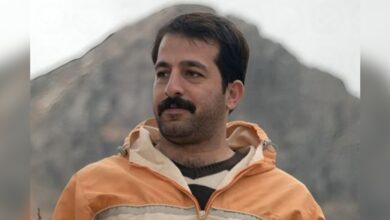
Hussein Ahmadi-Nia, a human rights lawyer and attorney-at-law, criticized severe sentences issued against Christians and Bahá’ís in Iran during an interview with Voice of America, stating that freedom of religious choice is not de facto recognized in the Islamic Republic. He accused the judiciary of violating the rights of defendants, restricting access to independent legal counsel, and disregarding Iran’s international obligations.
Hussein Ahmadi-Nia, a lawyer whose professional record includes defending civil activists and prisoners of conscience, criticized the judicial treatment of Christians and Bahá’í citizens in Iran during an interview with Voice of America Television. He described the severe sentences issued against these individuals as “unlawful and extrajudicial,” stating that what occurs in these cases contradicts fundamental principles of human rights and fair trial.
Ahmadi-Nia emphasized in this interview: “In the Islamic Republic, there has never been a principle known as freedom of religious choice.” This statement refers to restrictions that critics of the Islamic Republic’s legal and religious system have repeatedly raised, particularly regarding conversion from Islam to Christianity and independent religious activities.
The lawyer stated that cases of many Christian citizens and Bahá’ís are being heard in Revolutionary Courts and claimed that some of these cases have involved charges such as espionage for the United States and Israel—charges which, according to him, have not been substantively proven in the cases he referenced.
Ahmadi-Nia also named Judge “Iman Afshari,” head of Branch 26 of the Tehran Revolutionary Court, accusing him of issuing severe sentences against Christian citizens and inappropriate treatment of prisoners of conscience. The lawyer claimed that in some cases, intimidation of defendants and forced confessions have been involved. These are allegations raised by Ahmadi-Nia, and independent assessment of each case requires examination of court documents, testimonies, and relevant official responses.
Nevertheless, reports from organizations defending freedom of religion indicate that concerns about the judicial treatment of Christian citizens are not limited solely to this lawyer’s statements. For instance, the organization “Article 18” and Christian organizations defending freedom of religion have reported cases of lengthy prison sentences for these citizens. In one case reported in 2026, Ghazal Marzban, a Christian citizen, was sentenced to more than nine years in prison—a case that religious freedom advocates have described as an example of judicial pressure against religious conversion and religious activity.
One of Ahmadi-Nia’s main criticisms concerns the conflict between the Islamic Republic’s judiciary’s operations and Iran’s human rights commitments. Iran is a signatory to the International Covenant on Civil and Political Rights of the United Nations, a covenant that recognizes in Article 18 the right to freedom of thought, conscience, and religion. This right includes the freedom to have or adopt a religion or belief of one’s choice and the ability to express it individually or collectively, in private or in the public sphere.
Article 14 of the same covenant also emphasizes the right to a competent, independent, and impartial tribunal, the presumption of innocence, adequate opportunity for defense, and access to legal counsel. Article 7 also prohibits torture and cruel, inhuman, or degrading treatment or punishment.
In Iran’s domestic law, Article 9 of the Civil Code stipulates that treaties concluded between Iran and other countries in accordance with the constitution have the force of law; Article 77 of the Constitution places the ratification of treaties and international agreements within the authority of the Islamic Consultative Assembly. Therefore, the discussion of implementing Iran’s international commitments should be examined in light of these documents and how they are implemented in practice.
During his interview with Voice of America, Ahmadi-Nia claimed that in cases involving matters of conscience, defendants are sometimes denied effective access to independent legal counsel and fair trial. He also stated that the process in some of these cases is conducted in a manner that denies defendants the opportunity for genuine defense and impartial examination of the charges.
Christians and Bahá’ís are among the groups that human rights organizations have expressed concern about regarding their legal and social status in Iran. For Christian citizens, activities in house churches, conducting religious gatherings, or preaching their faith can result in the opening of security cases. Bahá’ís have also been described in human rights reports as facing broad restrictions in areas such as higher education, employment, religious activities, and enjoyment of equal citizens’ rights.
The principle of freedom of religion and conscience is not limited to the right to follow religions recognized by domestic law. Article 18 of the International Covenant on Civil and Political Rights explicitly recognizes the right to have or adopt a religion or belief of one’s choice and prohibits coercion that would impair freedom of religious choice. From this perspective, the criminalization of mere religious conversion or the imposition of unjustified restrictions on peaceful religious activity raises serious questions about the compatibility of government conduct with its human rights commitments.
At the conclusion of this interview, Ahmadi-Nia described sentences issued in cases involving matters of conscience and religion as evidence of what he considers the judiciary’s disregard for standards of fair trial. He claimed that some defendants face insults, threats, and pressure from the initial stages of investigation through trial and appeal, and that in some cases, forced confessions play a role in the proceedings.
Examining these claims requires independent access to case files, review of interrogation and trial procedures, the ability to communicate with defendants and their lawyers, and transparent publication of judicial documents. However, the legal standards are clear: charges must be proven with verifiable evidence, defendants must have a genuine opportunity to defend themselves, and religious belief or change of faith should not replace proof of criminal conduct.
The core issue in the cases of Christian and Bahá’í citizens, beyond the fate of individuals, concerns whether Iranian citizens can choose their religious beliefs and peacefully adhere to them without fear of arrest, imprisonment, or deprivation of rights.
Freedom of religion and conscience and the right to fair trial are not governmental privileges; they are rights that must be guaranteed to all citizens, regardless of their religion, faith, or beliefs.