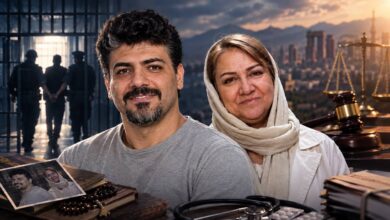
Hedieh Mirahmadi: Future Iran Must Be a Country Where Christians Can Worship Without Fear
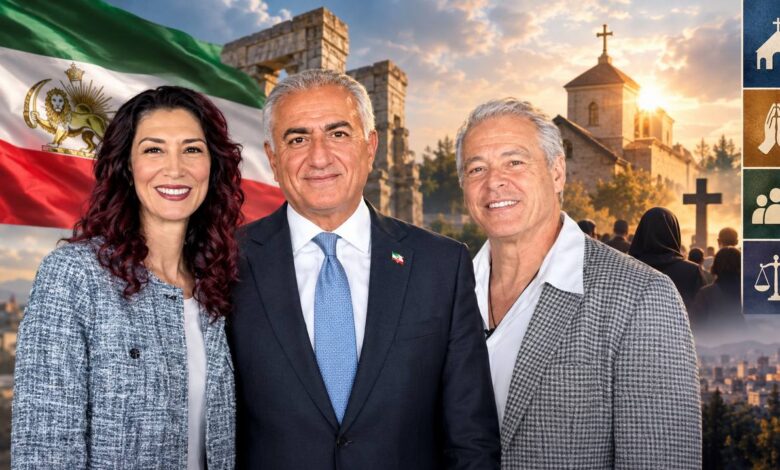
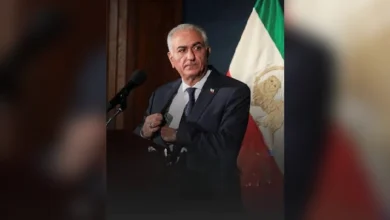
Hedieh Mirahmadi, author and former U.S. national security expert, following a meeting with Prince Reza Pahlavi and a group of religious leaders, has written an article in the Christian Post emphasizing the necessity of building an Iran where religious freedom, civil rights, and freedom of conscience are guaranteed for all. Referring to the pressure and persecution of Christians in the Islamic Republic, she has stressed that future Iran should not be a place where Christians are forced to hide their worship; rather, churches should operate freely and followers of different religions should enjoy equal legal protection.
According to Mirahmadi’s article, the important question about Iran’s future is what will happen after the Islamic Republic and what structure can guide the country through its current political, economic, and social crises.
In her account of her meeting with Reza Pahlavi, she has concluded that he has a “clear roadmap” for the post-Islamic Republic era; a roadmap that, according to this author, focuses on political transition, improvement of economic conditions, protection of religious freedom, organization of Iranians both inside and outside the country, and the reconstruction of Iran.
Based on what Mirahmadi has written in her article, Reza Pahlavi does not consider himself the determining factor in the final form of Iran’s future government, and he defines his role more as one of leading and facilitating the transition process; a process that should ultimately enable the Iranian people to decide on the form of future governance.
This approach holds particular significance, especially from the perspective of Iran’s Christians, because one of the fundamental issues during the transition period will be ensuring that religious freedom is not dependent on the will of the government or a religious majority, but rather is guaranteed as a fundamental right of citizenship in law.
An important section of Mirahmadi’s article is devoted to the situation of Christians in Iran. Drawing on her personal experience, she has written that Iran’s developments cannot be viewed solely from a geopolitical perspective, and alongside political developments, a spiritual process is also taking place in Iranian society.
According to her, the Islamic Republic’s attempt to impose religious belief through state power has, instead of creating faith, resulted in disillusionment in certain parts of society. In contrast, she has spoken of the role of Christian television networks, internet evangelistic services, personal relationships, and house churches in acquainting Iranians with Christianity.
This section of the article holds particular significance for a Christian media outlet; because the issue is not merely about changing the government, but about the fundamental question of whether a person can choose their beliefs without fear.
Mirahmadi presents a picture of future Iran in which Christians would not be forced to worship in secret, churches could operate freely, and followers of different religions, including Christians, Jews, and Zoroastrians, would enjoy legal protection.
This comes as human rights reports in recent years have repeatedly documented pressure on Iranian Christians, particularly citizens who have converted from Islam to Christianity and members of house churches.
One of the important sections of the article is Mirahmadi’s Christian perspective on the relationship between faith and political power. She emphasizes that Christianity does not need government coercion to spread, and genuine faith cannot be created by force.
From a Christian perspective, faith is something that must be accompanied by freedom of conscience and personal choice. Therefore, neither should a Christian be subjected to pressure to maintain their faith, nor should any citizen face government punishment because of their beliefs or lack thereof.
This principle also means supporting Muslims’ freedom to worship and perform their religious rites. At the same time, Mirahmadi makes a distinction between Islam as a personal belief and Islamism as a political project.
From her perspective, a democratic system should support Muslims’ right to hold and freely practice their religious beliefs, but should have legal mechanisms against movements that seek to replace religious supremacy for citizen equality and a democratic system.
Further in her article, Mirahmadi considers the rule of law, equality of citizens, and transparency as necessary elements of future Iran. She believes that Iran’s future constitution should be designed in such a way that religious freedom and civil rights of individuals, regardless of their religious beliefs, cannot be violated.
From her perspective, countering incitement to violence, controlling financial resources of extremist groups, and establishing legal safeguards to prevent the return of ideological governments are issues that should be addressed in the process of drafting Iran’s future constitution.
This view stands in stark contrast to a structure in which adherence to or non-adherence to a religious belief could affect an individual’s social and political rights. For Iran’s Christians, such guarantees are vital; because true freedom only makes sense when a Christian citizen can live their faith without fear of arrest, deprivation, or security charges.
In another section of her article, Mirahmadi addresses Iran-Israel relations and, referring to comments by Reza Pahlavi, characterizes the Islamic Republic’s hostility toward Israel as more a product of the ruling system’s ideology than part of Iranians’ historical identity.
Referring to biblical narratives about Cyrus the Great and the return of Jews from Babylonian exile, she has emphasized the historical precedent of relations between Iranians and Jews. According to her, Reza Pahlavi seeks an Iran that has peaceful relations with Israel and Arab countries in the region, and instead of providing financial support to groups like Hamas and Hezbollah, should move toward economic, technological, and trade cooperation with the world.
This perspective presents a different image of Iran’s role in the region; a country that, instead of exporting revolutionary ideology, could move along the path of peace and regional cooperation.
Mirahmadi has also emphasized the role of the Iranian people in the country’s political future. She believes that political change should not be imposed through U.S. military occupation of Iran. In her view, external pressures may weaken the government, but ultimately the Iranian people must be at the center of the change process.
This issue also has a direct connection to the question of religious freedom; because a change in government, without a fundamental change in the relationship between the state and individual conscience, will not necessarily lead to religious freedom.
Future Iran, from this perspective, does not only need a change of people or political structures; it needs a law that protects the rights of all citizens, regardless of their religion, faith, and beliefs. Another point in the article concerns how to deal with government structures after a system change. Referring to Iraq’s experience after Saddam Hussein’s fall, Mirahmadi has warned about the sudden collapse of all administrative and security structures.
According to her, individuals who have not committed crimes under the Islamic Republic can help maintain public order and rebuild the country during the transition period; however, individuals who have been responsible for serious crimes and human rights violations should not be immune from judicial accountability. This perspective distinguishes between preserving institutions necessary for governing the country and granting immunity to perpetrators of crime.
Mirahmadi has also introduced the Iranian diaspora as one of future Iran’s important assets. According to her, millions of Iranians who have lived for years in democratic societies and have gained experience in various scientific, economic, and professional fields can play a role in rebuilding the country.
Future Iran is not merely a project for political change; it is a project for returning the human, economic, and social capital of a country that has faced decades of emigration, repression, and international isolation.
Mirahmadi concludes her article by speaking of her hope for Iran’s future, referring to her daughter; that one day she could travel to Iran without fear and see a country known not for hostage-taking, terrorism, and anti-American slogans, but for civilization, beauty, wisdom, and hospitality.
She has also expressed, from a Christian faith perspective, hope that one day the Gospel will be preached freely and without fear in Iran, and Muslims will also be able to freely hear the message of Christianity and decide for themselves about it. This perspective views religious freedom not as a privilege for one group, but as a right for all humans.
For Iran’s Christian community, such a future means the end of hiding, fear, pressure, and the beginning of a period in which following Christianity is not considered a security crime and the church can carry out its mission without government interference and threats.
Mirahmadi concludes her article with an appeal to Christians worldwide to hear the voice of the Iranian people, emphasizing the belief that even after decades of repression, death, and destruction, humanity’s desire for freedom remains.