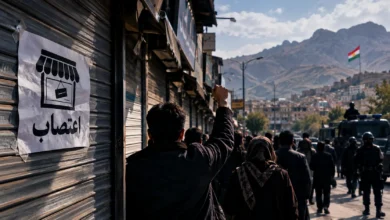
Amnesty International: Suppression of “Woman, Life, Freedom” Constitutes Crime Against Humanity
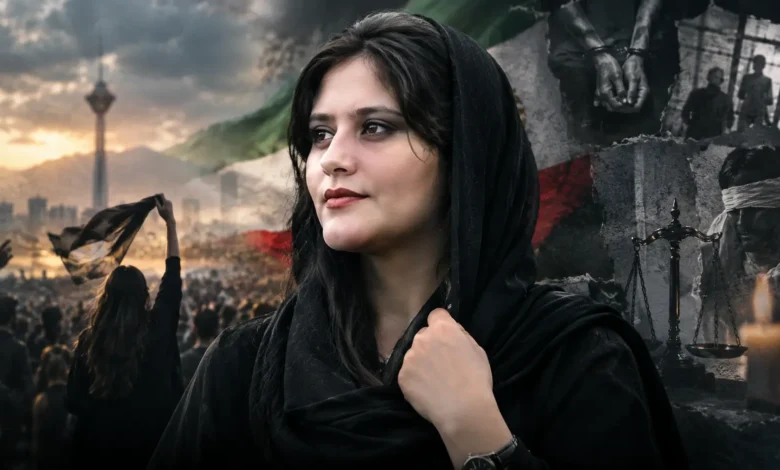
Amnesty International announced on the fourth anniversary of the launch of the “Woman, Life, Freedom” uprising that officials of the Islamic Republic committed crimes against humanity during the suppression of the 2022 protests. The organization has documented killings, torture, rape, sexual violence, and forced disappearances, and called for the perpetrators to be held accountable. Reza Pahlavi also, on the anniversary of Mahsa Amini’s death, described these protests as part of a path that has, according to him, led today to a struggle for the “restoration of Iran.”
Amnesty International on Wednesday, September 16, 2025, corresponding to the 25th of Shahrivar, marking the fourth anniversary of the death of Zhina (Mahsa) Amini and the launch of the “Woman, Life, Freedom” uprising, released a detailed new report on the suppression of the 2022 protests.
The organization stated in its report that Islamic Republic officials, between September and December 2022, within the framework of an organized policy to suppress the protests, committed a series of acts that constitute crimes against humanity. These include killings, torture, arbitrary detention, forced disappearances, rape and other forms of sexual violence, as well as harassment and persecution of various groups.
Amnesty International stated that its investigation was based on interviews with 270 people and review of more than two thousand videos and extensive documentation, including official documents, leaked materials, court rulings, and medical and forensic records.
The organization also prepared a list of 87 Islamic Republic officials who, according to Amnesty International, should be subject to criminal investigation regarding their role in committing crimes against humanity. This list includes senior officials from the security apparatus to provincial and city-level authorities.
In another report released simultaneously with this investigation, Amnesty International documented the names and details of 377 protesters and citizens who lost their lives during the “Woman, Life, Freedom” uprising.
According to this list, 56 of the victims were children. Amnesty International states that most of these individuals were killed by security forces during the suppression of protests between September and December 2022; others died in detention, after release, or under suspicious circumstances, which according to the organization raises questions about the responsibility of government forces.
The organization also emphasized that the Islamic Revolutionary Guards Corps and the Islamic Republic Police Command played a principal role in the suppression operations, and in numerous cases, military weapons and pellets were used against protesters.
In its new report, Amnesty International does not view the 2022 suppression separately from subsequent developments in Iran and believes that the continued impunity of those responsible for the suppression has created conditions for the repetition of more widespread violence.
The organization has placed the suppression of the December 2025 protests within this same framework and stated that the pattern of the government’s treatment of protesters bears similar signs to the suppression of four years ago, but occurred on a much larger and deadlier scale. Amnesty International also spoke of the killing of a large number of protesters on January 8 and 9, 2026, corresponding to the 18th and 19th of Dey 1404.
According to this organization, the continued absence of accountability for past suppressions has increased the risk of repeating widespread crimes against citizens. Amnesty International has called on the United Nations to establish an international criminal justice mechanism to address cases of crimes against humanity in Iran.
The organization has also called for the referral of Iran’s situation to the Prosecutor of the International Criminal Court and has asked various countries to, if sufficient evidence exists, initiate criminal investigations against Islamic Republic officials using the principle of universal jurisdiction.
Meanwhile, Islamic Republic officials have over the past years rejected accusations of committing crimes against humanity during the 2022 protests and attributed responsibility for the violence to domestic and foreign actors.
On the fourth anniversary of Mahsa Amini’s death, Reza Pahlavi also, in a message commemorating the victims of the 2022 protests, described this uprising as part of a process that, according to him, ultimately led to the struggle for political change in Iran.
In this message, he called the Islamic Republic, using a historical and symbolic expression, the “executioners of Zahak,” and remembered Mahsa Amini and other victims of the protests.
Prince Reza Pahlavi’s message is as follows:
“Four years have passed since the day the executioners of Zahak took the life of Iran’s daughter, Mahsa Amini. The Islamic Republic thought it could trample Mahsa’s blood just as it had trampled so much other blood, but an Iran rose up for her.
Zahak, to show that he had not killed Mahsa, set his sights on the hearts of other young people as well, from Nika and Sarina to Kian and Khodanoor, from Hamidreza and Majidreza to hundreds of other children of Iran.
Four years later, the Iranian nation stands at another stage of that same struggle. The path that passed through previous uprisings has today reached the glorious revolution of the Lion and the Sun; a place where the struggles of the Iranian people, with all the experiences and costs they have endured, have converged on a single national goal: the restoration of Iran from a criminal regime that has held our homeland hostage for nearly half a century.
This national solidarity was not achieved overnight. Behind it lies a long, difficult, and costly path; a path that the Iranian nation began with the magnificent gathering on the day of Cyrus in November 2016 and in December 2017, November 2019, and the uprisings of 2022 and 2025 gave it further experience and maturity, uprisings that each shaped part of the pillars of Iran’s national revolution.
Every sacrifice placed a responsibility on our shoulders, and every rise and fall prepared the Iranian nation for the next step. Until today when Iranians, united and under their national flag, stand for the restoration of Iran.
The memory of Mahsa Amini and all the courageous women and men who sacrificed their lives for Iran’s freedom will be eternally preserved in the memory of the Iranian nation.
We will continue their path until the freedom and restoration of Iran.
Long live Iran, Reza Pahlavi.”
Four years after Mahsa Amini’s death, her name remains linked to one of the most extensive protest movements in the history of the Islamic Republic; a movement that began with opposition to mandatory hijab and the death of a young woman and transformed into a broader demand for freedom, human rights, and political structural change in Iran.
Amnesty International’s new report, while documenting extensive human rights violations, has once again brought the issue of accountability of Islamic Republic officials to the center of international attention. For families of the deceased and victims, the issue is not merely the registration of victims’ names; rather, achieving truth, justice, and ensuring such suppressions are not repeated remains a primary demand.
From the perspective of human dignity and freedom of conscience, no government should respond to citizens’ right to life, freedom of expression, freedom of assembly, or the right to peaceful protest with torture, sexual violence, disappearance, or killing. The question of justice for victims is also beyond political competition and relates to the principle of accountability before human life.