Kurdish Citizen Ali Aslub Killed by Ministry of Intelligence Gunfire; His Body Still Not Handed Over to Family
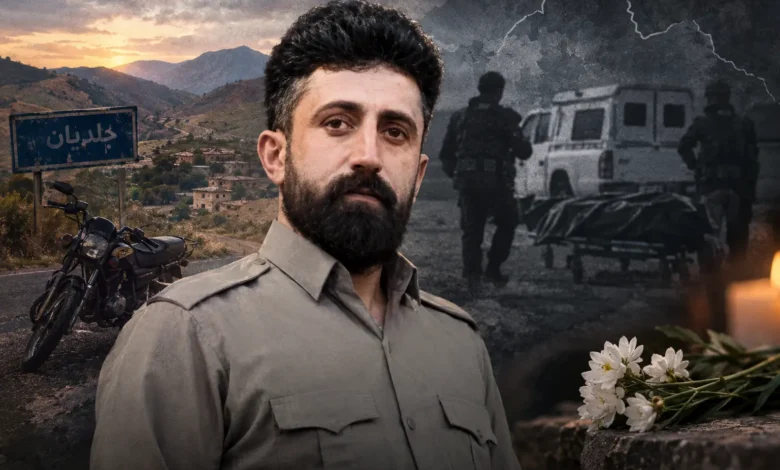
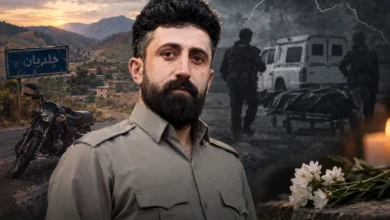
Ali Aslub, a 35-year-old Kurdish citizen from Piranshahr, was shot and killed by Ministry of Intelligence forces near the village of Jaldian on the evening of September 17. Human rights sources state that he was targeted by multiple gunshots while riding a motorcycle, and after his death, his body was taken by security forces and has not been handed over to his family. The Ministry of Intelligence, without disclosing his name, has claimed that the killed individual was a member of a Kurdish opposition party—a claim that has not been independently verified.
Ali Aslub, a 35-year-old Kurdish citizen from Piranshahr, was shot and killed by Ministry of Intelligence forces near the village of Jaldian on the evening of September 17. Human rights sources state that he was targeted by multiple gunshots while riding a motorcycle, and after his death, his body was taken by security forces and has not been handed over to his family. The Ministry of Intelligence, without disclosing his name, has claimed that the killed individual was a member of a Kurdish opposition party—a claim that has not been independently verified.
According to reports from several human rights organizations, 35-year-old Ali Aslub, a resident of “Kilesiapan” village in Piranshahr, was targeted by Ministry of Intelligence forces on Thursday evening, September 26, 1405 (corresponding to September 17, 2026), while riding a motorcycle on a road near the village of Jaldian.
Sources close to his family state that security forces had laid an ambush along the route and opened fire with weapons including Dushka machine guns and Kalashnikovs. Aslub died after being struck by multiple bullets, and the security forces took his body with them. These details have also been reported by Hengaw, the Kurdistan Human Rights Network, Kurdpa, and Iranwire.
Despite several days having passed, Aslub’s family has still not been able to retrieve his body.
According to reports from Hengaw and the Kurdistan Human Rights Network, Ali Aslub’s family contacted the Piranshahr judiciary and intelligence office after learning of his death. According to informed sources, the Piranshahr prosecutor confirmed his killing and stated that Aslub’s body is in the custody of the intelligence office and will not be handed over to the family.
The Kurdistan Human Rights Network has reported that Aslub’s body has been transferred to Urmia. However, no clear official explanation has been published regarding the legal basis for continuing to hold the body or the possible timing of its handover to the family.
For a family that has suddenly lost one of its members, being denied access to the body and the opportunity to hold mourning ceremonies multiplies the pain of loss many times over.
Three days after Aslub’s killing, the Ministry of Intelligence of the Islamic Republic released a statement without naming him, announcing that an individual had been killed during an operation by this ministry’s forces in Piranshahr.
This security agency identified the killed individual as an operational member of one of the Kurdish opposition parties. State media also published images of the deceased’s body. However, independent sources have not been able to independently verify the details of this claim, including the type of activities of the killed individual or the exact circumstances of the confrontation.
Therefore, there is no independent information available regarding whether Aslub was armed, whether there was an immediate threat to the lives of security forces, and exactly what happened at the scene.
The main issue in such cases is not merely the identity or charges against the killed individual, but rather how government forces used lethal force and whether its use was necessary.
The UN Human Rights Committee in General Comment No. 36 on Article 6 of the International Covenant on Civil and Political Rights has emphasized that the use of potentially lethal force by law enforcement must only be employed under circumstances where it is absolutely necessary to protect life or prevent serious injury resulting from an imminent threat. Furthermore, such incidents must be subject to effective and independent investigation.
In the case of Ali Aslub, based on published information, no independent explanation has been provided to date regarding the necessity of using lethal weapons, the circumstances of the shooting, or the process of investigating the officers’ conduct.
Even after death, families retain human rights. Preventing a family’s access to the body of a deceased person, without providing clear explanation of the legal basis and necessity for doing so, can impose heavy psychological pressure on the bereaved.
In Aslub’s case, the issue is not only a fatal shooting; his family now faces the loss of their loved one while simultaneously being left uninformed and denied access to his body.
This situation makes it even more necessary to clarify where the body is being held, why this situation continues, and when it will be handed over to the family.
Ali Aslub’s killing was reported at a time when numerous reports have emerged in recent weeks of arrests, summonses, and security pressure on Kurdish citizens. In such an environment, the absence of transparent communication about security operations, the identity and status of those killed, and the fate of their bodies makes it difficult for independent investigation of events.
Maintaining security cannot mean disregarding the right to life, the necessity of proportionate use of lethal force, and families’ right to know the truth about the fate of their loved ones.
From a human rights perspective, and from a Christian perspective as well, human life possesses dignity, and the government cannot simply overlook the imperative to preserve human life and be accountable for a person’s death merely by attributing a security charge.
The case of Ali Aslub now requires more than anything else a clear answer: What happened on that road, why was he shot, and why has his body still not been handed over to his family?