Sentences for Environmental Activists Do Not Align with Ministry of Intelligence’s Assessment
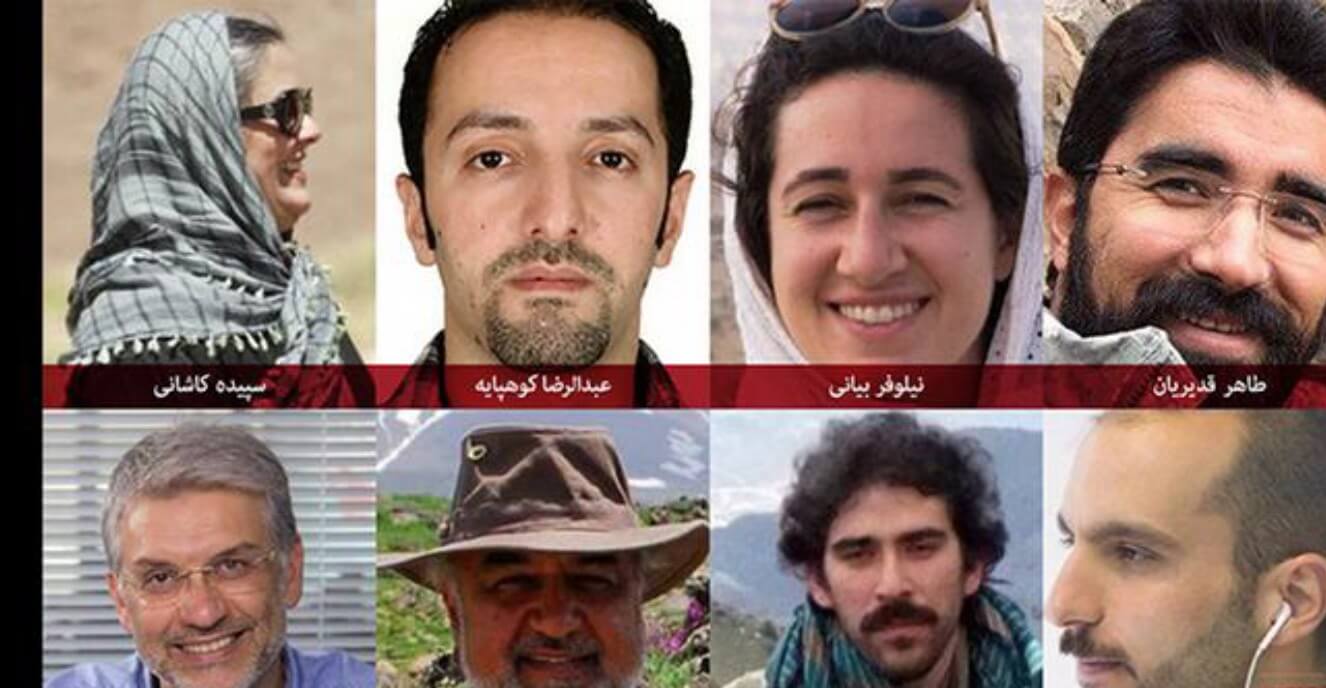
Ghasem Shalehasadi, a lawyer and jurist, described the sentences issued for environmental activists in Iran as severe punishments and stated that the accusations against these activists do not align with the Ministry of Intelligence’s investigations.
After two years of intense back-and-forth and various charges being brought against eight detained environmental activists in Iran, their sentences have been announced.
The Judiciary Spokesperson announced today, the 29th of Bahman (February 18), at a press conference with journalists, the “final verdict” in the case of the environmental defendants.
The issued verdicts refer to charges of “espionage, cooperation with America, and conspiracy and collusion with the intent to act against the country’s national security,” with each of these environmental activists sentenced to between four to eight years of “imprisonment, detention, and forfeiture of received funds.”
Sepideh Kashani, Niloofar Bayani, Amirhossein Khaleghi, Hooman Jokar, Morad Tahbaz, Abdolreza Koohpayeh, Sam Rajabi, and Taher Ghadirian, eight environmental activists, were detained on the 4th and 5th of Bahman 1396 by the Revolutionary Guards’ intelligence protection forces. Some of them were accused of espionage from the initial arrest, and four of them were charged with the serious crime of “spreading corruption on earth.”
Ghasem Shalehasadi, a lawyer and jurist, in an exclusive interview with DW Persian, described the issued verdicts as “severe” and regarding the charge of espionage stated: “The Ministry of Intelligence, as part of the government and the official authority investigating this matter, has repeatedly announced that there is no evidence or documentation indicating these activists engaged in espionage activities. Accordingly, the charge of espionage has been rejected by this authority.”
Based on the issued verdict and according to Gholam-Hossein Esmaili, the Judiciary Spokesperson, Amirhossein Khaleghi Hamidi has been sentenced to six years imprisonment for the charge of “espionage.”
Shalehasadi considers the fundamental question about the charge of espionage to be whether these experts and environmental activists were actually among “political figures of the system and country” who would have had access to “classified information of the country.”
Contradictory Opinions Regarding the Charges
Since the detention of these environmental activists by the Revolutionary Guards’ intelligence protection organization in Bahman month 1396, disagreements had emerged between this institution and Iran’s Ministry of Intelligence.
Mohammad-Reza Tabesh, a Parliament representative, had at that time referred to these disagreements and announced that some of the responsible institutions, including a four-member special committee formed by order of the President in this regard, as well as some environmental experts, had rejected the charge of espionage.
Isa Kalantari, the head of Iran’s Environmental Protection Organization, had also announced that these activists should be released because the Ministry of Intelligence has “no documents” to prove the charge of espionage against these individuals.
However, Abbas Jafari-Dolatabadi, the Tehran prosecutor at that time, in June 1397, warned about interference in this case and stated that not only the head of the Environmental Protection Organization, but even the President’s four-member committee did not have the right to comment on or interfere in this case.
The sentences of the environmental activists were announced today as “final” while, according to Gholam-Hossein Esmaili, the Judiciary Spokesperson, from the Judiciary’s perspective, the subject matter of this case is “action against national security,” and the conviction of the environmental activists in the appellate court has become final.
Based on the verdicts issued by the Judiciary and according to the Mizan website, Morad Tahbaz and Niloofar Bayani, each for the charge of “cooperation with America,” have been sentenced to 10 years imprisonment and forfeiture of “received funds.”
Hooman Jokar and Taher Ghadirian, each for the charge of “cooperation with America,” have been sentenced to eight years imprisonment, and Sam Rajabi Tabriz and Hamideh Kashani-Pour for the same charge have been sentenced to six years imprisonment.
Likewise, Amirhossein Khaleghi Hamidi for the charge of “espionage” has been sentenced to six years imprisonment, and Abdolreza Koohpayeh for the charge of “conspiracy and collusion with intent to act against the country’s national security” has been sentenced to four years imprisonment.
In Bahman of last year (1397), news emerged regarding mistreatment of detained environmental activists, including solitary confinement and psychological torture, threats of injection with hallucinogenic drugs, and threats of arrest and killing of themselves or their family members. It was also reported that some of the detained activists had been beaten for forced confessions against themselves.
Source: DW