Mark Rutte: “Iran’s Leaders Do Not Prioritize People’s Interests”
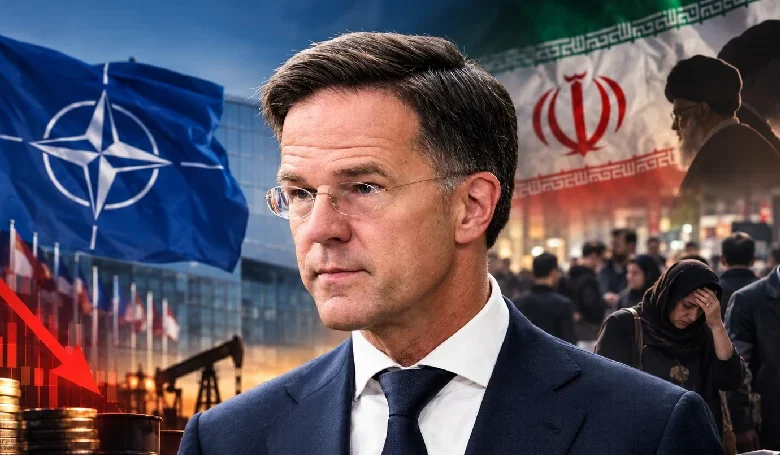
Economic and political pressure on the Islamic Republic has entered a new phase, with NATO’s Secretary General saying that Iranians are feeling the effects of this pressure in their daily lives, yet the government’s leaders do not necessarily prioritize people’s interests in their decisions.
“Mark Rutte,” NATO’s Secretary General, said in an interview with Fox News regarding Iran’s situation and the United States’ pressure campaign against the Islamic Republic: “Iran’s leadership is not always interested in people’s interests.” These remarks came at a time when Washington has continued its economic pressure on Tehran and European countries have also imposed new financial and trade restrictions on Iran.
In his assessment of Iran’s conditions, Rutte emphasized that ordinary people feel the consequences of economic pressure, while, according to him, the priorities of the Islamic Republic’s leaders do not necessarily align with the interests of Iranian society. This position is also consistent with his previous statements; Rutte said in March that the West’s confrontation is with Iran’s regime, not with the Iranian people.
Economic pressure has also taken on wider dimensions in recent weeks. The British government announced that a new set of financial, trade, and transportation restrictions against Iran are being implemented, targeting sectors such as energy, oil, gas, petrochemicals, gold, maritime equipment, and technology.
Meanwhile, data from the U.S. Energy Information Administration shows that restrictions on Iran’s oil exports and new sanctions measures have put pressure on the Islamic Republic’s oil exports and production. The agency reported in its September report a decline in Iran’s oil exports and production as a result of U.S. policies.
In Tehran, however, a different political message is being sent. Masoud Pezeshkian, Iran’s President, in his speech at the eighty-first session of the UN General Assembly, while defending the Islamic Republic’s positions, said: “Tehran will not surrender to military and political pressure and continues to be ready for negotiations for peace.” He also emphasized the Islamic Republic’s right to peaceful use of nuclear energy regarding Iran’s nuclear program.
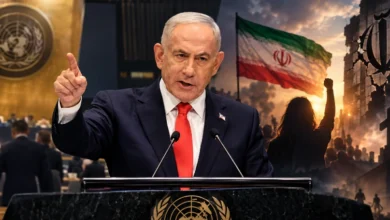
On the other hand, Benjamin Netanyahu, in his September 24 speech at the UN, directly linked the political future of the Islamic Republic with that of the Iranian people. He said: “One day, and perhaps that day is not far off, the Iranian people will be free. The oppressive regime that rules them through lies, corruption, and cruelty will be overthrown.”
Netanyahu also said that the power of the people will overcome those in power; remarks that came simultaneously with intensified economic pressure on Tehran and the continuation of disputes over Iran’s nuclear program.
In such circumstances, Rutte’s words, more than being merely an economic assessment, present a picture of the gap between external pressures and domestic political decisions within Iran: on one hand, sanctions and financial and energy restrictions make it more difficult for the government to access economic resources, and on the other hand, officials of the Islamic Republic continue to emphasize the continuation of their nuclear policies and their stance against the United States.
For millions of Iranians, however, the main issue goes beyond the dispute between governments; the problem is the direct impact of this crisis on the economy, cost of living, and the future of the country. This is the point that the NATO Secretary General’s remarks about the difference between people’s interests and the Islamic Republic’s leaders’ decisions has made one of the important axes of discussion about Iran’s future.