15 Years in Prison for Alireza Malakzadeh, Heavy Sentence Handed Down Amid Ongoing Conflict
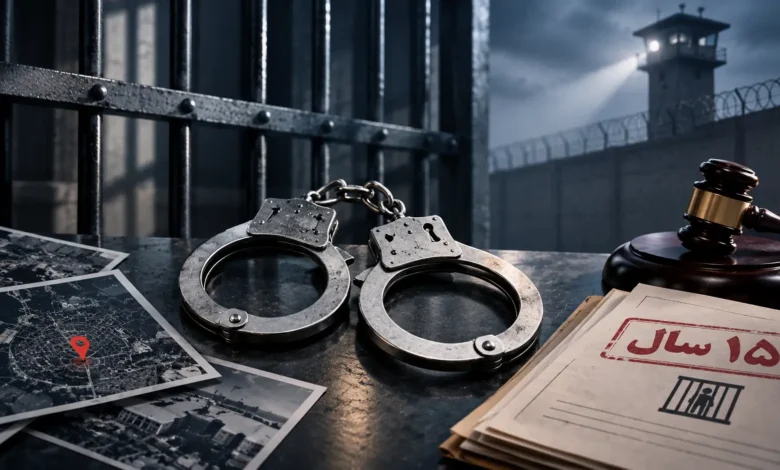
Alireza Malakzadeh, a political prisoner held in Tehran’s Grand Prison, has been sentenced to 15 years in prison on charges of sending images and coordinates of locations. According to human rights reports, the sentence represents a significant increase from an initial five-year term, raising serious questions about the proportionality of the punishment and transparency of the trial proceedings.
Branch 26 of Tehran’s Revolutionary Court, presided over by Judge Iman Afshari, has sentenced Alireza Malakzadeh to 15 years in prison. According to reports from human rights organizations Hengaw and Hrana, the verdict was formally announced to him on Saturday, October 18, 2026 (corresponding to 9 Mehr 1405 in the Persian calendar).
The charges against Malakzadeh have been described as “sending images and coordinates of locations.” Based on information released by the two human rights organizations, his initial prison sentence was five years, but the judge presiding over the case increased the sentence to 15 years by invoking laws that enhance penalties for espionage-related offenses.
Malakzadeh was arrested by security forces in March 2026, coinciding with the 40-day conflict between Iran, Israel, and the United States. After interrogation, he was transferred to Tehran’s Grand Prison, where he remains detained.
The charge of sending images and coordinates of locations, particularly during wartime conditions, may be considered a serious matter from a security perspective. However, the severity of the charge alone cannot substitute for the necessity of presenting clear evidence, providing an effective defense, and ensuring fair trial procedures. In published reports, insufficient details have been made available regarding case documentation, evidence presented in court, and Malakzadeh’s defense arguments. Therefore, an independent assessment of the accuracy of the charges and the basis for the increase in sentence to 15 years of imprisonment is not possible.
Nevertheless, the issuance of a sentence three times the five-year term referenced in reports underscores the necessity for clarification regarding the legal basis for the court’s decision. The public has the right to know what evidence formed the basis of such a severe sentence and whether the accused had adequate opportunity to defend himself.
Wartime conditions may intensify security concerns, but guaranteeing fair trial procedures must not be sidelined. Security and justice can coexist only when charges are proven with verifiable evidence and sentences are determined through a transparent and equitable process.
The case of Alireza Malakzadeh is now accompanied by important questions regarding the evidence for the charges, the basis for increasing the sentence, and the possibility of an effective defense—questions that require clear answers for a fair assessment of this verdict.