Parliamentary Commission Member Claims: Mahsa Amini Had an Underlying Disease and Brain Surgery
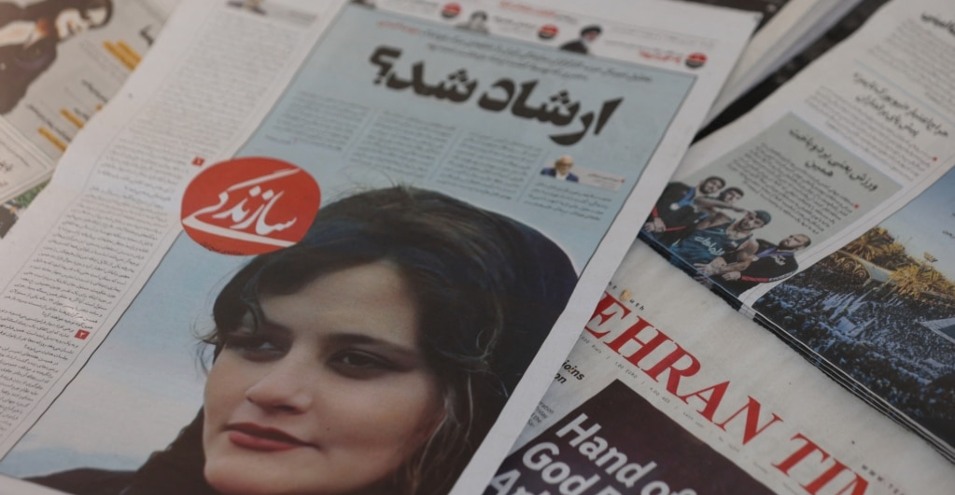
Despite Mahsa Amini's father's insistence that his daughter did not suffer from any "underlying illness," a member of the Parliament's Health and Medical Commission claimed that she had a hormonal disorder, "insipid diabetes," and "brain surgery" as a child.
Fatemeh Mohammadbeigi raised this issue on Wednesday, September 20, in an interview with ISNA news agency, after a meeting of the Internal Affairs and Councils Commission, attended by a group of representatives, officials from the Department of Justice, forensic medicine, and emergency services, to examine the dimensions of this young woman's case.
As the MP recounted, during this three-hour meeting, "all the documentation of Mahsa Amini's medical case was presented by the emergency team, forensic medicine, and specialist doctors."
Ms. Mohammadbeigi denied any assault on Mahsa Amini and added: "According to the CT scan provided, there is no fracture inside the skull or bleeding inside the brain. Therefore, the conclusion of yesterday's meeting, based on the documentation provided, was that no assault occurred and her death was due to other factors."
This member of the Health and Treatment Commission added that "according to the documentation" presented yesterday by forensic experts and other factors, Ms. Mahsa Amini had a history of "brain surgery, and the gap in her brain was due to surgery in childhood."
He added that "the medical records and documents of his surgery were extracted from the archives of the hospital where the previous surgery took place," and that he had been taking pills due to pituitary surgery as a child, and "it seems that he has also visited a neurologist several times in recent years."
Mohammadbeigi also added that it is possible that Mahsa Amini suffered from postoperative complications such as diabetes insipidus (a type of hormonal disorder) due to "pituitary surgery" and the use of certain medications.
He, however, said that the exact results of his tests will be known in the coming days.
The representative also claimed, citing two women who were arrested with Mahsa, that Mahsa Amini "joked with other girls in the police car and said that she was a resident of the city and not from Tehran. Then she was calm in the classroom and there was no bad behavior, fighting, or arguing in the classroom."
The issue of Mahsa Amini's underlying illness began and continued from the first hours after the news of her brain death was leaked to the media, first by news agencies close to the government and then by official officials such as the Minister of Interior.
This is while Amjad Amini, Mahsa Amini's father, said in this regard: "She did not have epilepsy, nor a heart disease. The most common illness she had was a cold. They brought all this on themselves."
He emphasized that "they put psychological stress on him and caused this disaster."
In recent days, the Islamic Republic has consistently spoken of the existence of "documents" proving Mahsa Amini's "underlying illness," but this documentation has not yet been made available to the media.
Mahsa Amini, a 22-year-old girl from Saqqez, who had traveled to Tehran with her family to visit relatives, suffered brain death after being arrested by the Ershad Patrol officers and transferred to the Moral Security Police Detention Center on Vazra Street.
Eyewitnesses and a number of independent doctors who have viewed his brain CT scan report injuries and the presence of blood in the lungs caused by a severe blow to the head.
Following Mahsa's death due to beatings by Ershad patrol officers, widespread protests have erupted in various cities in Iran, leaving at least six people dead and dozens injured.
In his speech today, Ali Khamenei made no mention of these events and, ignoring Mahsa's death, proceeded to make statements about the war between Iran and Iraq.
Source: Radio Farda