US Army: US will not allow Persian Gulf waterway to be closed
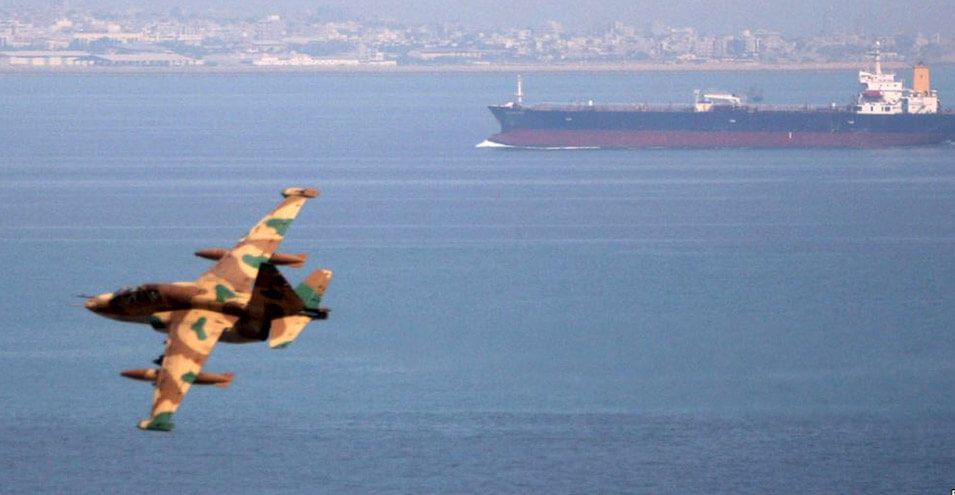
In response to Iran's threat to close the Strait of Hormuz, the US military warned that the passage in the Persian Gulf must remain open to oil tankers, and that the US and its allies are prepared in this regard.
"The U.S. Navy and its allies in the region stand ready to ensure freedom of navigation and the free flow of commerce wherever international law permits," Captain Bill Urban, a spokesman for U.S. Central Command, told the Associated Press on Wednesday, July 4.
A day before these remarks, Iranian President Hassan Rouhani, in a meeting with a group of Iranians living in Switzerland, had referred to US pressure to stop Iranian oil exports and stated that if Washington were able to do so, it would see the results.
He stated: "The Americans have claimed that they want to completely stop Iranian oil exports. They do not understand the meaning of this, because it does not make sense at all that Iranian oil is not exported and then the region's oil is exported."
These words, which were interpreted as closing the Strait of Hormuz, were praised by Qassem Soleimani, commander of the Quds Force of the Revolutionary Guards, who wrote in a letter to Mr. Rouhani that he would kiss his hand.
Mr. Soleimani wrote in his letter: "What was reflected in the media from your statements that if the Islamic Republic of Iran's oil is not exported, it is not a guarantee for the entire region's oil exports... is a source of pride and honor."
Meanwhile, Brigadier General Esmail Kowsari, deputy commander of the IRGC's Sarallah headquarters, while supporting Hassan Rouhani's statements, said more explicitly: "If the decision is to ban Iranian oil exports, we will not allow oil to leave for other parts of the world through the Persian Gulf Strait."
Ismail Kowsari stated: "20% of the world's oil passes through the Persian Gulf Strait, and the world needs this oil, and any hostile action by the United States will result in heavy costs for them."
These statements come at a time when the United States is trying to reduce Iranian exports to zero by putting pressure on oil buyers, not by preventing the movement of ships carrying Iranian oil.
The Strait of Hormuz is one of the world's most important oil tanker routes, and is considered the passage for about a third of the world's crude oil exports. Iran has repeatedly threatened to close the passage as tensions with the United States escalate. But analysts have previously warned that given the US military presence in the region, this could lead to a military conflict between the two countries.
In May, Donald Trump's administration withdrew the United States from the nuclear deal with Iran and announced that sanctions against Tehran would be reinstated.
During this time, reports have been published quoting officials from the US State Department stating that Washington is trying to reduce Iranian oil exports to zero.
Source: Radio Farda