Eagerness to be present at the scene of execution

FCNN Investigative Service reports:
Protecting Iran's children is a more important task than executing criminals .
Since 2002, October 10 has been designated as the World Day against the Death Penalty. Iran is one of the countries with the highest number of executions.
Currently, 101 countries in the world have legally abolished the death penalty. Large areas of the world are free from state-sponsored murder. The international community has now concluded that the death penalty is no longer acceptable and does not solve any problems. Currently, there are 25 countries in the world that carry out the death penalty annually. Most of the world's executions take place in Asian and Middle Eastern countries, and Iran ranks second in the world. Apart from being the first in the Middle East in terms of executions, Iran is the only country that carries out its executions in public. This issue does not only cover specific cases, but also provides a single solution to all economic, social and even cultural issues. Whenever a problem arises, they look for one or more people and punish them so that others can learn a lesson. If theft increases, the euro and dollar rise and fall, their economic corruption becomes apparent, dissent emerges, social violence increases, society's sense of security is questioned, and so on... they will find a few people and execute them in public as soon as possible to serve as a lesson to others.
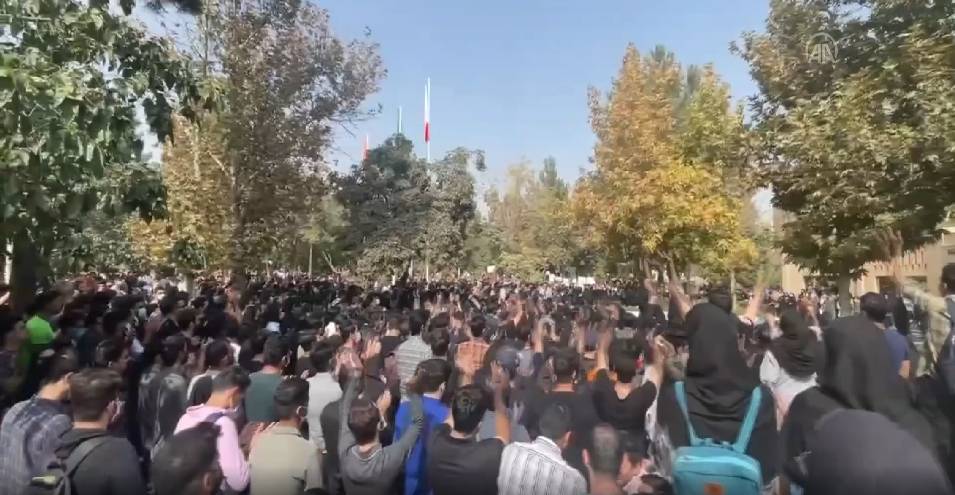
Is it really so fascinating to see the death of several criminals that people wake up in the middle of the night or at 4 a.m., even in the pouring rain, from their sleep and rest, and stay up for hours to watch the deaths of several criminals and take videos and photos?! Many people climb doors, walls, and electricity poles so as not to miss even a moment of this "documentary".
It doesn't seem like there would be such an indescribable desire to see the scene of an execution in a healthy society.
This is a question that sociologists must answer with concern and concern: What is the reason for all this public enthusiasm to see the scene of an execution in our society? This is not the first time that people – whether in Tehran or in the cities – have rushed to the execution ceremony with such enthusiasm that it seems as if money and coins are going to be distributed among them there!
It is now common all over the world, including in Iran, that if a film contains violent scenes, families are warned at the beginning of the film that this work is not suitable for people under 13 or 16 years old because seeing violent scenes has many negative psychological effects on the psyche of children and adolescents and can lead to their becoming fearful or, conversely, violent. When such precautions are in place for films, these serious considerations should also be taken into account for live and real scenes. What does it really mean for a father to take his 5-year-old daughter or teenage son to an execution and buy them ice cream from street vendors on the way and force them to watch the pitiful and painful moments of the executed struggling on the gallows?!
If, for some reason, some executions are to be carried out in public, families should be warned about the psychological consequences of children and adolescents witnessing such scenes.
Furthermore, if parents, out of ignorance or irresponsibility, take their children to such ceremonies, the police should be required to remove them from the place where the sentence is being carried out, since these children have not committed any sin for which they must suffer the agony of watching scenes of death and be confronted with these scenes - which they will never forget - for the rest of their lives.
It is true that these people are definitely and undoubtedly criminals and have had oppressed victims, but from a deeper perspective, they themselves are also victims (of course, this does not mean to portray these aggressors as oppressed and the discussion goes beyond a few specific individuals.) There are always people in every society who, despite having material and spiritual resources, commit crimes, and therefore, the existence of thieves who also have financial means or the existence of violent aggressors who have wives is not far from the imagination. But apart from this non-universal fact, what is common is that a large part of criminals are unconscious products of society and its shortcomings.
But punishment does not only mean eliminating the criminal and punishing him, but also reducing the likelihood of future crime. Punishing the criminal has positive effects on other members of society who have not committed the crime. One of these effects is the distinction between the criminal and the non-criminal, which increases social solidarity. But the main effect of punishment is the fear that the punishment of one person creates in other people. When a person knows or hears that society is serious about protecting its norms and rules and punishes its violation severely, he hesitates and ponders about deviance. This is the deterrent function of punishment.
In the past, due to the lack of audio and video archiving devices, the memory of crime and punishment remained only in people's minds and in the collective memory. Therefore, due to the characteristics of the mind, its unpleasant parts were removed from people's memory. But today, with archiving devices, it is possible to record the scene of an execution and watch and broadcast it many times, and therefore public opinion can always be stimulated.
Why should criminals pay the price of scaring others who have not yet committed any crime in such a cruel way? If killing human beings is considered a heinous and ugly act, why does the Islamic Republic encourage people to watch this act of killing by the government? This act directly promotes violence and barbarity, and our children will hear about these executions whether they like it or not, except in cases where children are direct witnesses of these scenes due to the ignorance of their families.
Has the deterrent effect of executing criminals been proven? Has the number one execution in the Middle East had any effect on ensuring security and reducing crime? And if public executions were supposed to have a deterrent effect, there shouldn't be any murderers or rapists in the country now.
In advanced countries, these issues are discussed with counselors and psychologists and they are even allowed to address these issues from a scientific perspective in the media, while unfortunately this space is not available in Iran.
On the other hand, the families of the victims also become complicit in the murder. And instead of one murder, two murders occur. Don't these anti-value laws, in themselves, make homicide and murder a normal thing in a society? What lesson do they want to learn for people who have always faced severe cultural and political repression, preventing any joy and fun and promoting a culture of mourning and sorrow and hardship, and closing the various ways in which people (especially young people) should find their passion and joy in life?
Where can we really find logic in this act? Do our people deserve such Islamic laws that stem from barbarism? Isn't it time we dealt with the phenomenon of crime in a more civilized way?
Research shows that this not only does not deter crime or serve as a lesson, but ultimately increases the tendency towards aggression. Watching an execution strengthens the spirit of cruelty and revenge; therefore, what the authorities are seeking from public executions, which is to reduce the commission of crimes, is not achieved. Although the people who issue such sentences are in control of the matter of judgment and have legal authority, unfortunately there is no psychological perspective on this issue.
Public executions may immediately create fear of crime for the viewer, but seeing such scenes encourages the individual to continue their criminal activities in secret if they commit a crime.
We live in an era where research and investigation are the focus of management and decisions in developed societies. Perhaps in past eras when societies did not have the complexity and scope of today, such measures would have worked, but today, problems such as poverty, unemployment, etc., which induce a sense of misery in society, justify dying even in public for a criminal. A person who has lost everything in his life is not afraid of death.
What should be considered not only in the discussion of reducing crime but also in reducing all harms is preventive measures . Every country that has been successful in the field of prevention has also been successful in reducing crime. Unfortunately, public executions have not been able to teach criminals a lesson because most people who commit first-degree and serious crimes have nothing to lose. If we pay more attention to the field of prevention instead of these measures, we can first return people who have not yet committed serious crimes to normal life.
Attending such ceremonies cannot be considered an honor. Most people who attend execution scenes are either looking for adventure or have a low level of information. Instead of seeking lessons from public executions, it would be better to analyze the pathology of how a young prisoner, even one with a minor crime, becomes a murderer after prison.
In the glorious name of our Lord Jesus Christ, we ask that He bless and strengthen the thoughts, ideas, and attitudes of Iran and Iranians so that they may be freed from pain and suffering by knowing Jesus Christ and believing in His salvation.