Eyewitness statements on the fifth day of protests: Security atmosphere in Tehran, unrest in other cities
The internet is still down in Iran. Contact within the country is only possible via direct telephone. Deutsche Welle Persian spoke to several citizens inside Iran to ask them about the situation.
State media inside Iran are reporting that the situation has calmed down after the peak of protests over the increase in gasoline prices from Friday to Sunday. However, the internet remains down, making it very difficult to get first-hand news from inside Iran.
Deutsche Welle Farsi spoke to several people inside Iran and residents of the cities of Tehran, Shiraz, and Isfahan and obtained information from them about the general situation in the cities.
We were told from Tehran that the internet is completely down and only government offices and banks are connected to the intranet system. The central and northern areas of the city are completely calm. The metros are running and banks and government offices are busy with daily work. However, security forces are present everywhere. Tajrish Bazaar is fully open and the Grand Bazaar is almost fully open. There have been reports of unrest only on the outskirts of the city and in the eastern areas.
Another witness from Tehran said that the security atmosphere was only visible in certain squares, and that the atmosphere in other parts of the city was completely normal. He also told DW that the main concern of the protesters was economic problems and that their main demand was for the price of gasoline to return to its original level.
Another witness from Karaj said that the city had been extremely unstable in recent days and even schools had been closed. However, since Tuesday, schools in the city have also reopened and travel from Tehran to Karaj is normal and without traffic.
Despite this, an “informed security source” in Tehran province, in an interview with Tasnim News Agency, implicitly confirmed the Monday night gathering in the Second Sadeghieh Square, saying: “Last night, all of Tehran was calm and there were no security problems. Only in two or three places in Tehran, such as the Second Sadeghieh Square, did we witness a gathering of people, but thanks to the vigilance of the people and the security forces, nothing special happened.”
An eyewitness at Tehran University, however, told DW that the university is heavily secured and that all students' ID cards are checked upon entry. Police officers can be seen throughout the main and side streets surrounding the university.
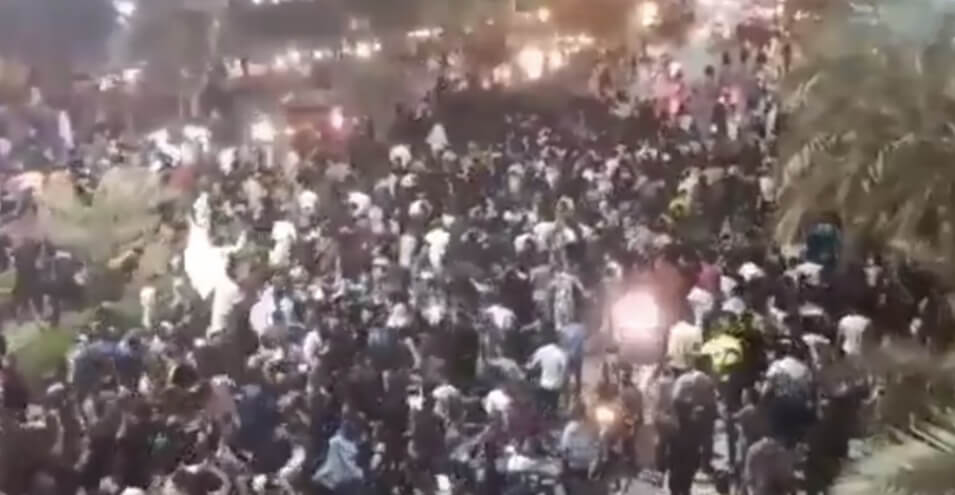
According to some websites inside Iran, students at Tehran University gathered for the second time on Monday evening to protest against the high price of gasoline. According to reports, security forces and plainclothes were present around and inside the university at the same time as the protest.
Videos posted on social media show that the doors of the University of Tehran are closed to students and they are not allowed to leave the campus.
On Sunday night, security officers entered a Tehran student dormitory and arrested three students.
Statements by Shah Hadan Aini from Shiraz: People were shot at by helicopter
A Shirazi citizen told DW: "Sometimes it seems like the city has calmed down, but the city is in a state of war. Government institutions and schools in the city are closed, bakeries are crowded, and due to the difficulty of transportation, the provision of public food is gradually becoming difficult. Only one gas station in the city is fully operational, and some neighborhoods of the city are practically devoid of the presence of government and security forces. In parts of the city, law enforcement forces are sitting in their cars in the rain, their fatigue visible on their faces."
Another citizen who planned to travel from Tehran to Shiraz told Deutsche Welle that instead of 12 hours, he was on the road for about 24 hours because transportation is practically paralyzed or semi-paralyzed.
Another person from Shiraz said that today (Tuesday) he got on the bus and went to work after three days. The bus driver said that he came to work today to prove to the authorities that he cannot continue working with these fuel prices. They are also not able to do much at work because of the internet outage.
Another person from Shiraz says: "During the day, it seems that the situation has calmed down, but then news comes again that the fighting is going on in full force in one corner of the city or another. Protesters are attacking banks and government institutions in some places, but everyone agrees that the attacks on houses and supermarkets are the work of the Guard members. In one place in the city, a helicopter fired on protesters, and now the sound of the helicopter coming is frightening. In one night alone, 80 injured people were taken to a hospital in the city."
Eyewitness statements from Isfahan: People are extremely angry
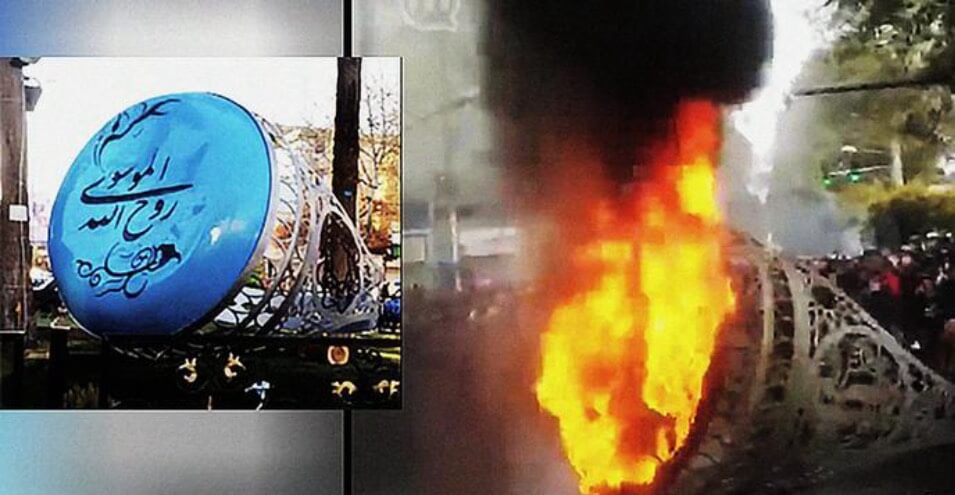
Deutsche Welle was told from Isfahan that the gatherings usually take place from 6 p.m. onwards and mostly in the lower neighborhoods of the city, such as Malek Shahr and Imam Khomeini Street. In Baharestan, the streetlights have been severely damaged. The Agricultural Bank in Baharestan's Vali Asr Square has been burned down. Across the city, cameras and traffic lights have been broken. The metro is still closed and schools have reopened this morning. But universities are still closed.
Another Isfahan citizen said that Isfahan universities have been declared closed until the end of this week.
Another Isfahan resident told DW that the shopping arcades in the south of the city, which is the wealthiest area of the city, are open, but the goldsmiths' market and the markets in Imam Ali Square (Sabzeh Square) are still closed.
Another person from the Telecommunications Department on Imam Khomeini Street in Isfahan said that the internet is still down and only access to Iranian services and applications such as Snap, bank payment systems, and Iranian sites is possible.
Another resident of Isfahan's Imam Khomeini Street, who witnessed the burning of the bank with his own eyes, told DW: "People are angry, but the idea that someone was trained to cause unrest is a complete lie. Most of the demonstrators are young and teenagers and make no effort to hide their identities. The officers use colored arrows and arresting demonstrators is like drinking water for them."
Source: DW