Mass hunger strike by 72 imprisoned dervishes in Fashafoyeh prison
Faezeh Abdipour, a Gonabadi Dervish rights activist and the wife of Mohammad Sharifi Moghadam, who is imprisoned in Fashafoyeh Prison, reported in an interview with the Campaign for Human Rights in Iran about a mass strike by more than 72 Gonabadi Dervish in two Iranian prisons, saying that their demand is to lift restrictions and security surveillance on Noor Ali Tabandeh, the leader of the Gonabadi Dervish movement, and to reopen the Gonabadi Dervish Hussainiyyahs.
According to Ms. Abdipour, the Gonabadi Dervishes' hunger strike began after Noor Ali Tabandeh refused to eat in protest of security restrictions.
Noor Ali Tabandeh, the leader and pole of the Gonabadi Dervishes, is one of the political and legal figures who was declared an apostate by Khomeini, the then leader of the Islamic Republic, in 1988 for protesting the Qisas bill. After a clash between security officers and a number of Gonabadi Dervishes on Golestan 7th Street in Tehran in February and March 2017, he was placed under house arrest and the Gonabadi Dervishes have been restricted from visiting him. On September 20, 2019, Mr. Tabandeh was allowed to travel to his hometown of Bidakht, but security officers did not allow the Gonabadi Dervishes to accompany him.
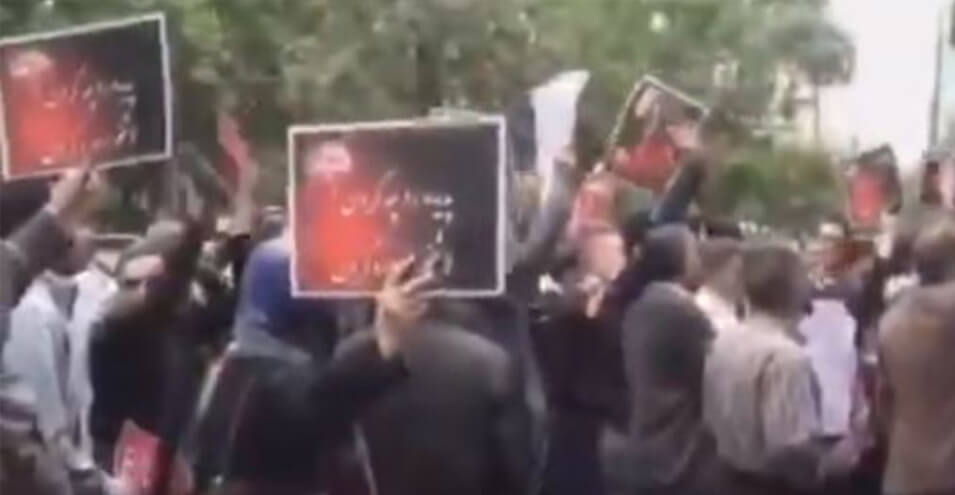
On February 20, 2017, the Gonabadi Dervishes gathered to protest the siege of their leader’s (Noor Ali Tabandeh) house in Tehran by security forces and the arrest of one of their co-religionists. The peaceful gathering turned into chaos when security officers and law enforcement officers attacked them. Mohammad Raji, one of these dervishes, was beaten and arrested during the clashes on the morning of February 2, and died in prison.
Faezeh Abdipour, a Gonabadi Dervish rights activist, said in an interview with the campaign: “When the news of Dr. Tabandeh’s refusal to eat reached the children in prison, they also went on a hunger strike on Sunday, November 1, and said they would also refuse to accept medicine. 72 people are currently on a hunger strike. 69 are in Greater Tehran Prison and three are in Evin Prison, namely Sepideh Moradi, Shokofeh Yadollahi, and Sima Entesari, who are in the women’s ward of Evin Prison.”
According to Ms. Abdipour, "Those who have been on hunger strike want all restrictions imposed on Dr. Tabandeh to be lifted, dervish gatherings and Hussainiyahs to be opened, and the security watch to be removed from the dervishes and Mr. Tabandeh himself."
He added: "After the Golestan 7 incident, Mr. Tabandeh was placed under siege and his contact with the dervishes was cut off. After a year when the dervishes used to visit him a lot, the visits are still limited. The dervish gatherings that were held in the Husseiniyas in various cities of Iran, such as the Amir Soleimani Husseiniya in Tehran, have all been closed."
Faezeh Abdipour told the Campaign about Noor Ali Tabandeh's hunger strike and refusal to eat: "The reason for his refusal to eat was that he was prevented from meeting with the Dervishes. In addition, he is concerned about the situation of the Dervishe prisoners. Children have been made unemployed and deprived of education, and after the Golestan 7 case, widespread arrests and heavy and unjust sentences continue. All of this has caused concern. He refused to eat, and the prisoners also went on a hunger strike from inside the prison and said that they were also refusing medicine."
The Gonabadi Dervishes are followers of a mystical minority in Iran who have a different interpretation of Islam than the one prevalent in the Islamic Republic. The Islamic Republic has a hostile attitude towards different interpretations of the official religion, including the Gonabadi Dervishes who have a different interpretation of Shiism, and these individuals face various forms of discrimination in the fields of education, work, and expression of their beliefs.
Over the past years, a large number of these dervishes have been arrested and imprisoned for expressing their beliefs, performing religious rituals and ceremonies, or reporting on violations of their rights. The arrest of lawyers as well as the administrators of the Majzooban Noor website belonging to the Gonabadi Dervishes is also among the incidents against this group.
Faezeh Abdipour, a Gonabadi dervish, said in an interview with the Campaign about the situation of the dervishes imprisoned in Fashafoyeh Prison: “Dervishes are currently in two brigades and one secure hall in Tehran’s Grand Prison. Secure halls refer to suites where prisoners are kept individually and separately from other prisoners. There are 9 people in those suites, and the rest of the dervishes are in brigades 4 and 2 of Tehran’s Grand Prison and have no contact with ordinary prisoners. They make it very difficult for dervishes to meet in person. For example, in the past year, I have only met with Mohammad in person once, which was in December 2018.”
He added: "There is no drinking water at all and everyone has to buy their own. Hygiene is below zero and the prison food is both contaminated and of unedible quality. This prison is actually a prison for ordinary prisoners and there is no segregation of crimes. Until a month ago, a number of dervishes were spread out among ordinary prisoners in the general ward and there was a possibility of conflict and death at any moment. With the follow-up we did and the protests that the children had from inside the prison, they have returned everyone to the halls except for 9 people who are being held for security purposes."
The campaign's follow-up shows that the names of the Gonabadi dervishes who have embarked on a collective hunger strike in prison are as follows: Ahmad Iranikhah, Saeed Durandish, Morteza Kangarloo, Saleh al-Din Moradi Sarvestani, Kasra Nouri, Sina Entesari, Reza Entesari, Mustafa Abdi, Sekhavat Salimi, Rasoul Hoveida, Abbas Dehghan, Javad Khamisabadi, Mojtaba Beiranvand, Saeed Soltanpour, Mohammad Reza Darvishi, Heydar Teymouri, Mohsen Moghaddisi, Faramarz Mangeri, Ahmad Barakoohi, Mahmoud Barakoohi, Seyyed Mustafa Mirmohammadi, Farnam Farhang, Akbar (Kianoosh) Beiranvand, Seyyed Mehdi Fateminasb, Hossein Arang, Jafar Ahmadi, Hadi Karimi, Reza Yavari, Alireza Lak, Babak Moradi, Alinejad Sahebi, Muslim Norouzi, Akbar Dadashi, Morteza Ghaderi, Abdullah Esmaili, Mustafa Rahspar, Mehdi Mahdavi, Farhad Naeimi, Saleh Kamali, Hossein Razzaghi, Ardeshir Ashayeri, Milad Kakavand, Mirsadegh Hosseini, Behrouz Sadeghi, Mehdi Izadpanah, Saeed Goodarzi, Majid Moradi, Mehran Asgharzadeh, Hadi Shahreza, Vahid Khamoshi, Saeed Khamoshi, Alireza Azadroosh, Mehdi Bakhtiari, Mohammad Hassan Shahreza, Ehsan al-Din Malekmohammadi, Babak Taghian, Mehdi Mehdilou, Bashir Riahi, Majid Rashidi, Reza Sigarchi, Mehdi Keyvanlou, Sadegh Qeysari, Mohammad Hossein Abolfathi, Behnud Pourrostami, Reza Rezaei, Saeed Karimaei, Mohammad Karimaei, Mohammad Sharifi-Moghaddam, Amir Soleimani, Shokofeh Yadollahi, Sima Entesari, Sepideh Moradi Sarvestani
They issued a statement addressed to Noor Ali Tabandeh, saying: "We are deeply saddened to hear the news about the physical weakness of His Excellency Mr. Hajj Dr. Noor Ali Tabandeh Majzoob Alishah, which is the result of not eating enough food due to the existing restrictions. Our concern and impatience regarding his condition has reached its peak. Therefore, we implore His Holiness to end his abstinence out of kindness to his followers, and we hereby announce that we will refrain from food and medicine until the security pressures and restrictions on Dr. Tabandeh are completely lifted, the Hussainiyyas are reopened, and all of his wishes are fulfilled. We, his followers, have no desire other than his health, safety, and longevity. May it be forbidden for me to choose life over a friend."
Source: Human Rights