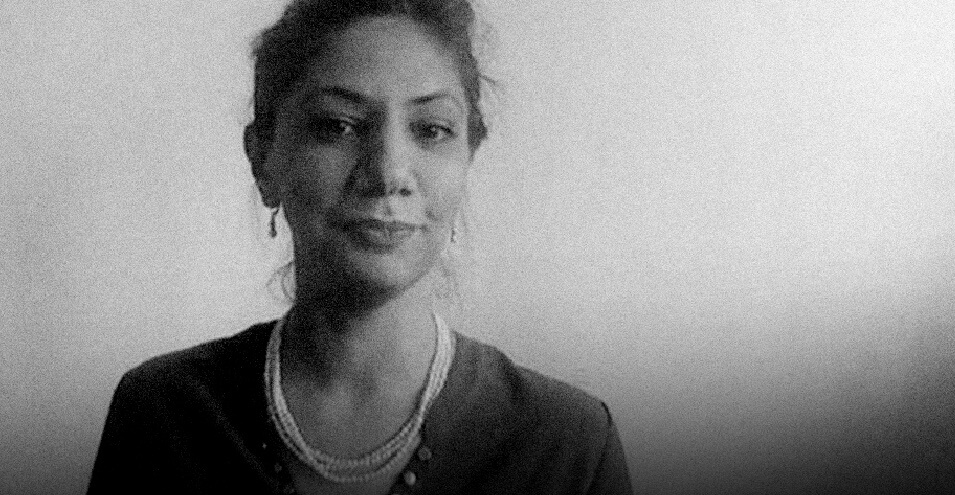
Livelihood discrimination and gender discrimination in Iran are strongly linked; an exclusive interview with Mina Khani
Recently, the preparations for the "Population Youth Plan" to become a law were finalized with the approval of the Guardian Council. A plan that, apart from its many negative consequences, such as the increase in child marriage or the spread of disease among women due to the lack of access to health and preventive measures, is an example of discrimination against Iranian women. How do you formulate this plan-law in line with discrimination against women?
In free societies, the issue of ownership of one's own body is essentially one of the most important issues of emancipation. When we talk about this concept, we don't just mean that women can walk freely on the street and not be afraid of being sexually assaulted at any moment! When we talk about emancipation, we are actually talking about the "political, economic and social subjectivity" that women gain through their own liberation. This law or the youth population plan itself and certain things in it, such as the ban on abortion and basically using the female body as a reproductive device, are completely related to the policy of "housekeeping" women. No matter how much this view of girls and women exists that you have to be mothers to have children, meaning that you are supposed to stay away from social relations more. For example, some European societies that have tried to define the issue of childbearing with women's job status in a specific economic system and have more space, we still see that women move away from the existing economic order to some extent when they become pregnant and have children. For example, the decision to have children should be based on their job situation and schedule. Now consider how this type of law (the youth population plan) that further restricts access to contraceptives has serious consequences in a society like Iran, with all the reactionary laws regarding women and the severe economic pressures that exist.
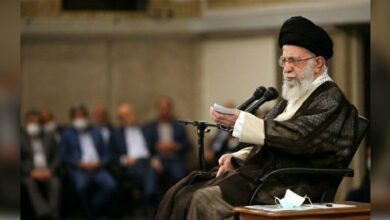
If you pay attention to Ali Khamenei's speeches in recent years, you will constantly see that he emphasizes the issue of childbearing and the growth of Iran's population. This is while in the years before that, the government had come to the conclusion that they should control the population to some extent, but the change in the government's view towards militarism changed the path. In fact, our civil society has overlooked an important point; that there is a serious connection in the politics of the Islamic Republic of Iran to become a regional power and its insistence on increasing the country's population and its efforts to do this through women. In fact, when the government wants to create a military situation, it always encourages population growth and in post-war periods it always encourages population control. For example, in the period after the Iran-Iraq war, policies based on population control were started and families were advised to have one child at best and two children at most. Of course, this had nothing to do with the ideological order of the Islamic Republic and in fact it still viewed women as reproductive organs. However, the reason for population control in those years was for various reasons. For example, the gender balance in society had been disrupted and the number of men had decreased, or the crisis of families without a headman that the Islamic Republic had to solve. In the current era, however, the Islamic Republic insists on a policy of militarism. Militarism always needs soldiers and it needs lives to be killed. All militaristic governments, including Nazi Germany, encouraged mothers to have more children. All societies that are experiencing war, even their subordinates, emphasize this childbearing. There is always a strong connection between this way of looking at women who should only have children and this policy of militarism or war, and we now see that both of these are happening simultaneously in the Islamic Republic.
On the other hand, in previous years, some women's movements, in response to such laws, carried out activities such as free distribution of contraceptives in deprived and impoverished areas, or spontaneous campaigns to combat AIDS. In fact, the launch of AIDS-related campaigns was not just about free distribution of condoms or contraceptives. In a sense, it was not just a charitable view, and discussions were formed around this movement about what should be done to prevent the transmission of this disease (AIDS), and these discussions themselves led to the creation of a movement. Now, by enacting such laws and dealing with activists and limiting freedom of expression, the Islamic Republic is confronting the possibility of similar movements forming, and by this means it is establishing a kind of social order.
The formulation of gender discrimination in Iran is defined in various ways; from existing discriminatory laws to the patriarchal view existing in society. What do you think has been overlooked or paid less attention to in the formulation of gender discrimination in Iran?
The relationship between gender-based violence and economic violence in relation to Iranian women is often not discussed together. Often these issues are raised in opposition to each other. It seems that there are some who present the image of Iranian women subjected to state violence as an image of upper middle-class women. Of course, I do not believe in this concept of middle class, because the application of middle class to women must be clearly defined. For example, women in this middle class are forced into forced labor, and in fact, these women themselves do not have independent and direct access to the economic components of the middle class. For example, these women do not own property, or if they do, the scope or method of accessing the economic opportunities of the middle class is largely controlled by the men of this class. The reason for this is actually one of the points of connection of these discriminations, meaning that the same discriminatory and misogynistic laws that exist in the text of the laws of the Islamic Republic leave the hands of the men of the families free to commit economic violence against women. From the issue of unequal inheritance and unequal blood money, which are very symbolic of this discrimination, to the deplorable state of women's employment in Iran. A large portion of university seats are held by women, but fewer jobs are held by women, which indicates another dimension of the cycle of inequality and discrimination. According to statistics, currently 18 percent of the society is occupied by women, and we know that a large number of this small percentage of employed women belong to the lower class of society and receive salaries that are much lower than those of men. In fact, these statistics tell us that the remaining 82 percent of women do not have a direct and independent economic income. In such circumstances, government laws that prevent women's freedom of action and take away their freedom of choice (from the freedom to marry and have children to choosing a city and workplace or university) are precisely related to the government's policy of economic subordination. Now, these conditions are compounded by the general economic and class situation in Iran today. Iran is ruled by severe class and economic conditions that, regardless of gender discrimination, have led most of the Iranian people to economic subordination. In these circumstances, it can be said that the situation of women is much more difficult. It should be added that the lack of financial independence of women also increases the possibility of sexual violence. For example, an employer can easily commit sexual violence and the worker can remain silent about it because he is forced to receive his salary. This is a clear example of the connection between sexual violence and economic violence.
To what extent has this aspect of discrimination against women, which is of particular importance and significance in the current era of Iran, been addressed?
We know that there are discussions and opinions all over the world that poverty basically has a female face. But the situation of women in Iran and several other countries in the world is a very special and unique situation that is often overlooked and ignored. Unfortunately, the dominant image that is presented of discrimination against women loses the connection between "economic discrimination" and "gender discrimination." That is, when the issue of discrimination against women is raised, unfortunately, sometimes a face of discriminated women is presented as if the majority of them have a good or normal financial situation. In a sense, the representation of being "middle class", meaning the form and way of life, in some women's rights movements causes their economic status to be equated with middle class criteria. But I emphasize that this view is not just a dominant media view, but all those who insist on the class issue, unfortunately, their understanding of the class issue is something that does not see this "interaction" of the class and gender issues. If they do, they do not pay much attention to it or do not consider these discussions "affordable." And when they do want to address class and economic issues and sufferings, they pretend as if the majority of women's society and women's movements are composed of those who do not have many livelihood problems and are only seeking to obtain their basic rights such as the right to their bodies and the choice of clothing. While it must be said that these (livelihood problems and gender discrimination) are not at all separate from each other and are not in opposition and conflict with each other and are not defined. The relationship between the law that makes the hijab mandatory and the situation that subordinates women to such an extent in the patriarchal family institution that they have no financial independence at all is a strong relationship. In fact, they also have a legal and legal relationship, which, combined with the existing class situation, adds to the difficulties and sufferings of women in society. In a sense, such laws (laws restricting women, such as compulsory hijab, etc.) themselves constitute a form of economic discrimination.
What you mean is that it is fundamentally impossible to separate the forms of discrimination (legal, cultural, social). How do these aspects of discrimination come together at one point?
In fact, it must be said that social patriarchy cannot be separated from the existing law. This is because the laws and government propaganda apparatuses both cultivate and reinforce the issue of social patriarchy, and in fact ideologize and systematize it. In this sense, it must be said that the same apparatus that commits “gender violence” is the same apparatus that systematically engages in “economic subordination” and drives these two issues in tandem. Therefore, ignoring or missing any of these components causes the connection between the two issues to not be seen at all. It must be said that there is a serious misunderstanding regarding the way the gender issue is raised. Specifically, I must say that instead of reaching a consensus on this issue, the working class movements and women’s movements stand “face to face” at many points.
How does this confrontation occur? What is a clear example of it?
For example, on the issue of compulsory hijab, for a long time the group that represented the movement against compulsory hijab never talked about the economic issue, or if they did, it was not very much related to the issue of compulsory hijab. In this sense, the representation of the struggle and women's movement was a representation of the group of "middle-class women" who only sought to make the hijab optional. On the other hand, the leftist movements and approaches had an obstacle in "understanding the necessity of addressing the issue of compulsory hijab." The problem here was that both of these two sides did not see the "interaction" of economic discrimination and gender discrimination.
My experience as someone from the left who has always participated in conversations and debates in various circles, cyberspace, and articles and intertextual discussions about class struggles is that in conversations we always encountered a concept called the “middle class” movement. In fact, the left always called women’s movements and movements against gender discrimination “middle class movements,” and in fact, in their opinion, the work of these movements only works for a part of the female community, ignoring inferior women and neglecting working women. I believe that apart from the criticism that is leveled at the representation of these movements against gender discrimination, it should be noted that the very issue of eliminating forms of discrimination that are purely gender-based contributes to women’s economic empowerment. For example, you cannot say that the issue of compulsory hijab for working class women does not entail “economic violence.” Why? Because through compulsory hijab, the issue of gender discrimination is explained, and through gender segregation and the ideological system, the issue of limiting women's participation in many jobs arises, and ultimately, it marginalizes a large part of women. I believe that the situation of women in Iran is a special class situation, and this special situation is directly linked to the issue of compulsory hijab. On the other hand, in today's Iranian society, if a citizen wants to refuse compulsory coverage and so-called "badly wears hijab" and thus engages in civil disobedience, he must pay a fine. That is, if he is sentenced to flogging and cannot pay the fine equivalent to the sentence, he will be forced to endure flogging. In a sense, the fight against compulsory hijab is harder and more difficult for women who have little economic wealth. On the other hand, the very heavy bails and mechanisms of the judiciary in dealing with activists and fighters against compulsory hijab in the real sense make this fight harder for a group of women who do not have financial independence. In this one example, the issue of compulsory hijab, we see how strong the connections are between livelihood discrimination and gender discrimination, but this issue is not given much attention in political formulation.
To what extent do you think this political formation is currently defined by women activists in civil and political movements themselves? Many say that any form of change in Iran’s future is very feminine and in some way closely linked to the women’s movement. To what extent do you agree with this interpretation?
این تفسیر به نظر من هم درست است. نسل جدیدی از زنان به مبارزات تبعیض جنسیتی و طبقاتی پیوستند که بسیاری از آنها از زنان مستقل و از«حاشیهها» به این جنبشهای پیوستند. کسانی مانند سپیده قلیان در واقع افرادی هستند که بدون اینکه وابستگی به جریانهای روشنفکری و یا محافل سیاسی داشته باشند به شکل مستقل به مبارزات پیوستند و به معنایی میتوان گفت که این زنان کلیشههای مبارزه علیه تبعیض جنسیتی و تبعیض اقتصادی را شکستند. در حقیقت این فعالان زن نشان میدهند که دغدغههایشان فقط تبعیض جنسیتی نیست و این دغدغهها در حوزههای دیگر هم بهم پیوند میخورند. در سالهای اخیر بر تعداد زنانی که در فعالیتهای مدنی و مبارزات علیه تبعیض در حوزههای مختلف فعالیت مستمر داشتند، افزوده شده است. به نظر من دلیل اصلی این موضوع از چند جهت قابل بررسی است. از سویی هرچقدر خشونت اقتصادی بیشتر شد، بیشتر گریبان زنان را گرفت. به خاطر ماهیت جنسیتی که خود خشونت طبقاتی در ایران دارد؛ دقیقا به واسطه نظام ایدئولوژیک. از سوی دیگر هرچقدر وضعیت از نظر سیاسی متزلزل شد و جریاناتی مثل اصلاحات به عنوان یک هژمونی سیاسی شکست خوردند، فعالان مدنی فرصت کردند که بیشتر به مسائلی چون تبعیض جنسیتی و یا تبعیض طبقاتی بپردازند. در حقیقت رادیکالیزه شدن فضای اجتماعی و سیاسی امکانی را به وجود آورده که برخی صداها که کمتر شنیده شدند، بیشتر از قبل شنیده شوند. در عینحال باید به قدرت و تاثیرگذاری شبکههای اجتماعی هم اذعان کرد. در واقع این فضا باعث شده است که بحثهای سیاسی و اجتماعی از قبضه یکسری افراد و شکل صورتبندی آن افراد بیرون بیاید و بیشتر شاهد وضعیتی باشیم که اصطلاحا به آن Grass – root (جنبشهای برآمده از اجتماعات مردمی) میگویند. در واقع این نوع شبکههای شاخهای وضعیت درونی را بیشتر توضیح میدهند و ریشهایتر هستند و از ریشه آمده اند. در حال حاضر میبینیم که این موضوع (بلندتر شدن صداهای خاموش) بیشتر شده اما هنوز هم چندان جا نیفتاده است. مثلا در آن صورت بندی سیاسی هنوز آن نگاه قبلی وجود دارد و فعالیتها و حضور این چهرهها نتوانسته تغییرات جدی به وجود آورد. مثال این میتواند جنبش «می تو» ایرانی باشد. در این جنبش بسیاری از زنانی که آمدند تا از تجربه خشونت و آزار جنسی خود حرف بزنند، اساسا از نظر اقتصادی در شرایط کاملا غیر مستقلی بودند و این باعث میشد که مانع جدی برای حرف زدن آنها باشد. معمولا به دلیل وابستگیهای اقتصادی و یا محدودیتهای اجتماعی مجبور میشدند که یا روایتهای خود از تبعیض و خشونت جنسیتی را بازگو نکنند و یا خیلی با احتیاط درباره آن سخن گفتند تا اصلا شناخته نشوند. تصور عمومی یا افسانه عمومی این است که زنانی که از تجربیات خشونتهای جنسی خود حرف میزنند اساسا برای «مطرح شدن» این کار را میکنند، در حالی که بنا به فعالیت من در این حوزه براساس آمار میتوانم بگویم که اکثر این راویان را بیشتر خود فعالان این حوزه میشناسند و در عموم چندان شناخته شده نیستند، به جز چند مورد بسیار محدود. یعنی همین هم باز به معنایی با استقلال مالی و شرایط اقتصادی پیوند میخورد. این جدای از آن است که اساسا در قانون مساله «تجاوز» به صورت جرم صورت بندی نشده و به عنوان «زنا» صورت بندی شده که در واقع در قانون جمهوری اسلامی یکجور نگاه اخلاقی به مساله خشونت جنسی هست و از زاویه درستی به آن نگاه نمیکنند. بعد از مدتها «طبقه متوسطی» خواندن جنبش «می تو» الان به تازگی صدای خیلی از راویان این جنبش درآمده که اصلا اینطور نیست و ما وضعیت اقتصادی خوبی نداریم و اصلا این تصور از کجاست که ما وضع زندگی خوبی داریم و هیچ غمی نداریم و حالا با این بهانه خشونت جنسی میخواهیم خود را مطرح کنیم؟
What do you think is the reason for the government's harsh and severe treatment of women activists?
There are two very important issues regarding the Islamic Republic; one is economic corruption and the other is an authoritarian ideological order. The question is, through what ideological order does the Islamic Republic government stabilize this corrupt economic, social, and political system? In fact, we are faced with a corrupt political and economic system that everyone keeps asking why it doesn’t collapse? They ask how high inflation is going to go or how the problem of increasing poverty will be solved? How have these rulers, who don’t even know how to govern, still managed to survive with all these problems? These questions can be answered with a brief explanation that this is a dictatorial government, but this is not enough to explain the current situation. In a sense, the dictatorship of the Islamic Republic of Iran differs from the dictatorship of Germany in the 1930s and 1940s. There are differences in the way the Islamic Republic of Iran defines itself ideologically. You see, the ideological order that the Islamic Republic of Iran has defined has been formed through the control of women’s bodies and the creation of this gender division. Whenever this gender formation changes in Iran, the ideological order of the Islamic Republic is destroyed and its corrupt system collapses. The regime knows that it needs an ideological order for the economic and political corruption it has unleashed, and a large part of this ideological order is actually produced through this control of women's bodies. In fact, the presence of female activists in civil and political struggles is a kind of confrontation with the ideological order of the Islamic Republic of Iran, and this is why the Islamic Republic's approach and attack on female activists in various fields is more severe and violent. On the other hand, the regime is trying to destroy the image of female activists by "socially stigmatizing" female activists, which is actually based on patriarchal beliefs in society. In fact, the regime is trying to limit the activism of female activists with these techniques. Activists who are constantly present in various fields, from advocacy movements to class movements, have a serious presence, and the regime wants to reduce and reduce their scope of movement. In fact, restricting women's movement between different civil and political movements causes some activists to sometimes not reach an understanding about this issue of ideological order and weakens these movements, a point that the government is well aware of and has used against activists for a long time. For example, we see that in the sixties, the issue of sexual violence in prisons was raised, but until recently, when people like Sepideh Qolyan, Narges Mohammadi, and Atena Farghdani had not spoken about the issue of sexual harassment in prisons, the issue of sexual harassment in prisons in the sixties was kept quiet. Because basically, this issue has been a taboo. Even among political and civil activists themselves, those women civil activists who take these stigmas to heart and move among these movements and even link these movements together through their bodies are very "dangerous" for the Islamic Republic, and the government has a serious problem with them.
Source: Iran Human Rights Campaign