Security forces search Narges Mohammadi's home and seize her belongings
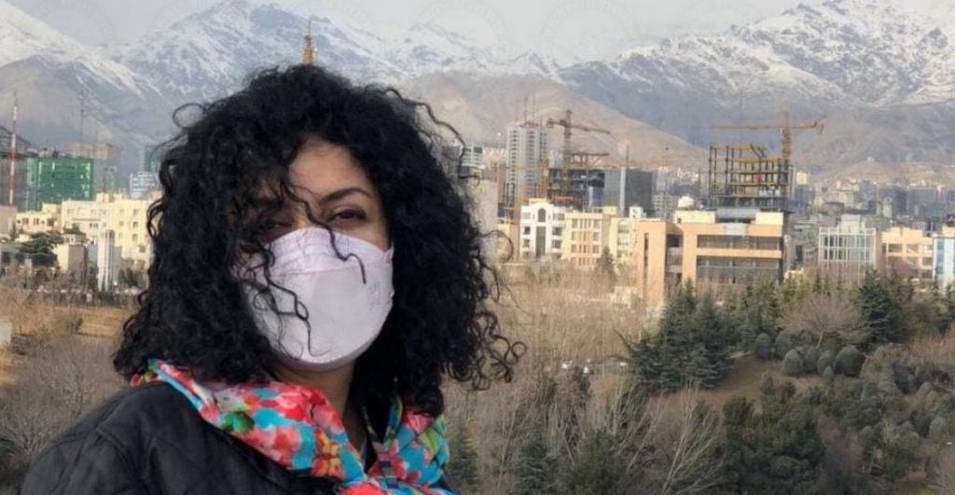
HRANA News Agency – The home of Narges Mohammadi, spokesperson for the Center for Human Rights Defenders, was searched by security forces on Wednesday, January 28. During the search, security officers confiscated and took away some of her personal belongings, including her books. Ms. Mohammadi was arrested by security forces in Karaj on November 15 and is currently being held in a solitary cell in the Ministry of Intelligence’s detention center, known as Ward 209, in Evin Prison.
According to HRANA News Agency, the news agency of the Human Rights Activists in Iran, on Wednesday, January 28, 2021, the home of Narges Mohammadi, spokesperson for the Human Rights Defenders Center, was searched by security forces.
Ms. Mohammadi's husband, Taghi Rahmani, announced this news and recorded books such as White Torture during the inspection, writing in a note on his personal page: "Narges is still in solitary confinement and without a lawyer. White torture continues."
Mr. Rahmani had previously reported on the continued detention and uncertainty of Narges Mohammadi, despite the fact that more than a month had passed since her arrest in one of the solitary cells of Ward 209 of Evin Prison, and the filing of new charges against her.
Ms. Mohammadi was arrested by security forces in Karaj on November 15, during a ceremony commemorating the second anniversary of the death of Ebrahim Kebatdar, one of the victims of the November 2019 protests. She was sent to Evin Prosecutor’s Office on December 2 for questioning and returned to solitary confinement. Ms. Mohammadi’s husband, Taghi Rahmani, had previously stated in a note that “the investigator of Branch 2 of Evin Prosecutor’s Office says that Narges does not have the right to choose a lawyer. According to her, she is in solitary confinement for the cases that have been filed against her.”
In a report in March 2020, HRANA reported that this human rights activist had been summoned to the Evin Prosecutor’s Office. Ms. Mohammadi had published an open letter in this regard, saying that “I have not participated in any stage of this investigation and have not complied with the verdict issued by the courts of the judiciary in this case, and I will definitely disobey it.” In June of this year, Narges Mohammadi was sentenced to 30 months in prison, 80 lashes, and two cash fines by Branch 1177 of the Criminal Court of the Second Judicial Complex of Quds, Tehran, on charges of “propaganda activity against the regime of the Islamic Republic of Iran through the publication of a statement (a statement opposing the execution), holding a sit-in in the prison office, disobeying the prison administration and officials (to end the protest sit-in), destroying windows, slander, and assault.” In October of this year, she was summoned to the Evin Prosecutor’s Office’s Sentence Execution Unit for execution of the sentence.
Ms. Mohammadi, who had been in prison since May 5, 2015, was sentenced to 16 years in prison on three charges. According to Article 134 of the Islamic Penal Code and considering “severe punishments,” Narges Mohammadi should have served 10 years in prison. On December 20, 2019, she and seven other political prisoners in the women’s ward of Evin Prison announced in a letter that they would be holding a sit-in for several days in prison to mark the 40th day and to join the grieving families of the nationwide protests in Aban. Following this sit-in, Evin Prison officials threatened Ms. Mohammadi and the other sit-in prisoners with deportation to another prison, and finally, on Tuesday, January 20, 2019, they transferred her from Evin Prison to Zanjan Prison. In January of last year, she also described the events and the treatment of the Evin Prison governor and security forces during her transfer in a letter.
Narges Mohammadi was finally released from Zanjan Prison on October 6, 2020, using the law on reducing prison sentences. She had been deprived of the right to have a passport and leave the country for more than a year after her release. Ms. Mohammadi was banned from leaving the country to visit her husband and children because her previous conviction did not include a supplementary punishment of a ban on leaving the country.
Source: HRANA