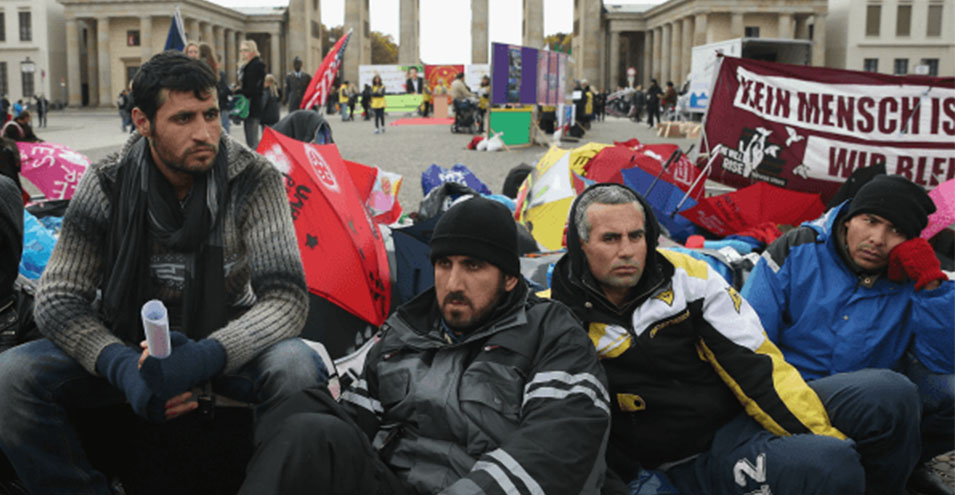
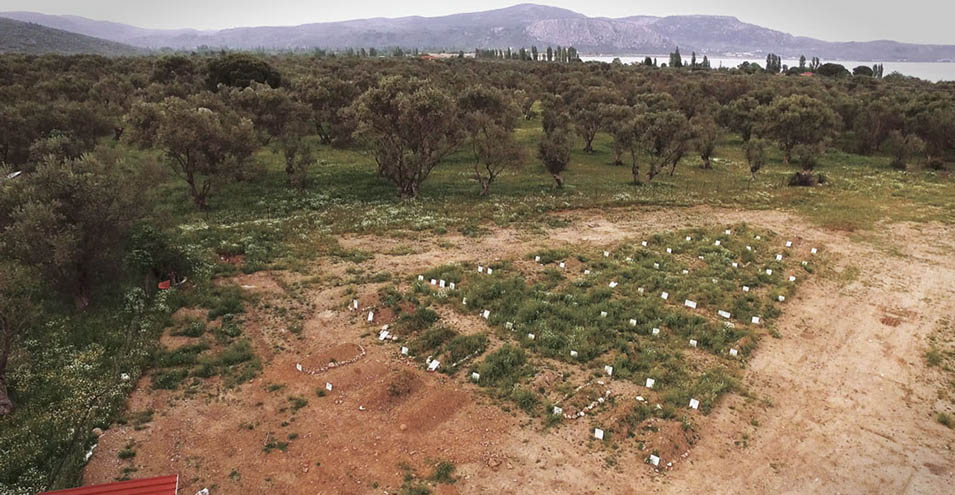
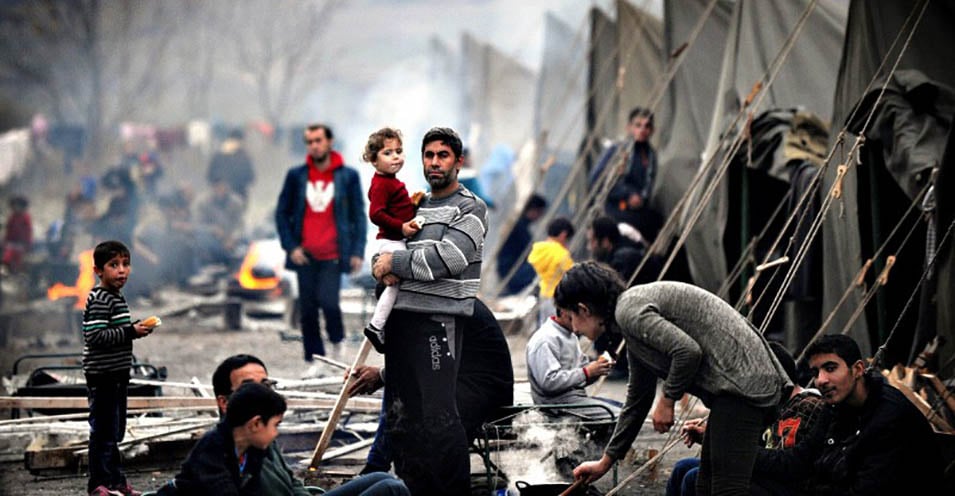
Erdogan’s Threat: We Will Send 3.6 Million Refugees to Europe
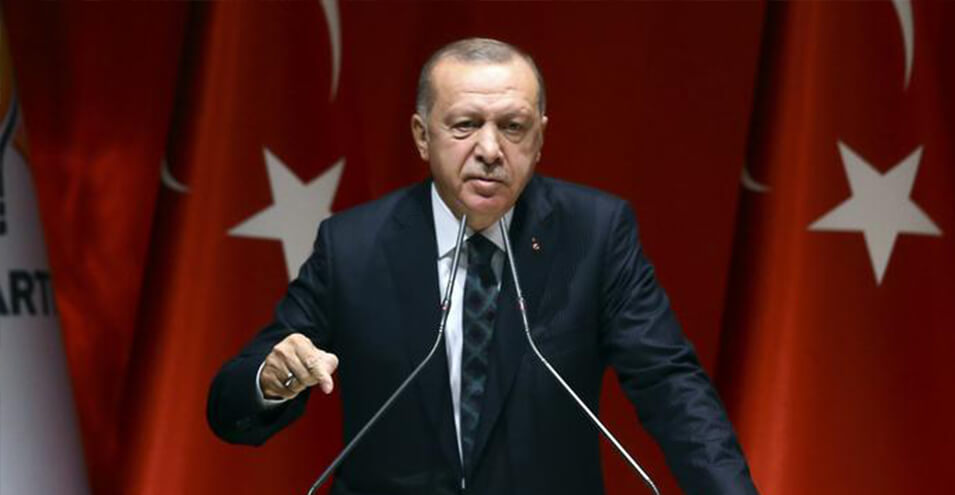
Recep Tayyip Erdogan, President of Turkey, angrily responded to criticism regarding Turkey’s attack on Syria. He said that if Europe does not withdraw its accusations, he will send 3.6 million refugees to Europe.
The Turkish military’s attack on northern Syria has faced severe criticism. Not only the United States but also the European Union has strongly condemned this operation. The Commission of the Union has asked Turkey to fulfill its responsibilities as a candidate for entry into the European Union.
A spokesperson for the European Commission in Brussels said: “Entry into the European Union requires that all candidates follow the foreign policy of the European Union.” He continued that in this regard, if Turkey is serious in its application to join this union, this is the path that this country must also follow.
Recep Tayyip Erdogan, President of Turkey, in response to these remarks addressed to the European Union saying: “Hey, Europe! Wake up! Once again I say: if you try to describe our operation as aggression, our duty will be clear: we will open the doors and send 3.6 million refugees toward you.” He continued that Europe is not honest and has not told the truth so far.
Erdogan’s reference is to 3.6 million Syrian refugees living in Turkey.
Thousands Fleeing War
In northern Syria, people are fleeing from Turkey’s military attack. According to the Syrian Human Rights Observatory, more than 60,000 people are fleeing this region. Most of these people are residents of Syrian border cities such as Ras al-Ain, Tel Abyad, and Darbasiyah. According to Syrian activists, those fleeing the war are moving eastward, and their destination is likely areas around the city of Hasaka.
Reporters from the French news agency have reported seeing people leaving Ras al-Ain and fleeing war zones by car, on foot, or on motorcycles.
According to 14 aid organizations in areas on the border between Syria and Turkey where fighting is currently ongoing, a total of 450,000 people live. Based on this report, “if the parties involved do not exercise maximum restraint and the protection of civilians is not their priority,” this number is at risk.
These relief organizations said that if they are forced to withdraw their staff from these areas due to escalation of the conflict, those whose lives are at risk cannot receive essential aid.
Global Opposition to Turkey’s Military Operation
It is not only the United States and the European Union that have opposed Turkey’s military attack on northern Syria. Israel has also condemned this military operation. Benjamin Netanyahu, Prime Minister of Israel, said on Thursday, October 9: “Israel strongly condemns Turkey’s military operation in Kurdish-populated areas of Syria and warns of ethnic cleansing in these areas.”
Netanyahu continued: “Israel is ready to provide humanitarian assistance to the brave Kurdish people.”
Iran’s Ministry of Foreign Affairs also opposed the military action in Syria in a statement. The statement said: “The Ministry of Foreign Affairs of the Islamic Republic of Iran, while understanding Turkey’s security concerns as previously stated, does not only assess military action as a solution to this country’s security concerns, but considers it to cause extensive material and human damage, and on this basis declares its opposition to this action.”
Iran’s Foreign Ministry also expressed concern about the consequences of this attack, especially for civilians, and called for an immediate stop to these attacks and the withdrawal of Turkish military forces from Syrian territory.
Concerns of UN Relief Agencies
United Nations relief agencies have expressed their concern about Turkey’s military attack on northern Syria. “Mark Lowcock,” the coordinator of emergency aid for the United Nations, in a statement released on Thursday in Geneva, called for the protection of civilians in the attacked areas. On the same day, he went to Turkey to meet with representatives of the government of this country.
The United Nations Children’s Fund said that many boys and girls in northeastern Syria face “serious danger of injury, death, or forced displacement.”
The head of UNICEF in New York stressed that another military tension would have “unfortunate consequences.”
Turkish Army Advancing Against Kurdish Militants
The Turkish military began its military attack against Kurdish militants “People’s Protection Units” (YPG) on Wednesday, October 8. The stated purpose of this operation is to create a “safe zone” within Syrian territory where two million Syrian refugees are to be resettled.
The Ankara government considers the YPG a branch of the Kurdistan Workers’ Party (PKK), which is recognized as a terrorist organization in Turkey. Ankara fears that strengthening Kurdish forces at Turkey’s southern borders will lead to the creation of an autonomous Kurdish region and ultimately the separation of Kurdish areas in Turkey from Turkish territory.
Turkey’s military attack on northern Syria immediately faced international protests. European Union countries in a joint statement on the same Wednesday stated that “the new armed conflict in northeastern Syria again jeopardizes stability in the entire region and increases the suffering and pain of civilians and causes more people to flee these areas.”
In this statement, Turkey was accused of jeopardizing the success of the global coalition against ISIS. For example, it was mentioned that as a result of this new conflict, imprisoned ISIS terrorists could be released.
Three Billion Euros from the European Union to Turkey
Erdogan had threatened in September that he would no longer keep Syrian refugees in Turkey. At that time, there was a dispute over European Union financial aid that was agreed upon in the refugee agreement in 2016 between the European Union and Turkey.
Under this agreement package, refugees who have illegally entered Greek territory can be sent back to Turkey. In return, the European Union guaranteed that within three years, twice, it would pay three billion euros each time to Turkey for the maintenance of these refugees.
In return, Ankara guaranteed that it would make greater efforts to prevent refugees from crossing the Aegean Sea islands. Since the start of the civil war in Syria, according to official statistics, Turkey has accepted approximately 3.6 million Syrian refugees on its territory. This figure is higher than all other countries.