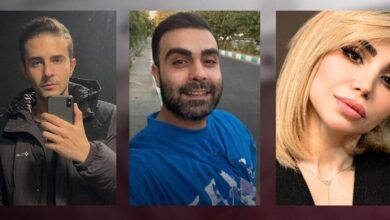
The lives of political prisoners deprived of medical services and treatment are at risk.
If urgent action is not taken to treat prisoners deprived of medical facilities, the bitter story of Behnam Mahjoubi will be repeated again.
The death of Behnam Mahjoubi, a prisoner of conscience, which occurred as a result of numerous neurological problems in prison and the lack of proper treatment, is evidence of the ongoing serious crisis in Iranian prisons; the deprivation of prisoners, especially prisoners of conscience and political prisoners, from medical treatment and services.
Hadi Ghaemi, director of the Human Rights Campaign in Iran, said: "There are many prisoners in Iran who are in urgent and desperate need of medical treatment, and there is concern that they will die if they do not receive the necessary medical treatment and care."
According to Hadi Ghaemi, "Governments around the world should strongly condemn the Islamic Republic of Iran's practice of depriving prisoners of medical care and using this tactic as a tool for torture and extrajudicial killing against detainees."
The Campaign for Human Rights in Iran calls on the government of Hassan Rouhani and lawmakers in Iran to hold judicial and prison authorities accountable for denying prisoners access to medical care.
The Human Rights Campaign in Iran also calls on the international community to take a united and united stance in response to the Iranian authorities' "systematic denial of prisoners' access to medical services and treatment and care."
Behnam Mahjoubi, a Gonabadi dervish, was arrested along with a large group of his co-religionists during a street demonstration in Tehran in 2017. In August of this year, he was sentenced to two years in prison and a two-year ban on membership in political or social parties, groups, and organizations for what was called “gathering and colluding against the security of the country through communication with others and facilitating an illegal gathering,” and was transferred to Evin Prison. He continued to be held in prison despite the forensic doctor’s confirmation that he could not bear the prison. Behnam Mahjoubi was transferred to Loghman Hospital in Tehran on Saturday, February 15, after his physical condition deteriorated in prison, and he died eight days later, on February 22, after enduring a difficult situation.
A day later, Mehdi Foruzesh, Director General of Forensic Medicine of Tehran Province, said: "The body of the deceased Behnam Mahjoubi was subjected to an autopsy and the necessary samples were taken for specialized tests, and the results of the tests will be announced to the judicial authority."
The United Nations has also called for a “full and transparent investigation” into the death of Behnam Mahjoubi, stressing that Behnam’s death is yet another sign of the denial of medical treatment to prisoners in Iran.
Many other citizens are imprisoned in Iranian prisons who have either become seriously ill in prison or suffer from chronic illnesses for which they have not undergone any treatment.
On February 8th of this year, Arash Sadeghi, a political prisoner imprisoned in Rajai Shahr, Karaj, wrote an open letter to Michelle Bachelet, the United Nations High Commissioner for Human Rights, and in part of this letter, he listed the names of a number of political prisoners who have been deprived of medical treatment during their imprisonment. Among them are prisoners who are in dire need of medical treatment and attention:
Nasrin Sotoudeh, a human rights lawyer who has been in prison since 2018, has been deprived of continuous treatment and necessary medical care despite serious heart and lung problems.
Raheleh Ahmadi; She is one of the opponents of compulsory hijab in Iran who is currently serving 31 months in Evin Prison. Raheleh Ahmadi suffers from mobility problems and, according to her lawyer and doctors, she is likely to become paralyzed.
Ahmadian's article; He is sentenced to 30 years in prison for what is being called membership in anti-regime groups. Mr. Ahmadian, who is being held in Rajai Shahr Prison in Karaj, suffers from orchitis (testicular infection) and the infection has spread to the bladder, and so far, no medical treatment has been provided for his illness.
Soheil Arabi, who has been imprisoned for nearly eight years due to his activities on social media and is currently being held in Rajai Shahr Prison in Karaj. Mr. Arabi has suffered from broken bones as a result of the beating and also has a blood clot in his testicles.
Munireh Arabshahi, who was arrested for participating in peaceful protests against compulsory hijab and is serving a five-and-a-half-year sentence in Karaj's Kachoi Prison, suffers from a thyroid disorder that has led to her speech impairment.
Afshin Baymani, who is imprisoned in Rajai Shahr Prison in Karaj for his membership in the Mojahedin-e Khalq Organization, suffered a heart attack in July 2017. Following examinations, the medical doctor ordered him to be sent to the hospital, however, he was prevented from being sent to the hospital.
Atena Daemi; who was sentenced to 2 years in prison while her release date was approaching. Since her arrest, she has suffered from numerous illnesses and has been denied treatment. She is currently suffering from a mass in her chest.
Abolghasem Foladvand; This prisoner has been sentenced to 15 years in prison for allegedly being a supporter of the People's Mojahedin Organization (PMOI). He is currently in Rajai Shahr Prison in Karaj and suffered a heart attack while in custody.
Zeinab Jalalian; This prisoner of conscience has been sentenced to life imprisonment for what is considered membership in groups opposed to the regime and is being held in Yazd prison, suffering from eye problems.
Hashem Khastar, a teacher and civil rights activist, was sentenced to 16 years in prison after signing a letter calling for Ali Khamenei to step down. He suffers from a heart condition.
Saeed Masoori, a doctor who was sentenced to life in prison for his membership in the Mojahedin-e Khalq Organization, suffers from stomach bleeding and urinary tract problems.
Mehdi Meskinnawaz: This journalist was sentenced to seven and a half years in prison for managing a news channel on Telegram and is imprisoned in Rajai Shahr Prison. He suffers from bone problems in his spine and legs.
Samaneh Norouzi Moradi; She has been in Rasht's Lakan Prison since late October of this year and suffers from lupus and breast cancer.
Fatemeh Muthani, a prisoner who was sentenced to 15 years in prison for holding a ceremony for her father-in-law, who was a member of the People's Mojahedin Organization. The prisoner is suffering from severe intestinal bleeding, and the prison doctor and a specialist have confirmed that she cannot tolerate imprisonment.
Hamzeh Savari; He was arrested in 2015 at the age of sixteen and sentenced to life imprisonment for what was considered war and an act against national security. He is being held in Rajai Shahr Prison and suffers from a cancerous tumor in his right knee.
Mohammad Nourizad, a filmmaker and writer who was arrested after signing a letter calling for Ali Khamenei's resignation, underwent surgery for gallbladder problems last winter. He also suffers from heart disease.
Arash Sadeghi, a prisoner of conscience who was arrested in 2016, is serving a 15-year sentence. Arash Sadeghi has been suffering from a type of bone cancer for about two years and has been denied medical treatment.
In addition to the names mentioned in Arash Sadeghi's letter, many other names of prisoners have been published, who are also deprived of medical treatment and care.
Nahid Taghavi, a dual Iranian-German prisoner, has not received any details about her case despite more than 130 days of detention. Her daughter had previously said that she was concerned about her mother's health, as Ms. Taghavi suffers from high blood pressure.
Qasem Abste, a prisoner sentenced to death in Rajai Shahr Prison in Karaj, is being held in prison without proper medical attention and medication despite his deteriorating condition. It is said that a tumor has recently developed in Mr. Abste's stomach and he is suffering from intestinal and stomach problems. On the other hand, one of the prison doctors has raised the possibility that he may have cancer.
Reza Taleshian Jelodarzadeh, a journalist sentenced to three years in prison and held in Fashafoyeh Prison, has been on a hunger strike since Sunday, March 25, to protest the “lack of medical attention” and “failure to receive medication.” Doctors have diagnosed Mr. Jelodarzadeh, editor of the banned weekly Sobh Azadi and a wounded man from the Iran-Iraq war, as “endangered.”
Khaled Pirzadeh, a political prisoner imprisoned in Greater Tehran Prison, also went on a hunger strike on Monday, March 25, to protest the lack of medical care and the authorities' opposition to his request for conditional release. In addition to heart problems, Mr. Pirzadeh also faces problems in his back and knees, requiring appropriate treatment and numerous physiotherapy sessions.
More names can be added to this list.
Political prisoners in Iran often face many pressures and threats; separating prisoners from others and denying them treatment and access to medical facilities are among the most important methods of harassing political prisoners in Iran.
The United Nations has expressed serious concern about the continued restrictions on political prisoners in Iran from accessing proper health care. The UN says the Islamic Republic of Iran’s behavior violates UN standard rules on the treatment of prisoners.
The regulations of the Iranian Prisons Organization refer to the right of prisoners to receive treatment. Article 118 of the regulations of the Iranian Prisons Organization states that “the examination and, if necessary, treatment of sick convicts is the responsibility of the prison administration or vocational training and employment centers.”
The lack of access to proper medical and treatment facilities is not the only health problem for prisoners in Iran; the health of most prisoners in the country, especially prisoners in remote areas of Iran, is at serious risk due to “physical and mental torture,” “failure to separate political prisoners and keep them with prisoners convicted of dangerous crimes,” and “keeping them in crowded and unsanitary prisons.” These health crises are particularly worrisome during the COVID-19 pandemic and the ineffective management of prison authorities to control the disease in prison due to insufficient testing and the failure to quarantine prisoners with COVID-19.
Source: Iran Human Rights Campaign