Haji sold the son of Iran to a stone house in Saudi Arabia
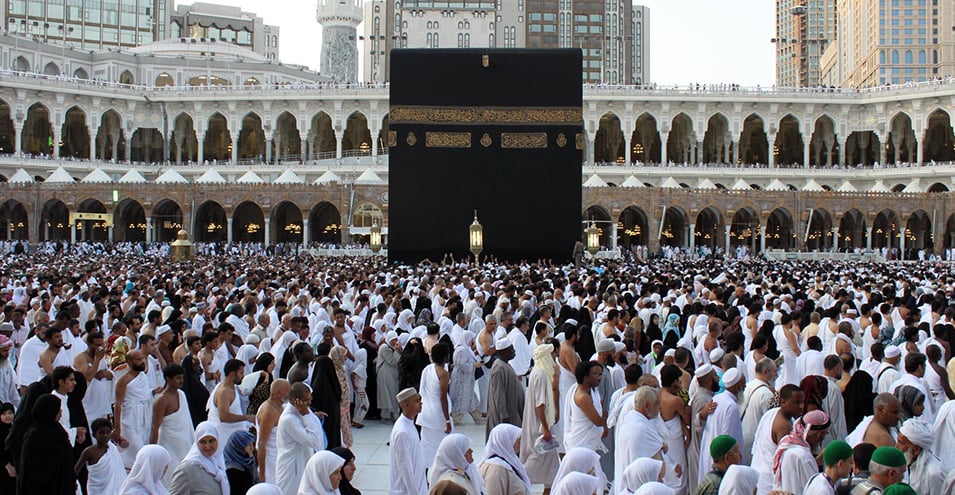
Soheila.S., FCNN News Agency: These days, Iran is in a chaotic market that resembles a tangle of confusion, and it seems that people are intertwined with each other, whose concerns and joys are alien to each other. We are on the verge of reopening schools, and at the same time, the program for the return of pilgrims from Saudi Arabia to the country is also being implemented. In this way, families on both sides of this chaotic market are going through different experiences.
On one hand, there are parents with a monthly salary of less than 900,000 Tomans and a minimum cost of 700,000 Tomans to send each of their children to school, and on the other hand, there are eager families of pilgrims who have returned from their journey and have poured more than 1.4 trillion Tomans into the pockets of Saudi Arabians and their allies in Iran to fulfill a religious and legal obligation.
This chaotic market reflects the confrontation between two segments of Iran's population in the current situation. One is unable to feed its hungry stomach and is deprived of basic human rights such as education, and the other is reaching out to Saudi Arabia to please Allah.
To better understand the conditions of the first group, it is not out of place to consider the latest statements of an official of the Islamic Republic. Last week, Parviz Fattah, head of the Relief and Welfare Committee, announced that about 12 million people covered by the Relief and Welfare Committee live in absolute poverty. This is in a situation where, according to him, even providing a precise definition of absolute poverty in our country is politically charged.
Perhaps this official wanted to remind us that talking about the existence of poverty in the country carries political consequences and the possibility of being labeled as opposing the power pyramid.
According to Mehr News Agency and according to Fattah, even for families covered by the relief committee, school attendance is not free and they are charged high fees.
Of course, this institution, activated after the revolution, like many other parallel institutions, has a wide and long body, and due to the lack of legal oversight over its performance, financial corruption and large-scale bribery are rampant in it. This is exactly the situation that keeps the mouths and wide pockets of the Hajj and Pilgrimage Organization satisfied.
In this way, among the approximately four and a half million needy Iranians covered by the relief committee, each covered seeker is given 53,000 Tomans per month. If they are a family of 2, they receive 60,000 Tomans, if they are 3, they receive 71,000 Tomans, and if they are 4, they receive 82,000 Tomans per month. If the number of family members is 5, they will receive 100,000 Tomans per month.
This is despite the fact that every Muslim who qualifies to become a Hajj pilgrim and seek the pleasure of God, whose home is only in the city of Mecca and who resides there permanently, has spent at least 15 million Tomans this year.
This is in a situation where the experience of past years and the disrespect for the lives and honor of Iranians in Saudi Arabia has been to such an extent that the head of Iranian pilgrims has proudly announced that this year Iranian pilgrims were able to perform their Hajj with dignity, respect, and to the desired level. It is as if this official even expected that the beliefs of the Shiites would be insulted during this journey. Without considering the money they offer under the pretext of the stone house of their god and the eyes that remain closed to the basic needs of their poor compatriots.
This year, 86,300 people participated in the Hajj Tamattu, and more than 2,000 of them were over 80 years old, which shows that after eight decades of life, these people have still not been able to find God in their hearts and in the hearts of their needy compatriots.
This is while dropout is rampant in most of the country's provinces due to financial poverty and students attending unsafe and substandard classes.
The current conditions in provinces like Sistan and Baluchestan are a handful of examples.
The Director General of Education of Sistan and Baluchestan, on the eve of the reopening of schools, has announced that there are 70,000 children who have not been educated in this province. It is easy to predict what place this part of the country's future generation will choose instead of school and what activity they will do instead of studying.
According to this official, most of the classrooms in this province are now unsafe, and students in more than 700 schools in Sistan and Baluchestan study in adobe and mud classrooms that cannot withstand the weakest earthquake or other unexpected natural disasters.
A general statistic also announced that in the new academic year, 68,000 students in the country are forced to study in unsafe classrooms. This figure is equivalent to more than 30 percent of the country's schools, putting the lives of more than 3 million Iranian students at risk.
But those eager to find Allah in His stone house in Mecca turn a blind eye to all these facts and continue to set out on the Hajj pilgrimage.
We pray for blessings for our fellow citizens so that they may come to believe that God resides in the hearts of the oppressed and burdened believers, not in a stone house in Saudi Arabia.