Imprisonment and disqualification for a student activist for opposing the death penalty

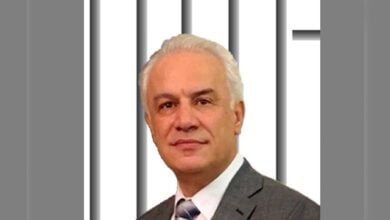
A student at Allameh Tabatabaei University has been sentenced to one year in prison for participating in a Women's Day ceremony and opposing the death penalty. Hasti Amiri has also been banned from using a mobile phone and joining political parties for two years.
Hasti Amiri, a student at Allameh Tabatabaei University and a student activist at the university, was sentenced by Branch 26 of the Tehran Revolutionary Court to one year in prison on charges of "propaganda against the system" and banned from participating in student gatherings except in classrooms.
In a tweet that Hasti Amiri's lawyer, Amir Raisian, posted on Monday, March 13, while announcing his client's conviction, he wrote that the charges against Ms. Amiri were based on a picture of her participation in the March 8 (International Women's Day) ceremony last year and her criticism and opposition to the death penalty.
Raisian also announced the “additional punishments” that Ms. Amiri has been sentenced to, including “the confiscation of the mobile phone she used, and a ban on membership in political and social parties, groups, and organizations (inside and outside cyberspace) for two years.”
Ms. Amiri was arrested on January 8 at the Evin Prosecutor's Office. Five days earlier, security forces entered the student's family home and, because she was not at home, informed her family that she must report to Branch 2 of the Evin Prosecutor's Office on January 8.
At the arraignment, Hasti Amiri faced charges such as "gathering and colluding with the intent to disrupt security" and "propaganda activity against the regime," but she was released on bail of five hundred million tomans until the trial.
The court later acquitted him of the first charge, but sentenced him to a total of one year in prison and "supplementary punishments" for the two aforementioned charges.
Hasti Amiri reacted to the verdict in a Twitter message, writing: "Not only do I have to go to prison for a year, but I also have to endure the university as a prison for two years. This means that I have no right to attend any student community except for compulsory classes. In addition, according to the verdict, my mobile phone will be confiscated as an instrument of crime, and I have no right to attend any virtual or non-virtual community."
Regarding the examples of the accusations made by the judiciary, he pointed to a photo he took with his companions at the entrance of Allameh University on March 8. The second accusation is the points he wrote on Twitter in defense of the right to life and opposition to the death penalty.
The news of Ms. Amiri's conviction, including for opposing the death penalty, was published on the same day that various officials and institutions of the Islamic Republic were attacking and criticizing Saudi Arabia for its widespread use of the death penalty on Saturday.
The Judiciary Human Rights Headquarters accused Saudi Arabia in a statement of “massive violations of human rights and abuse of power in the territory under its sovereignty” for these executions, and President Ebrahim Raisi said that “the silence of countries claiming human rights in the face of the execution of innocent people is condemned.” This is while Iran itself is constantly facing widespread criticism from human rights organizations and institutions and figures defending these rights at home and abroad regarding the mass executions of thousands of people in the first decade of the revolution and the continued widespread use of this punishment, even against juveniles. The Islamic Republic is consistently among the three countries with the highest number of executions in the world.
Source: DW