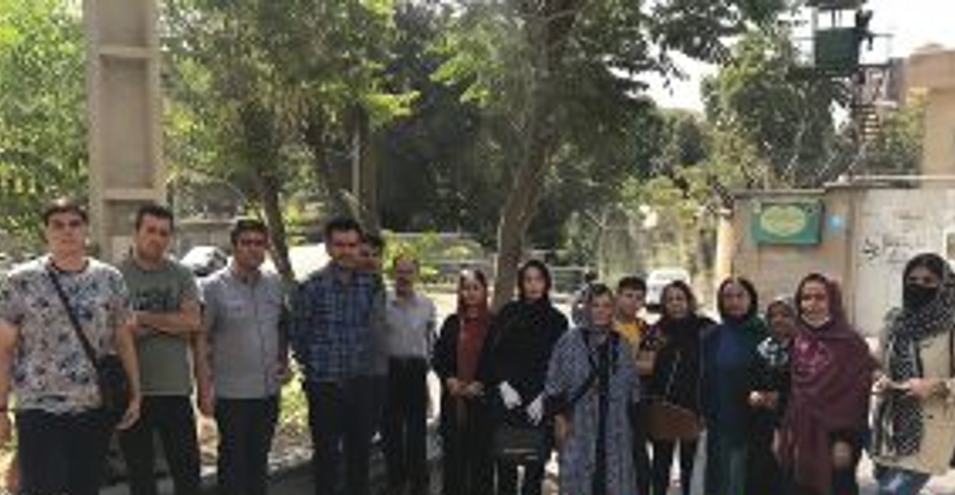
Al-Zahra University students "gathered" to protest the water cut in the dormitories
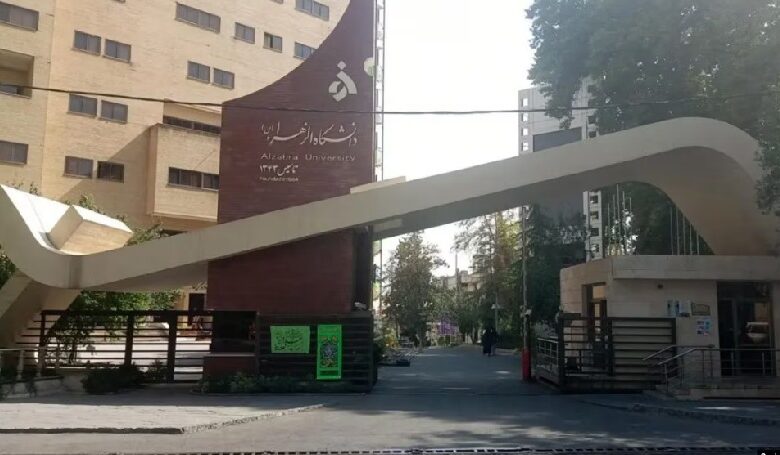
Protests by a number of Al-Zahra University students against the continued water cuts and rationing in the university's dormitories escalated on Sunday evening, November 9.
According to the "Amirkabir Newsletter", students gathered in the dormitory area and chanted slogans such as "We are waiting for our rights, we are not going anywhere, we are here," demanding immediate attention to the water situation and improvement of sanitary conditions.
According to reports, water in the dormitory bathrooms is only available for two hours at night, between 8 and 10 p.m., and is cut off during the rest of the day.
On Monday, the Tehran Water and Sewage Department announced that due to "consumption more than double the established pattern at Tehran, Al-Zahra, and Amir Kabir universities," the water pressure in these centers had decreased.
According to the Sharif newspaper, although the official announcement did not mention Sharif University, it seems that the situation at this university is more critical; as the water pressure has decreased from 3 to 0.75 PSI, as a result, the dormitory tanks are not filled and the upper floors are experiencing water shortages.
Students say that university officials promise to fix the problem and temporarily reconnect the water supply every time protests escalate, but these outages keep happening.
The day before the rally, images were posted on social media showing students queuing to receive bottles of mineral water. According to reports, due to the ongoing water cuts, each student is being given a limited quota of mineral water.
Student activists had previously warned about the lack of an emergency plan and the authorities' inattention to the water situation.
The water shortage crisis, which began in Tehran's universities, has now raised concerns about its spread to other higher education centers in the country.
Mashhad Water Authority: Water consumption management is no longer just a recommendation, but a necessity
As the water crisis in Iran continues, according to the CEO of Mashhad Water and Wastewater Company, the water reserves in Mashhad dams "have now reached less than three percent."
Hossein Esmailian continued on Sunday: "Although water consumption is relatively low in the cold season, the current situation shows that water consumption management is no longer just a recommendation, but a compulsion."
He also did not have good news about rainfall in Khorasan Razavi Province: "The total rainfall in Mashhad city has so far been only 0.4 millimeters, while last year this figure was about 27 to 28 millimeters and the long-term average for the same period was about 14 millimeters."
After Tehran, it is now Mashhad's turn to warn about the water situation.
Reza Hajikarim, head of the Iranian Water Industry Federation, emphasized on Saturday that Tehran's water situation is deteriorating exponentially, saying: "Water rationing should have started much earlier. Currently, 62 percent of Tehran's water is supplied from underground sources, and the level of these aquifers has dropped sharply."
The authorities' constant emphasis on the need for people to save money comes at a time when, on Saturday, the head of the Iranian Water Industry Federation once again emphasized that the current crisis is the result of years of ignoring scientific warnings about the decline of groundwater tables and climate change.
He added: "The only way to save Tehran is through a chain of measures; from recycling wastewater and reforming consumption patterns to reducing water consumption in the agricultural sector."
Earlier, on November 5, Iranian President Masoud Pezzekian also warned that if the rain does not continue until the end of autumn, Tehran's water will have to be rationed from December, and "if it still does not rain, we will have no water and we will have to evacuate Tehran."
He made these remarks despite the announcement by the Tehran Provincial Water and Wastewater Company that the level of filling of Tehran's five dams has reached 11 percent, and if Taleghan Dam is removed, this figure is only five percent.
Ali Shariat, Secretary General of the Iranian Water Industry Federation, told the "Rukna" news site on Friday that the cause of this crisis was "mismanagement and isolated decisions in the agricultural and industrial sectors."
Source: Radio Farda