The number of coronavirus victims in Iran has increased sixfold in a month
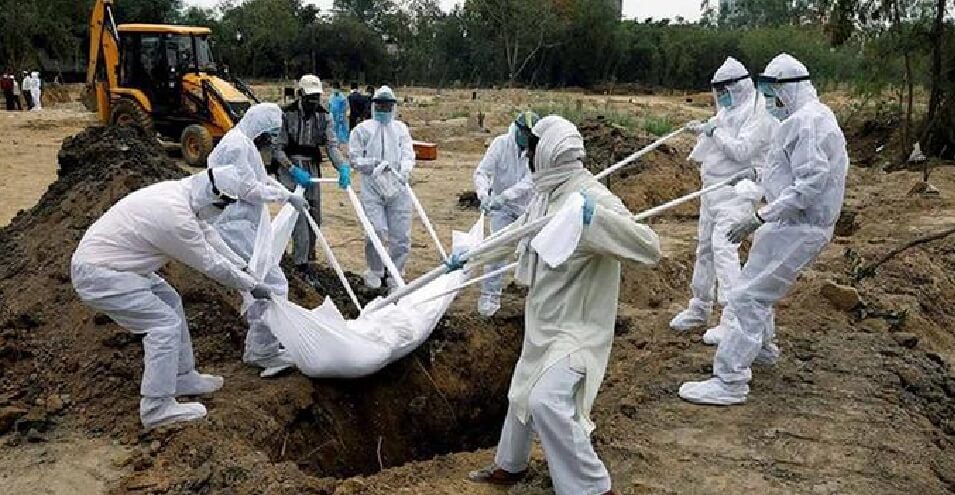
The daily death toll from the coronavirus has exceeded 450 for the first time since December 26, and was more than six times the number on April 1. The vaccination process in Iran has accelerated slightly, but it is still far from what officials have promised.
The fourth wave of the coronavirus pandemic in Iran began at the beginning of this year with greater speed and intensity than previous waves, and has not yet reached its peak, and all indicators are increasing with slight fluctuations.
The Public Relations and Information Center of the Ministry of Health announced on Thursday, May 2nd, that slightly more than 24,000 new cases of coronavirus have been identified in Iran in the past 24 hours, and 3,438 of them have been hospitalized.
According to the center's announcement, 453 people infected with COVID-19 have died in the past 24 hours, bringing the death toll to 68,366.
New cases triple, victims more than six times
Since the beginning of this year, the trend of new infections and deaths related to COVID-19 has been increasing sharply. In less than five weeks of the new year, cases have more than tripled and the number of victims has increased more than sixfold.
In the night ending on April 1, the number of victims was announced as 73. The upward trend of this index accelerated from mid-April and reached the 400 mark in the last days of April.
The second half of November and the first week of December were the peak of the third wave of the coronavirus pandemic in Iran, when the number of daily deaths reached nearly 500. From then until a week ago, this number never exceeded 400, and then decreased to about 50 deaths per day.
Most experts and even the Minister of Health, Saeed Namaki, cite Nowruz shopping, sightseeing, and travel as the most important factors in the rise of the fourth wave of the coronavirus, and they strongly criticize the National Headquarters for Combating the Coronavirus for not making decisive decisions in this regard.
President Hassan Rouhani, the head of the National Headquarters for Combating Coronavirus, has repeatedly denied the impact of Nowruz travel and visits on the rise of the new wave of coronavirus, claiming that many countries that do not celebrate Nowruz are also facing the same situation.
Extension of travel restrictions to red and orange cities
At the first meeting of the National Headquarters' specialized committees in Ordibehesht, in the presence of Rouhani, it was agreed to extend the restrictions in cities in red and orange status until the end of next week.
Accordingly, travel to or from red and orange cities has been prohibited for non-local vehicles except in essential cases.
The Ministry of Health's public relations department has declared the status of 301 Iranian cities as red (very high risk) and 95 as orange (high risk). 45 cities are in yellow (medium risk) status and only seven cities are in blue (low risk) status.
The color coding of cities is also an issue on which there was disagreement between the Ministry of Health and the National Headquarters for Combating Coronavirus, which has been set aside for now in favor of the headquarters.
Dispute over black cities affected by coronavirus
The official Ministry of Health app (Mask) released a new color scheme for Iranian cities on April 16, following Namaki's remarks about the situation in some cities going beyond red and turning black. According to this new map, which was also published by ISNA News Agency, 63 cities were in black, 85 cities in super red, and 176 cities in red.
Alireza Raisi, spokesman for the National Headquarters, called the Ministry of Health's move incorrect in a television program, saying that this headquarters is the basis for the cities' coronavirus color scheme, and that the notification of this decision will be sent to the provinces by the Ministry of Interior.
Vaccination; falling behind on promises and plans
The slow vaccination process in Iran and the failure to fulfill the promises made by officials about it are other issues that have drawn widespread criticism.
Vaccination of citizens in Iran began on February 11 with a limited number of the Russian vaccine "Sputnik V." A spokesperson for the National Headquarters for Combating Corona last year expressed optimism that medical personnel and high-risk groups, who are a top priority, will be vaccinated by the end of the year.
The number of these people is estimated to be around 1.3 million, and 2.6 million doses of vaccine are needed to vaccinate them. However, from the start of vaccination until May 2nd, in about two and a half months, only slightly more than 677,000 doses of vaccine have been administered in Iran.
Mehr News Agency reported on May 2, quoting Alireza Raisi, that the first phase of vaccination will include medical staff and vulnerable groups, which will end by the middle of this month, after which the second phase will begin with the vaccination of people with underlying diseases and the elderly.
A spokesperson for the National Coronavirus Task Force says that the first phase includes about 1.5 million people and the second phase includes about 12 million. 27 million doses of vaccine are needed to vaccinate these people, the source of which is not yet known.
Promise of joint production of Russian vaccine within two weeks
According to Alireza Raisi, to vaccinate second-priority individuals, "we must wait until more vaccines arrive and we can achieve domestic vaccine production in 3 to 4 months."
On May 1, the Minister of Health announced at a meeting of the local headquarters to combat the coronavirus in Alborz province that joint production of the Russian vaccine "Sputnik V" will begin in this province next week or the week after.
So far, the Islamic Republic's plans to import vaccines from various countries have not gone as planned for various reasons. However, Saeed Namaki expressed confidence yesterday that Iran will become one of the "very good producers" of vaccines in the world and its exporters by the end of spring and from June onwards.
The National Coronavirus Task Force says that vaccination in Iran will be carried out in four phases, involving a total of more than 64 million people. This number is scheduled to be vaccinated by the end of this year, which requires access to 128 million doses of the vaccine and the necessary facilities for its administration.
Source: DW