The head of the National Security Committee of the Parliament said that in order to counter US sanctions, efforts are being made to attract capital, including capital from Iranians abroad. According to him, in this regard, a plan to protect their assets will also be presented to the Parliament.
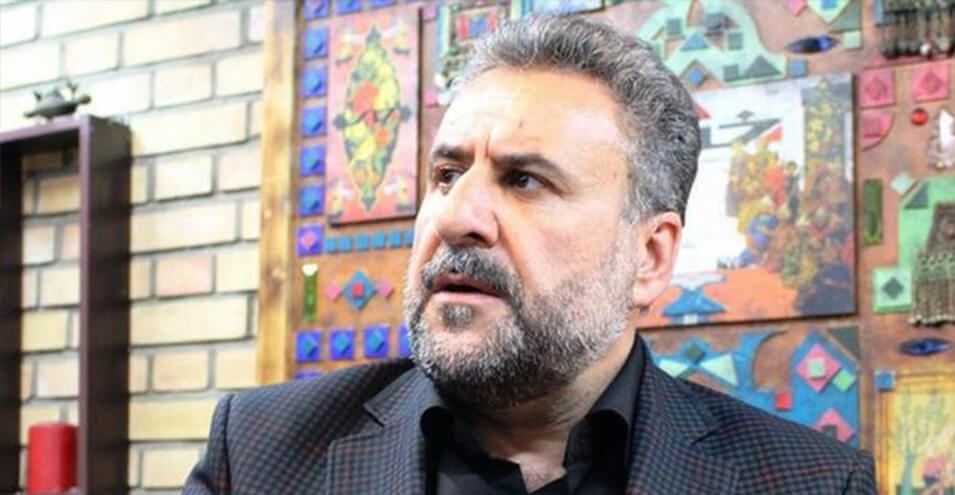
Heshmatollah Falahatpisheh, head of the National Security and Foreign Policy Commission of the Islamic Consultative Assembly, said that in light of the US sanctions against Iran, efforts will be made to attract capital, including capital from Iranians who are citizens of foreign countries.
According to ISNA news agency, Falahatpisheh said that the first step in this direction is "an urgent plan to amend the country's Civil Code 989 in such a way that the property of Iranians who have accepted the citizenship of another country for any reason will be protected within the country."
The head of the Parliament's National Security Commission also referred to the government's recent decision that "foreign nationals can receive five-year residency in Iran with an investment of $250,000."
Falahatpisheh said in this regard: "Since the United States has imposed sanctions on Iran, the impression may arise that there will be a problem for these people, while the executive mechanisms have been designed in such a way that investors in Iran related to trade will not have problems traveling to our country."
The plan to protect the assets of Iranians abroad and grant five-year residency to foreign investors is being mentioned by the head of the National Security Committee of the Parliament at a time when a large number of Iranians with dual citizenship, as well as citizens of foreign countries, have faced charges such as "espionage" in Iran and have been arrested in recent years.
Following these arrests, the British Foreign Office recently took an unprecedented step, warning British-Iranian citizens to only travel to Iran in absolutely essential circumstances and to consider the potential risks of such travel.
Foreign nationals and dual nationals facing charges of “espionage”
At the same time as Falahatpisheh’s statements, the spokesman for the Islamic Republic’s judiciary announced the sentencing of a “dual-nationality influencer” to eight and a half years in prison and the “seizure of his assets.” Gholamhossein Mohseni Ejei did not mention the identity of the individual, but said that the report on the individual’s dual nationality and the accusation of “infiltrating sensitive centers and gathering intelligence” was prepared by the Iranian Ministry of Intelligence. Ejei also did not identify the “sensitive center” that the individual “infiltrated” to “gather intelligence.”
There is no official and accurate statistics on the number of dual nationals imprisoned in Iran. On November 9, 2017, Reuters reported that there were more than 30 of these prisoners. It is said that most of these people were arrested and imprisoned by the Iranian Revolutionary Guards Intelligence Organization over the past few years.
Currently, including Iranian-British citizen Nazanin Zaghari, Iranian-Swedish citizen Ahmadreza Jalali, Iranian-American citizens Bagher and Siamak Namazi, and Iranian-British citizen Mohammadreza Hashemi Nabi, are in prisons of the Islamic Republic .
In addition to these individuals, some dual citizens in Iranian prisons are of no Iranian descent. Lebanese-American citizen Nizar Zakka and Chinese-American citizen Shi Wang are among these individuals. Two years ago, following the release of several Iranian citizens in the United States, the Islamic Republic also released a number of dual Iranian-American prisoners, including Jason Rezaian, Amir Hekmati, and Saeed Abedini. It was then announced that the Obama administration had simultaneously released millions of dollars in frozen Iranian assets in the United States in cash and by plane to Iran.
After arriving in the United States, dual Iranian-American prisoners filed a lawsuit in American courts, accusing the Islamic Republic of "psychological torture" and " hostage-taking" with the intention of influencing the nuclear negotiations .
Source: DW