Mahmoud Sadeghi: 53 innocent people were arrested in the nuclear assassination case
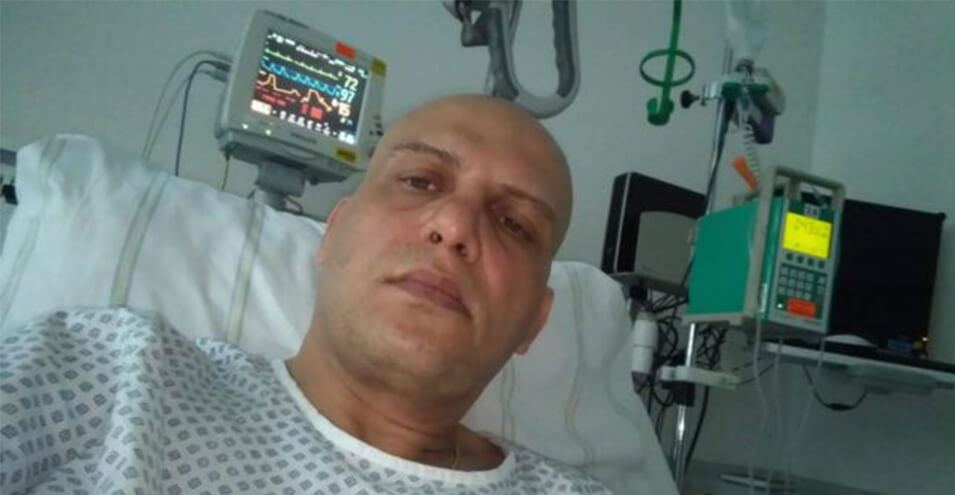
Mahmoud Sadeghi, a Tehran representative in the Islamic Consultative Assembly, has announced that in 2012, the Iranian Ministry of Intelligence arrested 53 people in connection with the assassination of nuclear scientists, and after their "innocence was proven," 4 billion tomans were paid to these individuals in compensation.
Mr. Sadeghi wrote these statements on his Twitter account, quoting Mahmoud Alavi, Iran's Minister of Intelligence, who attended a meeting of the Parliament's National Security Commission on Tuesday, September 2.
The discussion of the assassination case of Iranian nuclear scientists was reopened in mid-August of this year, following the broadcast of a television documentary on the BBC Persian channel.
In this documentary, Maziar Ebrahimi, who confessed on an Iranian state television program in August 2012 that he had participated in the assassination of these individuals in collaboration with Israeli security services, spoke about the false accusations and his torture by agents of the Ministry of Intelligence.
Mr. Ebrahimi was released from prison in August 2014 and after his release from prison, he went to Germany.
After the release of this documentary, on August 6 of this year, the Iranian Minister of Intelligence promised to respond to the "issues raised" about the assassination of Iranian "nuclear scientists" in a press conference.
Report of the Minister of Intelligence
The conference that the Iranian Minister of Intelligence had promised has not yet been held, but on August 16 of this year, Mahmoud Sadeghi announced that he had asked the Minister of Intelligence several questions about this case.
The Iranian Minister of Intelligence was present at the National Security Committee meeting of the Parliament to answer the MP's questions. Mr. Sadeghi said that the Minister of Intelligence's answers were "not convincing" and that "additional explanations were scheduled to be provided within the next month."
According to a report from this meeting by Mahmoud Sadeghi, the Iranian Minister of Intelligence did not provide a "clear explanation" about extracting confessions from defendants through torture, but said that "through training, inspections, and more careful monitoring, procedures have been improved and some erring officers have been dealt with."
Mazyar Ebrahimi previously said in an interview with Radio Farda that his leg was broken during the torture and flogging.
The Iranian Minister of Intelligence also said that 130 million Tomans had been paid to Maziar Ebrahimi as compensation. However, Mahmoud Sadeghi wrote that the Iranian Minister of Intelligence’s explanations regarding “full compensation for material, psychological, and reputational damages” to Maziar Ebrahimi and his contract with the Iranian Broadcasting Corporation were not convincing.
Mazyar Ebrahimi had previously explained in an interview with Radio Farda that the Intelligence Ministry agents had paid 215 million tomans. However, according to Mr. Ebrahimi, when they arrested him, the security agents had also confiscated $50,000 from him, and the compensation paid was not equivalent to this amount of money.
He also said that he had a one million euro contract with the Iranian Broadcasting Corporation and that his debt has not yet been paid.
The conflict between the IRGC and the Ministry of Intelligence
Another discussion in this meeting was the disagreement of Iranian security institutions regarding this case. It was previously reported that during the detention of Maziar Ebrahimi, the issue of his connection to the explosion of the Mallard base in 2011 was also raised, but the experts of the IRGC Intelligence Organization ruled this out during the interrogation of Maziar Ebrahimi, and their intervention in the case led to a new direction for the case and Maziar Ebrahimi's release.
However, Mr. Alavi denied the involvement of the IRGC Intelligence Organization in this case and said that the IRGC Intelligence Protection Department had suggested that some of the defendants in the nuclear assassination case were also involved in the Mallard explosion, and "through intelligence cooperation between the two institutions, it has been proven that they were not involved in that explosion."
On November 11, 2011, a massive explosion occurred at the IRGC's Modares Barracks in the village of Bidganeh, a suburb of the city of Malard, killing 17 IRGC soldiers and wounding 16 others. Hassan Tehrani Moghadam, head of the IRGC's Self-Sufficiency and Industrial Research Organization, was the most important IRGC commander killed in the explosion.
Ali Mohammadi assassination case
Tehran's representative in parliament also wrote in another tweet, quoting the Iranian Minister of Intelligence, that in the case of the assassination of Masoud Alimohammadi, "the commission of assassination" by Majid Jamalifashi was proven and his death sentence has been carried out.
Mr. Alimohammadi, who some Iranian news agencies have named as a senior nuclear scientist, was killed in an explosion in front of his own home on January 12, 2009.
The Iranian Ministry of Intelligence announced in January 2010 that Majid Jamalifashi was the main perpetrator of the assassination and had been arrested. Mr. Jamalifashi was executed on May 16, 2012.
Between 2009 and 2011, four individuals who were generally working and studying in the field of physics, some of whom were directly involved in Iran's nuclear program, were assassinated, resulting in the deaths of three of them, Masoud Alimohammadi, Majid Shahriari, and Dariush Rezainejad, and in one case, Fereydoun Abbasi Davani, who was injured. These cases have become known as the "assassination of Iran's nuclear scientists."
Source: Radio Farda