Minister of Health: We knew that the price of gasoline would affect other goods
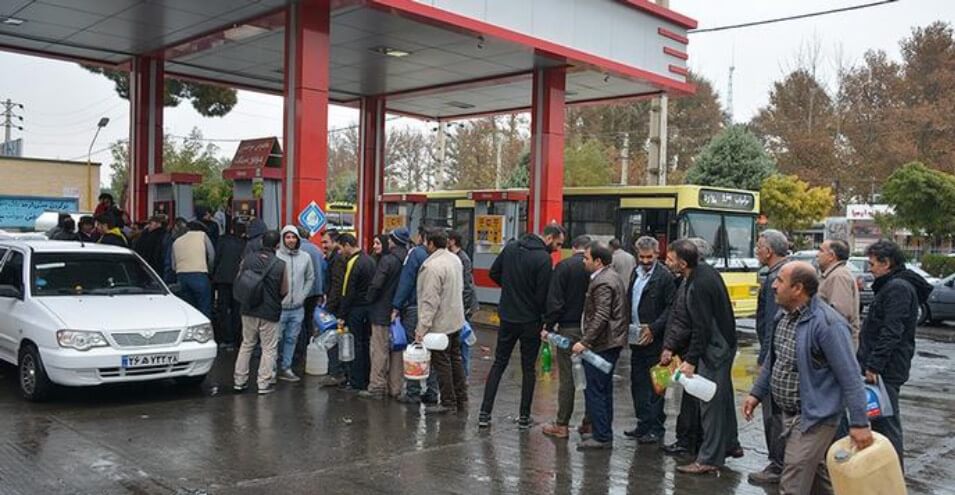
A member of the parliament's economic commission, referring to the rise in the prices of rents, steel products, and food, said that if the price of diesel increases, the country will be doomed. The speaker of the parliament has suggested that the government use the "capacity of the Basij" to control prices.
Several MPs addressed the problems and consequences of the increase in gasoline prices in a public session of the parliament on Monday, December 24. In the session, which was held in the presence of the Minister of Industry, the MP from Abadeh warned that with the increase in the price of diesel, “the conqueror of the country will be called.”
Rahim Zare, a representative from Abadeh and a member of the Economic Commission, reported a 15% increase in steel products, a 30% increase in pickup truck and taxi fares, a 40% increase in liquefied gas, a 20% increase in the price of imported rice and eggs, the high cost of each bag of flour, and a 25% jump in the price of chemical fertilizers. He criticized the government for still not being able to identify and complete the household income identification system and database after 11 years: "Many people send us text messages saying they are in need and have not received any compensation so far."
Davud Mohammadi, a representative from Qazvin and head of the Article 90 Commission, also stated that the government has not been successful in controlling prices and that people have been burdened by the increase in the prices of goods and services. He said: "In recent days, we have had a flood of inquiries and calls from the public indicating that the income from the increase in the price of gasoline has not been paid to them..."
Nader Ghazipour, a representative from Urmia, also called for transparency in the money deposited and for the government to prove its claim that 60 million people will receive subsidies from the increase in gasoline prices. He said, “Where are these 60 million people who received the money? Show them to us.”
At the same time, Parliament Speaker Ali Larijani called for the government to first control the prices of goods produced in state-owned companies or imported by the government. Addressing the Minister of Industry, he said: “Sometimes it is heard that some state-owned companies and even car manufacturers have raised prices.” Larijani suggested that the government use the “capacity of the Basij” to monitor the issue of prices of goods.
Minister of Justice: A jump in the number of complaints
Reza Rahmani, Minister of Industry, Mines and Trade, acknowledged that the government was aware of the impact of the increase in gasoline prices on the prices of other goods. Regarding the impact of gasoline prices on taxi fares, he said: “We accept that the increase in gasoline prices has an impact on this sector, and we are trying to have a reasonable increase in this sector.”
Rahmani, who had claimed just five days ago that there was no reason for the price hike, said: "We knew that the price hike in gasoline would affect the prices of other goods. The number of complaints has increased since the price hike in gasoline, and the number of cases brought to the criminal justice system has increased by 45 percent... We have only sought to combat the psychological climate of price hikes."
Other officials from the Ministry of Industry had previously emphasized that there would be no news of price increases. For example, Yadollah Sadeghi, head of the Organization of Industry, Mines and Trade, had announced: "People should not worry. With intensified market monitoring, the price of no imported or domestic goods will increase ."
Rahmani also stated that, based on the resolution of the Market Regulation Working Group, no government agency has the right to increase prices until the end of the year: "Even the departments that had received permission to increase prices before the implementation of this plan and had not yet implemented it, their resolutions were canceled. None of the government agencies has the right to increase the prices of any goods until the end of the year."
Hossein Raghfar, an economist and critic of neoliberal policies and privatization, previously stated in an interview with the "Fararou" website that the government would have been better off spending the money from the increase in gasoline prices on supporting goods and services, such as free education and healthcare, or cheap transportation, so that people would feel less discriminated against: "Paying the people the money from the increase in gasoline prices is a very heavy burden that the government has placed on its shoulders. Giving 31 trillion tomans in cash to the people every month in addition to the current subsidy has many inflationary effects ."
According to this university professor, getting out of the current situation requires that the government not give the resources from the increase in gasoline prices to the people in cash, but rather spend them on creating sustainable employment and boosting production.
Source: DW