77th Session of Nouri Court; Witness: Claims of Legality of Executions Are ‘Pure Lies’
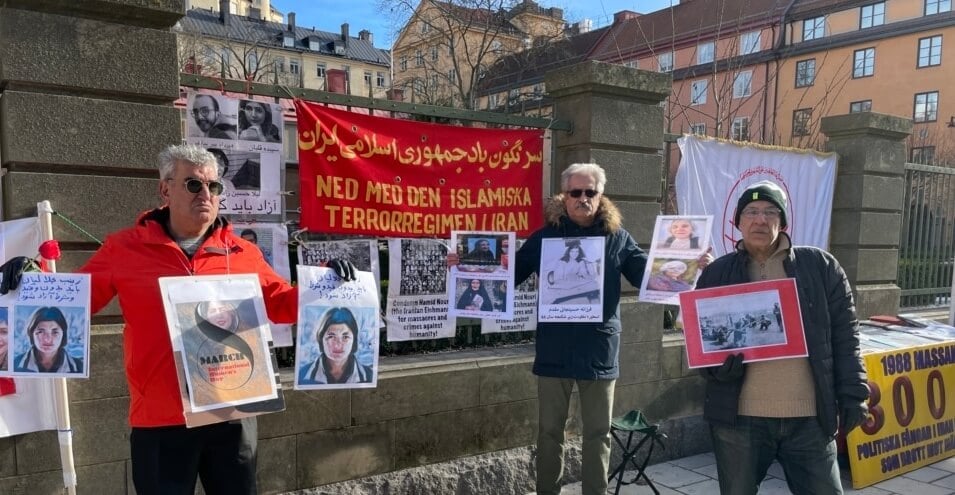
The 77th session of the trial of Hamid Nouri, accused of participating in the execution of political prisoners in the summer of 1988 at Gohardasht Prison, was held on Wednesday, the 3rd of Farvardin 1401, with the presence of two expert witnesses—Turon Lindholm, professor of social psychology and deputy director of the Department of Psychology at Stockholm University, and Shadi Sadr, a human rights lawyer and one of the founders of Justice for Iran organization.
Turon Lindholm explained that since 1993, he has conducted research on witness psychology, memory of violence-affected prisoners, the reliability and consistency of testimonies, factors affecting statements, and the characteristics of torturers and perpetrators. Throughout his testimony, he repeatedly emphasized that one of the most important research sources and foundations for him and his colleagues has been World War II and Nazi crimes against Jews and prisoner camps. The witness highlighted the following important points:
- Humans are very capable and intelligent at recalling events, with observation and primarily “appearance” being the most important factor in the remembering process.
- Human focus during encounters and confrontations with others is more on the person than their surroundings.
- Women’s memory and facial recognition is better compared to men.
- People’s ability to remember varies, but overall, individuals have better and greater ability in recognizing people of their own race and ethnicity.
Turon Lindholm explained human brain encoding and the effect of trauma or crisis on it:
- The focus of an [imprisoned] person under trauma conditions is centered on that trauma.
- The person can recall events, external environment, and emotional effects related to that trauma.
Turon Lindholm said regarding post-traumatic stress:
- The memory of a trauma is involuntarily stored in a person’s memory, and the person unwillingly recalls it.
- The repeated and serial occurrence of events causes their recall and repetition, and in some cases, the merging and fusion of events in the person’s mind.
Turon Lindholm stated that in the case of lack of sight or having blindfolds:
- The person’s perception and recording of the environment becomes better and more accurate.
- The reliability of accounts with blindfolds depends on how much the person could see from inside the blindfold.
Turon Lindholm emphasized that narrating a memory and trauma to others helps the witness better remember it. He said the manner of interrogating a person directly affects the mechanism of recalling events.
Turon Lindholm explained that through research on prisoner camps in World War II, he found that people mostly remember well the date of their transfer and entry to camps, but may make mistakes about when their friend or cellmate was killed or died.
In response to the defendant’s defense lawyers, Turon Lindholm said that time is important in accounts and can create differences in a witness’s account of a specific event—immediately after its occurrence and two weeks later.
The defendant’s defense lawyer asked the witness to what extent prior information affects witnesses’ statements and testimony. The witness replied that in research conducted forty years after the Nuremberg trials, it was determined that broadcasting one person’s testimony in court and showing his [or the defendant’s] image affected the testimony of subsequent individuals. However, the same research showed that 60 percent of those who had not seen the broadcast still remembered the person and identified him.
When asked whether showing a picture to a witness and asking him to testify against the person in question could affect the witness’s testimony, Turon Lindholm answered affirmatively.
Shadi Sadr, a human rights lawyer and co-founder of Justice for Iran, was the next court witness. She said that from 1999 onwards, she has handled various human rights cases, especially cases of women prisoners sentenced to stoning, and did not have precise information about the 1988 summer executions. She said that in 2010, after Justice for Iran began operations, she started investigating sexual torture and gender-based violence against female political prisoners in the 1980s.
Shadi Sadr confirmed the validity of Ayatollah Khomeini’s fatwa based on available documents, particularly what she claimed were “detailed” explanations by Ayatollah Montazeri in his book.
Shadi Sadr mentioned “the remains of executed persons in mass graves” as the most important evidence of the occurrence of the 1988 crime by the Islamic Republic. She spoke of eyewitnesses who have seen the bodies of those buried with their own eyes. She said: “Unfortunately, the Islamic Republic has not allowed any independent human rights group to even approach mass grave sites, let alone allowed them to excavate them and identify the buried individuals.”
In her testimony, Shadi Sadr referenced several joint reports by Justice for Iran and Amnesty International, including “Blood-Stained Secrets” and “Concealing Crime,” regarding the massacres, identification and awareness of the destruction of mass graves. She emphasized that before and after these reports, other reports have been prepared by multiple human rights organizations.
Shadi Sadr said that the joint investigation by Justice for Iran and Amnesty International on twenty-three prisons and approximately sixty mass graves of executed persons throughout Iran conclusively shows that prisoners were secretly and collectively executed in all these prisons during the summer of 1988.
Shadi Sadr said these executions were pre-planned and widespread, and most of the executed prisoners had been detained and sentenced in revolutionary courts in the early 1980s. Some were serving their sentences, and some had even completed their sentences.
Shadi Sadr said that in her view, one of the characteristics of the “Blood-Stained Secrets” report compared to other reports in this regard is its “comprehensiveness.” She said: “Until this report was published on the thirtieth anniversary of the 1988 summer executions, no other international human rights organization had published a research report on this massacre.”
She said that given Amnesty International’s special credibility at the international level, this report was very important for any action—legal and quasi-legal—in the sphere of this crime. She named the “legal analysis” included at the end of this report as another one of its characteristics.
Regarding the legal decision-making based on Ayatollah Khomeini’s fatwa regarding the executions in the summer of 1988 at Gohardasht Prison, Shadi Sadr declared: “The claim that the sentences of execution for political prisoners in the 1988 massacre went through a judicial process to the Supreme Court and were carried out after confirmation is pure lies.” She said the executions were completely outside the framework of even the existing structure of courts and revolutionary prosecutor’s offices.
Shadi Sadr testified that Hasan Golzari and Majid Sahib-Jameh were two political prisoners who in their interviews in 2017 directly and specifically named “Hamid Abbasi” as someone they encountered at “Gohardasht” prison. Hasan Golzari had said in his interview that “Hamid Abbasi” questioned him and ordered him to write a statement of renunciation and be flogged by the Revolutionary Guards. She testified that besides these two, no other prisoner has named “Hamid Abbasi” in any other prison.
However, Shadi Sadr elsewhere provided clarifications regarding some interviewees’ reference to encounters with Abbasi in prisons other than Gohardasht. She said they had prepared a diagram and timeline of Hamid Abbasi’s professional life, and this timeline was consistent with the professional timeline of Lashkari and Nasserian.
Shadi Sadr said that based on this, “we know that Hamid Abbasi worked until 1985 as Nasserian’s assistant, prison officer at Evin Prison. Between 1985 and 1987—during a period—he worked at Qarchak Prison and was later transferred to Gohardasht Prison. Therefore, there are prisoners who may have seen Hamid Abbasi at Qarchak, Evin, or Gohardasht prisons. Some may have indicated that Hamid Abbasi was transferred from Qarchak Prison to Gohardasht along with Nasserian.”
One of the important sections of Shadi Sadr’s testimony today was about the manner and reasons for the importance of conducting more than fifty interviews with some families and prisoners who were members of the People’s Mujahedin Organization and survived the executions in provincial prisons, who now live in Albania, the headquarters of the People’s Mujahedin Organization. These interviews were conducted in Tirana, Albania, where these individuals were residing in 2017.
Shadi Sadr said that Justice for Iran, before beginning joint investigations with Amnesty International, interviewed more than fifty political prisoners in Albania. Regarding the reason for these interviews, she said: “There was little information about executions in provincial cities, and we tried to fill this gap with our research.”
Shadi Sadr explained that in 1988, in many small provincial towns, most political prisoners had been released, and few remained in prisons, the vast majority of whom were members of the People’s Mujahedin Organization and were executed. Among the survivors, individuals lived in small cities in Iran who could not be accessed due to security issues. Some [survivors] also lived in Albania, and to obtain information, their testimony was necessary and important.
Shadi Sadr said she personally prepared a list of potential interviewees. Amnesty International contacted the public relations office of the People’s Mujahedin Organization at the UN headquarters in London and provided them with this list. Finally, in October 2017, they were informed that interviews could be conducted.
Shadi Sadr explained that the interview methodology was conducted based on the Istanbul Protocol endorsed by the United Nations and other standard laws for such human rights interviews, with the only difference being the location of the interviews. She said interviews conducted in Europe and North America were conducted at the witness’s home, but in Albania, all interviews were conducted in a closed room in the hotel where the interviewers stayed or behind closed doors in a restaurant near their residence. She said that at the Tirana interviews in Albania, none of the officials of the People’s Mujahedin Organization were present, and the witness was alone. The interviews were filmed, and the films exist and in some cases have been handed over to the prosecutor’s office upon request.
In explaining the defense lawyer’s question about why three lists prepared from interviews do not exist in the indictment, she said the responsibility for this matter falls on the conduct of the [Swedish] prosecutor’s office. She said she was interrogated in February 2020, and she personally emailed list A to the prosecutor’s office and Ms. Gita (one of the counsel lawyers for some of the complainants in the case) in December 2019, two months before her interrogation. She said: “At least two months before my interrogation, I formally informed the prosecutor’s office in writing that among those we interviewed, at least two people named Hamid Abbasi in Gohardasht Prison during the 1988 massacre.”
Shadi Sadr testified that research on prison events in provincial towns in the summer of 1988 shows that only supporters and members of the People’s Mujahedin Organization were executed in provincial towns. She said the research also shows that in 1988 in Tehran, there were cases of executions of leftist prisoners and supporters of Kurdish groups in prisons other than Gohardasht.
Regarding the question of whether she has made any comments about the accused after his arrest anywhere, Shadi Sadr said that except for two tweets in which she posted about the identity of Hamid Nouri as “Hamid Abbasi,” she has not participated in any interview and has made no other comments about the witness. She said at the time of those tweets, it was before she became active in the trial process as a witness.
Shadi Sadr’s testimony will continue tomorrow, Thursday, the 4th of Farvardin 1401. Tomorrow’s session will include the presence of three witnesses in total.
Source: Voice of America