A Political Prisoner’s Self-Immolation in Iran and the Worthlessness of Prisoners’ Lives to the Regime
Why does the judicial system in the Islamic Republic of Iran continue to mistreat and pressure political and ideological prisoners without holding itself accountable? What methods do responsible authorities in prisons and the judicial system use to implement their discriminatory views toward political prisoners? Why do judicial authorities and prison officials, contrary to the obligations stipulated in the Criminal Procedure Code regarding the necessity of considering prisoners’ physical and mental health for executing sentences, continue to insist on illegal treatment of political and ideological prisoners?
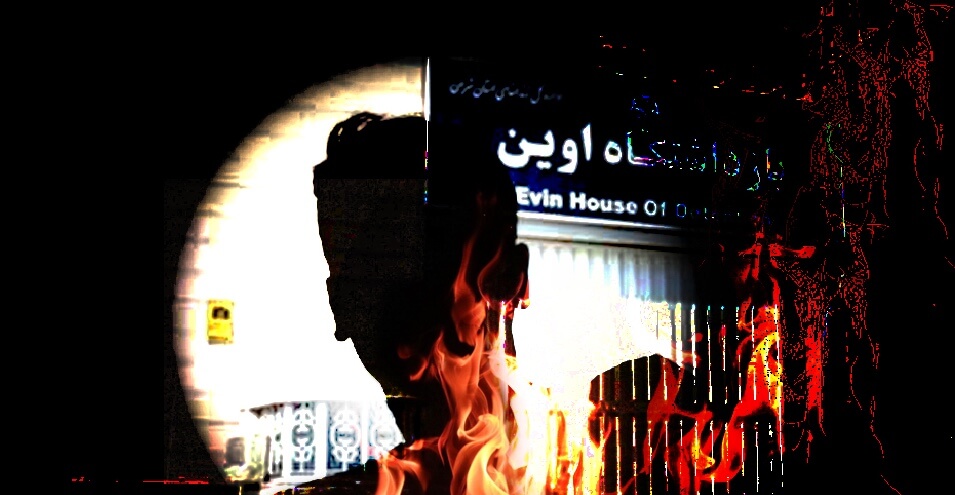
Denial of medical treatment, detention in unhygienic prison conditions, forced administration of specific medications, and transfer to psychiatric hospitals have been part of the systematic measures by the judicial system in dealing with political and ideological prisoners. On the other hand, the unjust legal proceedings in political and ideological cases and discrimination against defendants in these cases regarding the use of legal facilities such as furlough and conditional release represent another aspect of systematic treatment of political and ideological prisoners. Mehdi Darini’s self-immolation attempt, a political prisoner held in Evin, following the failure of his protests and pursuit of conditional release, is the latest example of illegal and discriminatory conduct by the judicial system toward political and ideological convicts.
The Devaluation of Prisoners’ Lives for Jailers
On Wednesday, October 26, 2021, journalist prisoner Keyvan Samimi reported that Mehdi Darini, a political prisoner held in Evin, attempted self-immolation. This action followed security and prosecutorial authorities’ prevention of Mehdi Darini’s conditional release and the futility of his correspondence and protests.
As Keyvan Samimi wrote, Mehdi Darini had told relevant authorities a few days before the self-immolation attempt, “If the case investigator does not respond to my request, I will do this [self-immolation] on the second of November.” Mehdi Darini was arrested in June 2019 and sentenced to 11 years in prison, but ultimately, based on Article 134 of the Islamic Penal Code, only 5 years of this sentence was enforceable as the most severe punishment, and after serving one-third of this punishment, he became eligible for conditional release. However, in recent months, his repeated requests for conditional release have not been answered. According to Keyvan Samimi, Mehdi Darini’s self-immolation attempt “is a serious warning to the security authorities and the judiciary of the Islamic Republic.”
The publication of this news and some of its details are clear evidence of the attitude governing the judicial system regarding political prisoners and the authorities’ disregard for prisoners’ legal demands. An attitude that in many cases has inflicted irreparable harm on prisoners and their families. Although Mehdi Darini’s request was for conditional release, in many cases, even basic and legal rights of political prisoners such as “furlough” or “treatment outside prison” have been easily ignored by responsible authorities in prisons, security forces, and courts. This is in addition to numerous cases in which such treatment has directly resulted in loss of prisoners’ lives or serious harm to their physical or mental health. The consequences of such inhumane and illegal behavior have resulted in witnessing suicide or self-immolation attempts by such political prisoners in cases like “Vahid Afkari” and now “Mehdi Darini.”
Although specific articles of the Criminal Procedure Code emphasize the necessity of considering the prisoner’s physical and mental health to endure the sentence, it appears that judicial authorities deliberately refuse to apply these laws regarding political prisoners, and the only matter that is of no importance to responsible authorities is the prisoner’s mental and physical health. For example, Article 502 of the Criminal Procedure Code states that execution of a sentence may be postponed considering the “physical or mental illness of the convict” and the possibility of “aggravation of the illness” if the sentence continues. This legal article also orders the conversion of the prison sentence to appropriate punishment or suspension of sentence execution in some cases, but judicial authorities in many cases, under the supervision of security officials, refuse to implement this law.
On the other hand, the application of discrimination against political prisoners in granting some obvious prisoner rights such as medical furlough or cases like conditional release also specify the illegal path of the judicial system in dealing with political and ideological convicts. For example, as stated in Article 58 of the Islamic Penal Code, “all persons sentenced to imprisonment” can benefit from “conditional release” under certain conditions, but in many political and ideological cases, convicts, even when they meet the conditions specified in the law, remain deprived of the right to conditional release.
The persistence of discriminatory treatment by the judicial system toward political and ideological prisoners in Iran has resulted in prisoners having no choice but to sacrifice their own lives to make their voices heard to authorities.
However, it appears that security authorities and the judicial system, indifferent to prisoners’ lives, insist on continuing discriminatory treatment; as Keyvan Samimi writes in describing Mehdi Darini’s self-immolation attempt: “In his recent meeting with his case investigator, Mehdi Darini stated that he wanted to go on a hunger strike, but the investigator responded by saying: ‘Good, that’s one less mouth to feed for the Islamic Republic.'”
Clear Evidence of Prison Conditions and the Regime’s Response
The news of Mehdi Darini’s self-immolation attempt was published at a time when Mohammad Mehdi Hajmohammadi, head of the Islamic Republic of Iran’s Prison Organization, spoke of “Islamic prison services” in Iran and accused “hostile” media of “focusing on the prison system and human rights to tarnish the image of the regime’s prison services.”
The claim of the head of the country’s prison organization comes at a time when, fundamentally, statements about “services” should be recounted not from the voice of “jailers” but from the voice of “prisoners.” All existing accounts and evidence speak to a reality completely different from the claims of Mohammad Mehdi Hajmohammadi, head of the Islamic Republic of Iran’s Prison Organization.
Although in recent years and in accounts from many petitioners and audio files of some political and ideological prisoners, explicit evidence and signs of discrimination against political and ideological convicts have been published, perhaps the most eloquent witness to the treatment of prison personnel toward inmates and prison conditions is the revelation of videos from CCTV cameras in Evin Prison and some videos of prisoner abuse that in recent months have completely captured public attention. Following the revelation of these videos, none of the senior officials and decision-makers in the judicial system have been prosecuted or tried, and now, after this short period has passed, not only do authorities speak of “Islamic prison services,” but they also emphasize “explaining and introducing the true face of prison and Islamic imprisonment.”
In fact, the response of the Prison Organization as the principal authority responsible for prison affairs, to the numerous disclosures and accounts by prisoners of the deplorable prison conditions, is to construct a counter-narrative and present a distorted and false reality. A method that the regime has pursued for years; producing documentaries to justify the conditions of prisoners’ detention and broadcasting them on television or preparing sections of prisons for visits by some officials are among the measures used by security and judicial authorities to impose their false narrative.
Nevertheless, the widespread dissemination of information about the conditions of prisoners and prisons has rendered all the desperate efforts of the government to present a favorable image of the justice system and judiciary in the country futile.
Source: Human Rights Campaign