Account of a Former Prisoner on Treatment Process in Iranian Prisons; Akbar Laksatani: The Government Pretends That Opponents Have ‘Mental Problems’
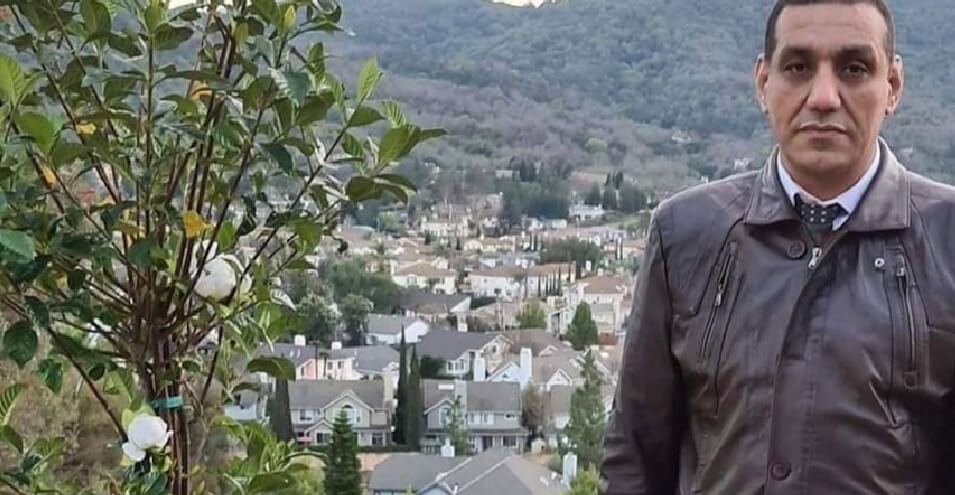
More than forty days after the death of Behnam Mohammadi, a political prisoner in Iran, a former political prisoner says that the Islamic Republic’s treatment of political prisoners is in a way that aims to show they have psychological and mental problems.
The family of Behnam Mohammadi, a Dervish of Gonabad who died on February 17 at Laqman Hospital in Tehran, says that his death was not natural. Mr. Mohammadi had previously complained about inappropriate treatment procedures in the prison; however, after being ignored several times, Mr. Mohammadi was suddenly transferred to the hospital in critical condition, and news of his death was announced there.
Akbar Laksatani, a former dual-citizen political prisoner in Iran, said in an interview with Voice of America that he too was transferred to Razi Neuropsychiatric Hospital in Urmia during his detention. This is while, according to Mr. Laksatani, hospital physicians had stated that he had no problems and his presence at Razi Hospital was not necessary.
This former dual-citizen prisoner in Iran says that after being transferred to Urmia Prison, in protest of unsanitary conditions, lack of medical services, lack of access to insulin medication in prison, and transfer to the narcotics ward, he went on a hunger strike. After 14 days, due to unconsciousness, he was initially transferred to “Imam Khomeini Hospital Emergency.” Mr. Laksatani says that security forces beat him in prison and after a few days, by order of the judge overseeing the prison, he was transferred to Razi Neuropsychiatric Hospital.
He continued, saying that while hospitalized at the neuropsychiatric hospital, he was prescribed medications that were not under specialist supervision, and this worsened his physical condition. According to Mr. Laksatani, his family members also told him after his release that during visits they had with him at the hospital, he did not recognize them.
Batul Hosseini, the mother of Behnam Mohammadi, a Dervish of Gonabad and political prisoner who died at Laqman Hospital in recent weeks, recently said in an exclusive interview with Voice of America: “My Behnam was not like that, my Behnam was not sick. I don’t know what they are doing to him that my Behnam is no longer conscious, my Behnam didn’t wake up at all.”
According to Akbar Laksatani, at Razi Hospital he was transferred to the worst ward of the hospital, where he was subjected to harassment and abuse, and was tied to the bed with handcuffs and shackles. Mr. Laksatani says this caused wounds on his hands and feet, the effects of which are still visible on his body.
This former political prisoner told Voice of America: “The Islamic Republic is trying to portray its opponents both inside and outside the country in such a way as to say that they have psychological and mental problems and do not have sound and proper judgment. Those who oppose us have psychological and mental problems; meaning they are not normal people who are protesting and opposing.”
Akbar Laksatani, an Iranian citizen with permanent U.S. residency, was arrested on Saturday, September 27, 2019 at the Sarveh Urmia border crossing while intending to enter Iranian territory to visit his sick and elderly mother, by agents of the Sepah Intelligence Organization in Urmia. He was released after at least 47 days from Urmia Prison and finally left Iran for the United States on February 9, 2020.
He is the former chairman of the city council of Shout in West Azerbaijan province, and is a war veteran of the Iran-Iraq war. In early 2007, he was arrested on charges of “insulting government officials” and “conducting propaganda activities against the system,” and the Khoy Revolutionary Court sentenced him to three years in prison.
Mr. Laksatani was transferred to Makoo Prison in autumn 2008 to serve his three-year prison sentence and was able to temporarily leave prison in June 2009 by obtaining a leave, and also left Iran on June 20, 2009.
Source: Voice of America