Admission of “Corona Disaster” in Iran with Promise of New Measures
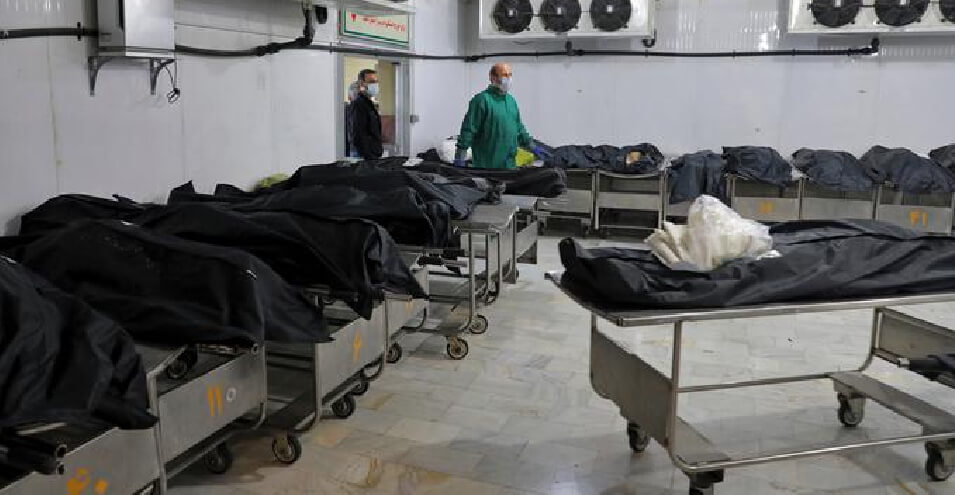
Iran’s health minister has promised to accelerate vaccination and admits that with 600 coronavirus deaths per day, we are witnessing a disaster. He says efforts are being made to increase daily coronavirus vaccine doses administered in Iran to one and a half to two million doses per day.
The health ministry’s information center announced on Monday, Shahrivar 15, that 300,917 doses of vaccine to prevent COVID-19 were administered to citizens across Iran in the past 24 hours.
The vaccination process in Iran accelerated significantly starting in early Mordad compared to previous months, but in recent days, some vaccination centers suspended their activities due to vaccine import shortages.
The number of vaccine doses administered in the 24 hours ending at noon on Saturday dropped to 138,000 doses, which was the lowest in the past forty days.
With the arrival of approximately five million new vaccine doses in Iran, the vaccination situation improved somewhat, and on Sunday it reached over 309,000 doses.
The government’s role in creating the “corona disaster”
On Monday, the health minister said to reporters on the sidelines of a joint meeting with members of the executive board of Iran University of Medical Sciences: “Unfortunately, we are witnessing a disaster today, and more than 600 of our dear compatriots are losing their lives daily due to coronavirus infection.”
According to ISNA news agency, Bahram Einalahi named accelerating vaccination as the effective way to prevent deaths among more citizens due to COVID-19 infection and promised that the number of vaccine doses administered daily would increase to one and a half to two million doses.
The health minister says “by accelerating vaccination, we can prevent subsequent waves of coronavirus disease in the country.” This is what most experts also repeat, and much research has confirmed its accuracy.
On this basis, it can be said that the government’s delay in securing the vaccines needed by citizens in previous months, at the height of the fifth wave of the pandemic and the emergence of the corona disaster, directly contributed to it.
The deadly consequences of Khamenei’s decree
Vaccine imports to Iran began in mid-Bahman of last year, but proceeded very slowly over six months. According to evidence, one of the main reasons for the slow vaccine imports to Iran was the decree of December 19 by the Supreme Leader of the Islamic Republic, Ali Khamenei, who, while denying the effectiveness of “American and British vaccines” against coronavirus, prohibited their entry into Iran.
Failure of vaccine under Khamenei’s supervision
Khamenei, apparently realizing the catastrophic consequences of this decree amid increasing criticism and discontent, recently said coronavirus is the “first problem” of the country and the vaccine needed by people must be secured “by any possible means.”
Khamenei’s decree was issued when three vaccines that had received international licenses were being produced in collaboration with major American and British pharmaceutical companies.
Apparently, one of Khamenei’s incentives for issuing this decree was support for the Iranian Barkat vaccine, which is produced by one of the subsidiaries of the “Imam Khomeini Executive Headquarters,” one of his supervised institutions. Khamenei even staged a televised demonstration of receiving the vaccine to promote it.
The failure of the Executive Headquarters to produce and supply the Barkat vaccine as promised, coupled with increased protests and expert statements about the impact of slow vaccination on rising infection, hospitalization, and death rates among coronavirus patients, led to smoother vaccine imports from late Tir.
Increased vaccine imports despite continued sanctions
Government officials and supporters of “absolute guardianship of the jurist” attribute the slow vaccine imports in recent months to American sanctions. The significant increase in vaccine imports in the past month and a half without lifting sanctions demonstrates the inaccuracy of this claim.
The total vaccines administered in Iran until the first of Mordad had not even reached ten million doses; by Shahrivar 15, this figure had exceeded 29 million doses.
By mid-Shahrivar, more than 40 million vaccine doses had entered Iran, and Karim Hemati, head of the Red Crescent Society, says an additional 20 million doses will enter by the end of the month.
Hemati said vaccine imports will continue in the same manner in the coming months, and by the end of Aban, a total of 90 million vaccine doses will have entered Iran.
In recent months, most officials’ promises for large shipments of vaccines to Iran proved hollow, and the surge in vaccination statistics over the past six weeks indicates a change in this trend.
The important role of vaccination and lost months
In recent weeks, research conducted in some provinces such as Ilam and Sistan and Baluchestan has revealed that increasing vaccination significantly reduces hospitalizations, severe cases, and deaths among those infected with COVID-19.
Recently, 575 Iranian civil, political, and trade activists stated in an important declaration that the main cause of increased severe cases and deaths from coronavirus was false claims about the capacity for domestic vaccine production and the prohibition of American and British vaccines by Khamenei.
Based on health ministry statistics, nearly five million 157 thousand cases of coronavirus have been identified in Iran by mid-Shahrivar, and the number of COVID-19 victims has reached 111,257 people.
Many experts, even senior health ministry officials and the scientific committee of the national coronavirus task force, believe the actual number of coronavirus victims is two and a half to three times the official figures.
Despite observing the impact of vaccination in reducing cases and deaths in some areas, this situation does not yet extend to all of Iran and is not sufficiently reflected in daily coronavirus statistics.
The main reason for this “catastrophic” situation goes back to the six months when Khamenei’s obstinacy and officials’ incompetence prevented timely import and administration of sufficient vaccine to citizens.
Remedying this disaster, even if the health minister’s promise to administer up to two million vaccine doses daily is fulfilled, will take weeks and months. Of Iran’s population of approximately 84 million, fewer than ten million have been fully vaccinated to date.
Source: DW