Amnesty International: Arslan Khodzakam Faces Execution
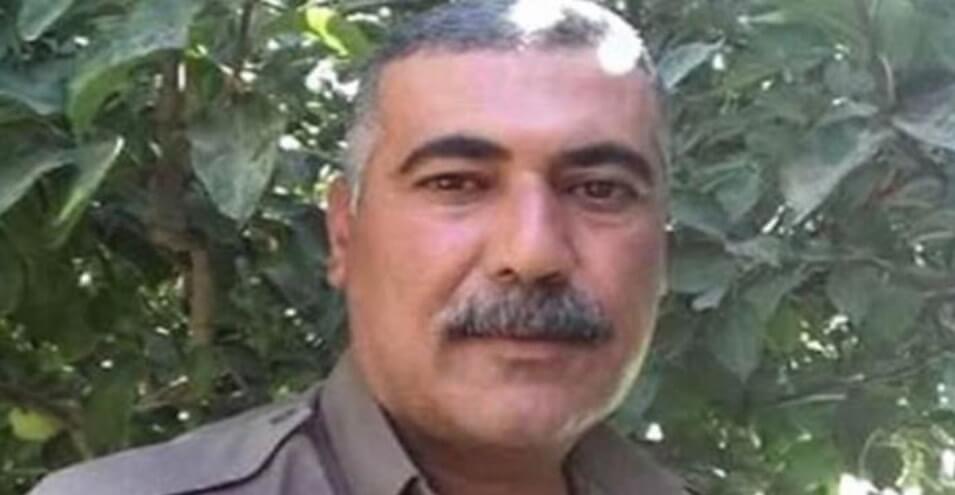
Amnesty International, in a letter to Ibrahim Raisi, called for preventing the execution of a Kurdish prisoner. The Urmia Military Court sentenced Arslan Khodzakam to death on charges of “spying for the Kurdistan Democratic Party” in a half-hour trial.
The Amnesty International organization, in a letter addressed to the head of Iran’s judiciary, described the issuance of a death sentence for a Kurdish defendant in a half-hour court hearing as “unjust” and recalled that Arslan Khodzakam did not have access to a lawyer, and the basis of his trial consisted of confessions extracted under pressure.
Arslan Khodzakam (Sohrabi), 47 years old, was arrested in May 2018. The Urmia Military Court sentenced him to death on charges of “actions against national security through spying for Kurdish opposition parties,” and the sentence was upheld in the Supreme Court.
This resident of Mahabad was previously a member of the Islamic Revolutionary Guards Corps and is married.
The “Iran Prison Atlas” website identified Khodzakam as a member of the Kurdistan Democratic Party who, after leaving the party, joined the Revolutionary Guards in the 1980s. Iranian security authorities have accused him of intelligence gathering for the Kurdistan Democratic Party while serving as a senior member of the Revolutionary Guards. Amnesty International writes: “Khodzakam has consistently denied these charges and stated that an Instagram connection with one of his wife’s relatives who is a member of the Kurdistan Democratic Party formed the basis for such an accusation.”
Amnesty International states that Arslan Khodzakam was sentenced to death only three months after his arrest and following an unjust 30-minute trial, while he was forced to confess under pressure and torture and never had the right to access a lawyer during that period: “In spring 2020, his lawyer requested access to the case documents to prepare a defense petition, but the Urmia Military Court authorities refused to allow legal representation. Khodzakam saw his court-appointed lawyer for the first time on the day of trial; a lawyer who provided no defense for him.”
In Amnesty International’s letter, it states: “He was detained at the Al-Mahdi military base in Urmia following his arrest and spent 36 days in solitary confinement without access to family or a lawyer.”
Arslan Khodzakam stated that during this period, interrogators tortured him into confessing. This prisoner described one instance of torture as “repeated whipping, punching and kicking” on his back and surgically scarred lower back, and said that from the beatings he lost consciousness several times. Amnesty International writes: “Interrogators also did not allow him access to sanitary facilities, so much so that he repeatedly urinated on himself and his bladder and kidneys were damaged from urine retention.”
Khodzakam stated that interrogators also deprived him of sleep to force him to confess.
Amnesty International recalls that Branch 32 of the Supreme Court, without considering the defendant’s objections to confessions extracted under pressure, rejected the request for review of the death sentence and did not provide the defendant with a written copy of the judgment. The organization emphasizes that under international law, the death penalty for espionage applies to “the most serious crimes” and describes the sentence against Khodzakam as a violation of law.
Amnesty International has called on Iran’s judiciary to annul the death sentence against Arslan Khodzakam and allow him access to a lawyer of his choice. The organization has also requested that an independent and impartial committee investigate Khodzakam’s allegations of torture and mistreatment during interrogation and, if proven, bring those responsible to justice.
Amnesty International has called on human rights advocates to send a similar letter to Ibrahim Raisi and work to prevent the execution of Arslan Khodzakam.
The human rights website “Hengaw” previously reported that Arslan Khodzakam lost 40 kilograms during his interrogation period. Nazmil Qavitasi, his wife, was also arrested at the same time as her husband and served a one-year sentence.
Source: DW