Annual Report on Executions in Iran: Hundred Percent Increase in Executions Following Raisi’s Election Victory
Two Iranian and French human rights organizations announced on Thursday a hundred percent increase in the execution of death sentences in Iran following the latest presidential election, which Ibrahim Raisi won.
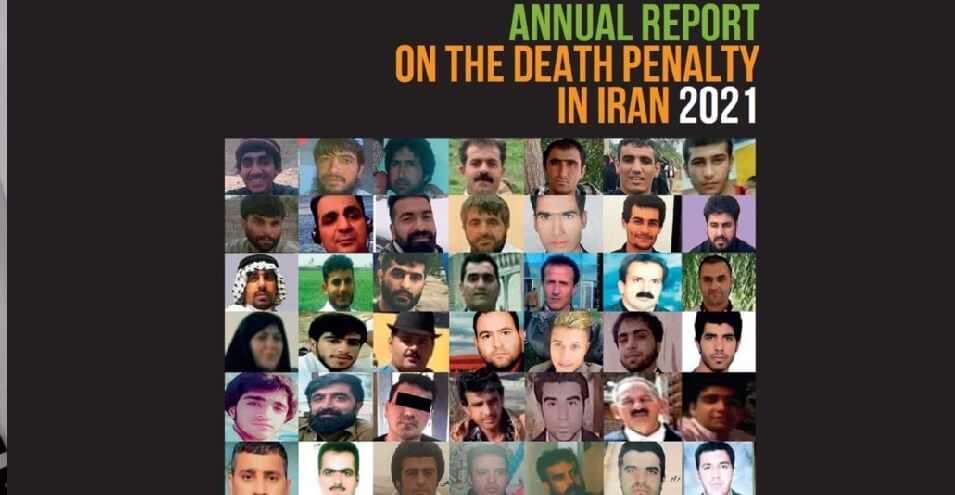
The Iran Human Rights Organization and the French organization “Together Against the Death Penalty” (ECPM) made this announcement in their annual report on executions in Iran for the year 2021, which was released on Thursday, the eighth of Ordibehesht.
In the fourteenth annual report on capital punishment in Iran, expressing severe concern about the increased use of the death penalty, attention was drawn to the significant increase in drug-related executions.
The latest presidential election in Iran was held on June 28, 2021, and Ibrahim Raisi, the former head of the judiciary, came to the presidency in a low-turnout election.
The 120-page report from the two human rights organizations indicates that 333 people were executed in 2021 and a 25 percent increase compared to the previous year. This shows that the execution statistics after the presidential election increased by hundred percent compared to the first half of the year.
This figure was 267 people and 280 people in 2020 and 2019, respectively.
According to the report, in this year only 55 executions (16.5 percent) were announced by official sources. This was while in 2020, 2019, and 2018, 91 people (34 percent), 84 people (30 percent), and 93 people (34 percent) respectively had their executions announced by official sources.
83.5 percent of the executions counted in the 2021 report, namely 278 executions, were not officially announced.
The two human rights organizations announced that at least 126 people (38 percent) of all those executed were executed on charges related to narcotics, which represents a significant increase compared to 2020, when the figure for this type of execution was 25 people (10 percent) of the total.
This figure represents a five-fold increase compared to the average of executions related to this charge between 2018 and 2020.
The report from the two human rights organizations indicates that executions of ethnic minorities also increased significantly in Iran in 2021; such that 21 percent of those executed in 2021 were Baloch citizens.
This is while these minorities make up only between two to six percent of Iran’s population.
In 2021, at least two juvenile offenders and at least 17 women were among those executed. Despite international opposition, the Islamic Republic authorities continued executing juvenile offenders in 2021.
The increase in the number of executions in Iran in 2021 occurred at a time when negotiations between the Islamic Republic and world powers to revive the nuclear deal known as the JCPOA were ongoing, without regard to the human rights crisis in Iran.
The two human rights organizations say that not only do the number of executions rise in the year of political negotiations between Iran and the West, but the legal changes made in 2017 to reduce the number of drug-related executions have also been reversed in practice.
Mahmoud Amiri Moghadam, director of the Iran Human Rights Organization, says about this report: “The critical state of human rights and the high execution statistics in the Islamic Republic have never been part of the JCPOA talks. It appears that government officials, during political negotiations, find their hands freer to intensify human rights violations.”
Raphael Chenuil-Hazan, director of the French organization “Together Against the Death Penalty,” has also emphasized that “the issue of capital punishment must be at the forefront of any negotiations between the West and Iran.”
The latest report on annual execution statistics in Iran has been published with a preface by Mohammad Rasoulof, a renowned Iranian filmmaker. Mr. Rasoulof, in his writing, calls executions “organized and legal murder” and emphasizes raising the level of cultural and public awareness of people to eradicate this type of punishment.
Finally, the two human rights organizations have called for an immediate halt to the execution of capital punishment in Iran and have asked the international community, particularly the United Nations office for drugs and crime and European countries that have diplomatic relations with Iran, to play a more active role in promoting accountability and abolishing capital punishment in Iran.
Source: Radio Farda