Aradkuh Waste Management Complex is the Source of Bad Odor in Tehran
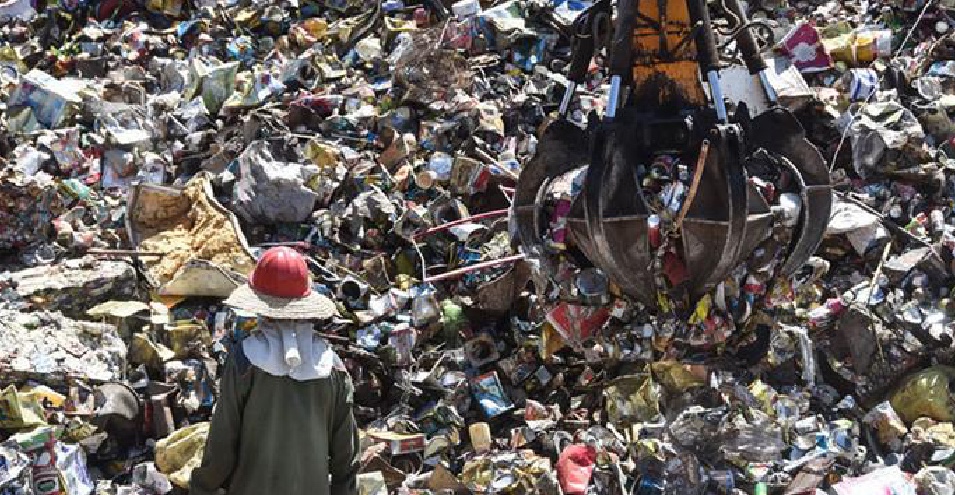
According to Isa Kalantari, half of the bad odor in the south of the capital is related to the Aradkuh waste disposal and processing complex. The leachate from this waste contains dangerous chemicals such as sulfur, and no effective measures have been taken to address it so far.
Isa Kalantari, Vice President and Secretary of the Supreme Council of Environmental Protection, said on Tuesday, the 7th of Bahman, in a gathering with journalists that the bad odor in the south of Tehran is caused by the Aradkuh waste disposal and processing complex, and it has been decided “to reduce the intensity of the unpleasant odor and to hold negotiations with the municipality to make a final decision about Aradkuh”.
According to him, it was approved in the session of the Supreme Council of Environmental Protection that “the fate of waste and investments” should be clarified “in coordination with the Organization for Environmental Protection and the ministries of oil, energy, interior, agriculture, and industry”.
The source of the odor was clear from the beginning but no public information was provided
For several years, Tehran residents have been complaining about an unpleasant odor in some areas of the city. Various speculations have been made about the source of this odor, including sewage pipe leaks, gas leaks at the Tehran refinery, and the activation of Mount Damavand’s volcano, and so on.
On the 26th of Azar in 1398 (December 2019), the Shahrvand newspaper wrote about this issue, saying that previously it was claimed that this odor “should be examined as a new phenomenon”. But did officials not know about the existence of the Arad complex until last fall?
Shahrvand continued that on the 11th of Azar this odor returned to Tehran, and this time a committee was formed to trace the source of the odor. However, “the wind and rain came and officials said the source of the odor was lost”. But the odor did not go away, and “on the 19th of Azar it came and went, and on the 23rd of Azar it came back and remained until yesterday. Even yesterday they came up with reasons for it again; some said it was from the waste of south Tehran and some mentioned the use of heavy fuels and mazut”.
But now the head of the Organization for Environmental Protection formally announces: “The investigations conducted by the municipality show that 22 percent of the unpleasant odor in the south of Tehran is related to Aradkuh. However, the investigations of the Organization for Environmental Protection show that more than 45 percent of the unpleasant odor in the south of Tehran is related to Aradkuh”.
He also announced the determination of the fate of the Aradkuh waste disposal and processing complex by the end of the twelfth government. According to him, Hassan Rouhani ordered that “this matter be settled definitively in the remaining six months of the twelfth government”.
Is the source of pollution sanctions or disregard for people’s health and life
In the Shahrvand report, it is stated that the reason this odor was not perceived in Tehran in the past was that “the capacity of this site had never been filled to this extent”. In the same place, reference is made to the efforts of the Organization for Environmental Protection, and it states: “The Organization for Environmental Protection is looking for a new location for waste landfill. Waste disposal methods in Iran are traditional, and officials of the Organization for Environmental Protection say that because of sanctions, they cannot import new equipment for industrial landfills. According to them, before the sanctions, this organization had contracts with countries like South Korea for importing equipment, but these contracts were canceled, and therefore the new landfill location will also be traditional.”
Environmental activists in Iran, rather than attributing water pollution, forest destruction, air pollution and bad odor in Tehran to sanctions, point to the mafia of power, for which neither environmental destruction nor playing with people’s lives matters; and whenever the issue of fighting pollution arises, it becomes a security matter.
Framarz Mo’atter, a faculty member of the School of Environment and Energy at the University of Science and Research, in addition to unsanitary waste disposal, also referred to “population increase and the expansion of urban outskirts” and told Shahrvand: “Now we have reached such a critical condition that besides air pollution, the odor crisis has become a daily problem in Tehran. This is while we have not witnessed such a case in other countries. Developed countries have been using new methods for waste disposal for a long time and for this reason they do not experience such cases or at least we have not heard of them”.
He says that the leachate from this waste contains dangerous chemicals such as sulfur, which has a very bad smell. According to this expert, nine years ago a plan was presented at the School of Environment at Tehran University to treat the leachate, but “this plan was implemented for a short time and then was no longer considered”.