Araghchi Condemns Attack on Jordan Church Amid Questions About Christians’ Status in Iran
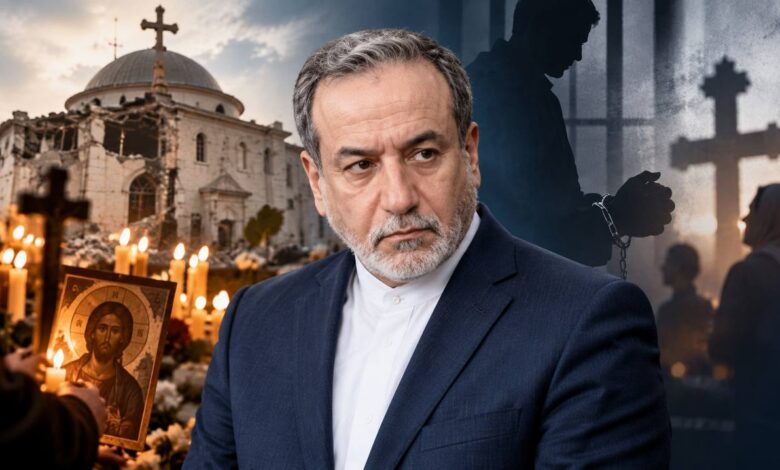
Abbas Araghchi, Iran’s Foreign Minister, condemned a deadly attack on a Greek Orthodox church in southern Jordan and expressed sympathy with the victims’ families. This diplomatic stance comes as international reports document the continued detention and legal persecution of Christian citizens in Iran, particularly converts to Christianity.
According to a report by Petra, Jordan’s official news agency, Araghchi on Tuesday, October 26, 2026, spoke by phone with Ayman al-Safadi, Jordan’s Foreign Minister, condemning the attack on the church in the village of Hamoud in Karak Governorate and offering condolences to the victims’ families. Tasnim news agency also reported that during this call, Araghchi emphasized the need to confront what he described as Israeli expansionism and warmongering.
The armed attack on the church occurred on Friday, October 22, during a funeral service. According to reports released by Jordanian authorities and international media outlets, nine people were killed and over 30 were wounded. Jordanian officials characterized the attack as terrorism, and security forces later announced the arrest of three suspects.
Condemning attacks on religious sites and expressing sympathy with victims’ families are customary steps in diplomatic relations between countries. However, this stance also raises an important question: to what extent is the protection of churches and the right of religious followers to worship upheld in the Islamic Republic’s domestic policies?
A policy and intelligence note issued by the British government regarding the status of Christians, particularly Christian converts in Iran, published in June 2026, states that Islamic Republic authorities continue to arrest and prosecute some Christian citizens and individuals who participate in church activities. According to this report, charges such as “propaganda against the system” and matters related to national security have been raised in a number of these cases, and penalties can include lengthy prison sentences.
The report also points to restrictions on the activities of Persian-speaking churches, monitoring of Christian gatherings, and action taken against certain home meetings. In some cases, peaceful gatherings for prayer, Bible study, and religious ceremonies have led to legal proceedings.
Iran’s Christian community is not monolithic, and the situation of Armenian and Assyrian Christians, who are officially recognized religious minorities under the constitution, differs from that of many Christian converts. Nevertheless, human rights reports document serious pressures and restrictions against groups of Christians, particularly those who participate in Persian-language communities or home churches.
Condemning the attack on Jordan’s church does not, in itself, prove anything about the Foreign Minister’s sincerity or personal motives, but the government’s domestic record on religious freedom is an important measure for assessing the consistency of official positions with human rights commitments.
The right to freedom of religion and belief, including the right to perform religious ceremonies and hold peaceful gatherings, is recognized in Article 18 of the International Covenant on Civil and Political Rights, a treaty of which Iran is also a member. From this perspective, supporting the security of Christians in Jordan and other countries should go hand in hand with respecting the rights of Christian citizens within Iran.
The attack on Jordan’s church reminds us that religious sites and civilians must remain protected from violence and targeted attacks. At the same time, defending religious freedom takes on fuller meaning when this right, regardless of country, religion, or the identity of individuals, is respected in practice as well.